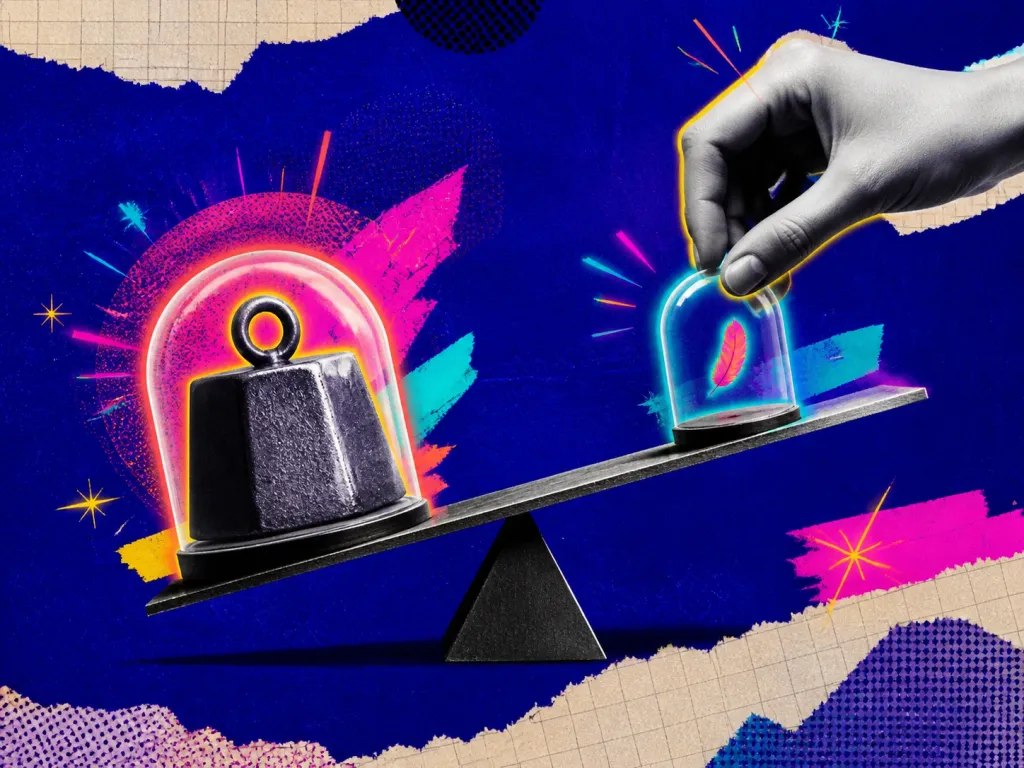
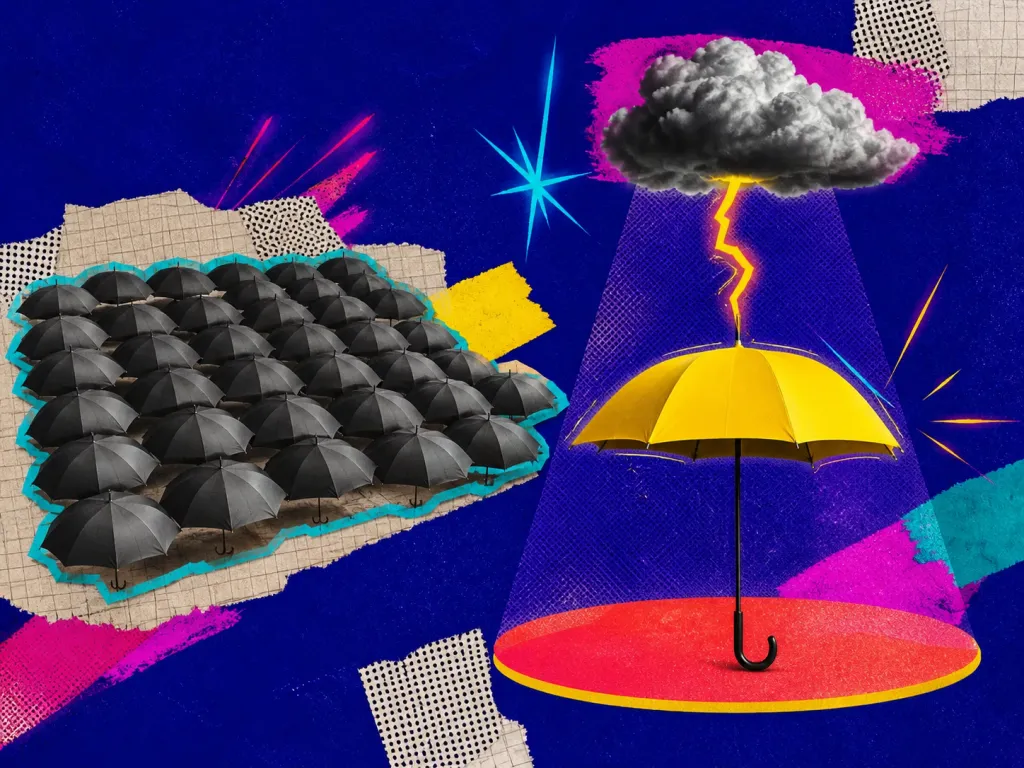
Normalcy Bias – when you believe nothing bad will happen
Do you believe disasters only happen to others, not you? That’s Normalcy Bias – the tendency to ignore or underestimate the likelihood of rare but serious events just because they haven’t happened before.

Examples and situations
- Natural disasters – people refuse to evacuate before a hurricane because “nothing bad has happened before.”
- Financial crises – investors don’t believe in a market crash until it actually happens.
- Health – “I’ve never been sick, so I’ll be fine,” even when symptoms clearly indicate a problem.
Questions to check
- Accept reality, not comfortable beliefs – just because something hasn’t happened doesn’t mean it won’t.
- Assess risks in advance – it’s better to prepare than to assume you’ll be lucky.
- Learn from others’ mistakes – disasters have happened before, and you’re not immune.
Long-form guide
The Quiet Lie That Keeps Us Sitting: Normalcy Bias and the Cost of “It’ll Be Fine”
There’s a siren in the distance. You hear it, barely, like a fly behind a wall. You tell yourself: probably a test, probably the fire station, probably nothing. You keep typing. A notification about a weird login pops up. Probably your VPN. A friend messages about news spreading fast. Probably overblown. The room feels the same. The coffee still tastes right. You stay. You do what you always do.
On this page
What is Normalcy Bias — when you believe nothing bad will happen — and why does it matter?
Fifteen minutes later, you wish you had moved. Normalcy bias is the mental shortcut that leads us to underestimate the possibility, impact, or speed of a negative event because things look normal right now. Let’s talk about the quiet lie of “it’ll be fine,” the patterns underneath it, and what to do when the siren sounds far away but not as far as you hope. Normalcy bias is our tendency to assume the future will be a lot like the recent past, especially when a negative change would force us to do something hard right now. It’s part denial, part inertia, and part brain-efficiency. Normal saves energy. Danger burns it.
Bad news punishes slow movers. Fires spread. Bank runs accelerate. Bugs cascade; It masks signals in everyday routines. The way the light looks at 4 p.m. doesn’t tell you anything about a server memory leak; It pairs dangerously with social proof. If no one else is moving, staying put feels rational; It loves ambiguity. Vague warnings become “probably nothing.”. Why it matters: Risk researchers found that people often delay action after warnings until they receive multiple, consistent signals and see others act (Mileti & Sorensen, 1990). We don’t trust one alarm. We wait for a chorus. Unfortunately, some choruses arrive too late. The bias isn’t stupidity. It’s the brain being efficient on average and fragile on the wrong day. Recognizing it doesn’t make us paranoid; it makes us fast where speed matters.
1) The building alarm
Stories matter because they teach the gut. Here are real-world textures of normalcy bias at work — moments that feel familiar until they flip. A fire alarm chirps once, then stops. People glance up, then keep working. A minute later, it blares for real. Someone says, “They test these all the time.” A manager stands, sighs, then sits.
Smoke never shows. Twenty people wait. Two leave. The stairwell later fills with actual smoke — no drama, just a slow gray truth. The slow movers cough; the fast movers drink water across the street. Social signaling: no one wants to look jumpy; Past pattern: previous false alarms trained “ignore.” Friction: packing laptops feels annoying.Why we stayed:
2) The bank that “can’t fail”
The week before a bank run, the app works fine. The balance is there; the brand is strong. Then two tweets land. Then a thread. Then a chart with a downward slope. Your founder chat lights up. You tell yourself: “It’ll be okay by Monday.” It’s noon on Friday.
A dozen founders moved funds within 30 minutes. A thousand waited for the press release. Guess who slept better. Narrative lock: “regulated,” “long history,” “great leadership.”; Hope over logistics: “Transfers take time; maybe I’ll wait for clarity.”; Status quo bias meets routine banking. Why we stayed:
3) Security “just this one time”
Your repo is private. Your staging environment is “only internal.” A contractor asks for broad permissions for speed. You think, “We’ll clean it up next sprint.” You whitelist your home IP. You put a token in a notes doc temporarily. “No one cares about a tiny app.” Three weeks later, you’re explaining to users why their data was visible for 19 minutes.
Present bias: shipping today feels more valuable than a breach you can’t see; Normal vibes: “We’re too small to be targeted.”; Ambiguity comfort: it’s not wrong yet, so it feels less wrong. Why we stayed:
5) Product metrics sliding
A dull ache. A new mole. The cough that lingers. WebMD searches say “common cold.” You tell yourself: “Give it a week.” Then another. The calendar swallows anxiety until a friend says, “Book the appointment. Now.” Sometimes it’s nothing. Sometimes it isn’t. Emotional cost: appointments, tests, the possibility of bad news; Familiarity: you’ve had colds before; The body’s deceit: steady routines mask gradual declines.
Why we stayed: DAU dips 2% three days in a row. “Weekend effect,” someone says. Support tickets drift upward but don’t spike. A cohort churns faster than expected. You decide to “watch it.” A month later, it’s not a dip; it’s a slope. Noise washing: “Seasonality.” Narrative protection: “We shipped a great feature; it can’t be the problem.” Sunk-cost whispers: “We need more time for it to prove itself.”. Why we stayed:
7) Aviation plan continuation
Emergency officials urge evacuation. The sky is bright. The air smells like breakfast. Dogs nap. You think of the hassle: packing, traffic, nowhere to go. You wait for visible danger. Research shows that many people delay evacuation until seeing credible cues and social confirmation (Dow & Cutter, 1998; Mileti & Sorensen, 1990). Visual mismatch: blue sky contradicts the forecast; Social inertia: neighbors mowing lawns; Hope: “It always veers north.”.
Why we stayed: Pilots sometimes continue an approach in deteriorating weather despite clear indicators it’s unsafe. This “plan continuation bias” has contributed to accidents (Orasanu & Martin, 1998). Normalcy bias plays a role: if it was fine five minutes ago, and we’ve invested in this approach, we keep going. Momentum: already aligned; Cost of aborting: refuel, delays, shame; Illusion of control: “We can handle it.”. Why we stayed:
8) The “stable” relationship or team
Familiar fights feel safer than the risk of change. “We’ll get better after the launch.” “He’s stressed.” The problems stay gentle until the consequences don’t. Identity lock: “We’re not quitters.” Time cushioning: “This quarter is unusual.” Fear of rupture: confronting now seems worse than drifting. Why we stayed: We could go on. The point isn’t panic. It’s pattern recognition.
Normalcy bias often hides inside good, calm days. The danger isn’t that you see nothing. It’s that you see something and label it normal because normal is cheaper, emotionally and operationally. We built a simple set of moves we use in our studio and personal lives. They don’t require heroics. They require small, deliberate interruptions of comfort.
Simple tools that break normal
We use these both in code and life. Security: If we ever see a credential in logs, rotate within 30 minutes. No debate; Finance: If bank exposure > X% of runway, execute diversification by 3 p.m. today; Ops: If latency > 300ms for 10 minutes, roll back. No hero fixes on prod. 1) Tripwire thresholds Examples: Quarterly evacuation drill for the team (remote too: “what’s our plan if office is inaccessible?”); Incident role rehearsal: each person knows their software on-fire role, even if we never use it; Health: practice booking a screening now so future-you knows the path.
2) Standing rehearsals Pre-mortem: “It’s six weeks later; the feature tanked retention. What did we miss?” List three signals that would have told us earlier; Red team: Assign someone to argue the “bad case” in planning. Give them time and permission, not a token role. 3) Pre-mortems and red teams Access: least privilege by default. Temporary escalations expire automatically; PR templates: critical changes require rollback plan box checked and filled; Messaging: prewritten “we’re pausing rollout” note. Ready to send.
4) Default-to-safe templates In the office: formalize “If you hear a fire alarm, leave immediately. Don’t wait for the group.”; In product: no shame for rolling back early. We celebrate reversals that avoid 2 a.m. incidents. 5) Social permission to move first “We’ll monitor” is not a plan. Create a 24-hour, 72-hour, and one-week review with a named owner; Set a timer for decisions: 15-minute “proof of concern” research sprint instead of a two-day spiral.
6) Time boxing for uncertainty Once a quarter, show your risk list to an advisor who is not embedded in your normal. They will see what you’re blind to. 7) Outside eyes 8 minutes: surfacing weak signals (metrics, security, health, money); 7 minutes: pick one to push into a tripwire and pre-commitment; 5 minutes: assign a micro-drill this week (rehearse a failover, rotate a token); 3 minutes: write one “if I’m wrong” note. It’s short on purpose. We’re building an app called Cognitive Biases because rituals like this work best with nudges and checklists in your pocket, not buried in a PDF.
Related or confusable concepts
Normalcy bias lives in a neighborhood with other biases. They often hang out. Here’s how to tell them apart and use them wisely. Optimism bias. We believe things will turn out better for us than average (Sharot, 2011). Optimism bias says “It’ll be fine for me.” Normalcy bias says “It’ll be like it was yesterday.” Combine them and you get dangerous calm. Status quo bias. We prefer the current state over change, even when change is rational. Normalcy bias is the story that justifies staying put: “Things are normal, so we don’t move.” Status quo bias is the comfort that keeps the seat warm.
Plan continuation bias. Once we start a course of action, we stick to it despite cues to stop (Orasanu & Martin, 1998). It’s normalcy bias with momentum. Remedy: premade abort criteria. Confirmation bias. We seek data that fits our expectations. If we expect normal, we notice normal signals and ignore anomalies (Tversky & Kahneman, 1974). Remedy: structured disconfirming checks. Sunk cost fallacy. We continue because we’ve invested. Normalcy bias says “it’s normal to continue.” Sunk cost says “we paid for normal; let’s keep paying.”
Cry-wolf effect. Repeated false alarms reduce responsiveness to future alarms (Mileti & Sorensen, 1990). It trains normalcy bias like a dog. Remedy: tie alarms to clear, visible thresholds and provide fast “all-clear” feedback to rebuild trust. Availability heuristic. We judge risk by what comes easily to mind (Tversky & Kahneman, 1974). If you’ve never seen a flood, floods feel unlikely. If you saw one last year, every cloud gets suspicious. Normalcy bias filters availability: it makes rare-but-real events feel too far to matter.
Risk perception and dread. People fear vivid, catastrophic risks differently than chronic, slow risks (Slovic, 2000). Normalcy bias thrives with slow risks — data leaks, climate, churn — because nothing explodes today. Knowing the neighbors helps. Your plan doesn’t need diagnostic purity. You need tripwires and rehearsals that catch the blend.
The anatomy of “It’ll be fine”
Let’s dissect that sentence. It carries weight. “It’ll…” pushes everything to the future, vague and distant; “…be…” implies no action; outcomes just arrive; “…fine.” compresses a whole distribution into a single wish. Underneath are three forces: 1) Emotional economics Fear is expensive: it costs attention, energy, and often social standing. So we hedge. Being the person who says “we should leave” risks looking dramatic. We prefer the cheaper emotion of calm. 2) Cognitive laziness by design Our brains conserve energy. Patterns and routines keep the lights on with minimal burn. Questioning normal is metabolic work. We rationalize laziness as “focus.”
3) Social glue Groups coordinate by cues. If nobody moves, you feel more bonded by sitting. If you stand up, you break the mutual spell. We choose belonging over accuracy, especially in uncertain territory. Knowing this doesn’t mean we can delete the bias. We can budget for it. We can create cheap, automatic ways to act before it gets expensive.
Crafting “move scripts”: playbooks for non-dramatic exits
A “move script” is a written, one-page plan for a specific category of bad days. It makes moving easy, not heroic. Build three: Trigger: fire alarm, earthquake alert, neighbor banging on door yelling “fire,” severe weather alert for your area; First 2 minutes: grab go-bag, keys, phone; put on shoes; exit via stairs; move two blocks away; message check-in contact; If you’re wrong: walk back; debrief yourself without shame; adjust go-bag; Preparation: pack go-bag (ID copies, meds, water, charger, cash).
1) Personal safety move script Trigger: credible reports of bank instability; FDIC chatter; exposure threshold exceeded; First hour: initiate transfer to secondary bank; message accountant; freeze new large outgoing payments until clarity; If you’re wrong: unwind transfers Monday; document costs; consider it a drill; Preparation: open secondary account now; test small transfer; keep instructions handy. 2) Money move script Trigger: suspected credential leak; abnormal auth patterns; vendor breach; First 30 minutes: rotate keys; revoke tokens; enforce password reset; restrict production access to on-call; inform team on predefined channel; If you’re wrong: revert access changes carefully; document the event; update playbook; Preparation: enable MFA everywhere; keep rotation scripts ready; store emergency contacts. 3) Data and security move script These aren’t paranoia. They are kindness to your future self. When the alarm sounds fake and your stomach says “sit,” scripts carry your feet.
A builder’s angle: what we changed in our studio
We write code, ship features, and carry a very human mix of optimism and stubbornness. Here’s what we changed after a few humble lessons: We replace “Probably fine” with “What would make this not fine?” in standups; We use “risky iff” in our PR templates: risky if X occurs, then do Y. No imagination tax at 2 a.m; We run “reverse demos”: instead of showing what works, we show how we roll back and how we detect failure; We budget anxiety. One person each week is the “Designated Worrier.” Their job is to ask “what could go sideways?”
and be thanked for it; We do small, boring drills. Simulate a lost laptop. Practice a simulated payfreeze. Run an “office unavailable” day even if we’re remote. The boredom is the point. When it’s boring, you’ll do it; We keep a “Bad Day Backpack” next to the door of our small office. It has chargers, a printed contact sheet, a router, and snacks. Laugh if you want. It makes leaving easier. And because we’re building an app called Cognitive Biases, we design features that nudge these behaviors: tripwire reminders, premade move scripts, and quick pre-mortem prompts that fit into a 10-minute coffee.
Evidence corner (short and useful)
Disaster warnings often require multiple consistent messages and trusted messengers before people act; delays are common, especially when cues are ambiguous (Mileti & Sorensen, 1990); People weigh risks unevenly; unfamiliar, catastrophic risks and slow-burn hazards are perceived differently, which affects response times (Slovic, 2000); Optimism bias is robust; individuals often underestimate negative outcomes for themselves (Sharot, 2011); Decision-makers stick to initial plans under pressure, leading to mishaps;
structured abort criteria reduce this “plan continuation” pattern (Orasanu & Martin, 1998); Evacuation behavior shows that social cues and normalcy shape action; many wait for neighbors or visible danger (Dow & Cutter, 1998); Heuristics drive biased judgment under uncertainty, leading us to underreact to low-frequency but high-impact events (Tversky & Kahneman, 1974). We cite lightly because the fix lives in what you do on a Tuesday, not in footnotes. Still, it helps to know your brain isn’t broken — it’s typical.
When to move fast and when to sit still
Normalcy bias can be overcorrected into panic. That’s not wisdom either. Here’s a quick compass: The harm curve is exponential (fire, contagion, bank runs, data leaks); Reversibility is easy (you can come back with small cost); You already set tripwires (you did the thinking earlier).
Move fast when: The harm curve is linear and small; You lack data and the action is irreversible; You have high-quality, recent counterfactuals (“last time we rolled back, it caused larger harm”). Still, schedule a short revisit. Sit a beat when: The key is pre-commitment. Decide in calm what “fast” means and keep it boring.
“Leave now” message to team
We promised practical. Steal these. It’s six weeks later and the project failed. List three early signals we ignored; For each signal, what measurable proxy could we track now?; What’s the smallest experiment that would accelerate the failure and expose it sooner?; What’s the one-line abort criterion?.
Risk: [one sentence]; Metric: [exact unit]; Threshold: [number + window]; Owner: [name]; Action within first 15 min: [checklist of 3 steps]; Communication template: [link]. “Evacuate the building now. Do not wait for confirmation. Meet at [location]. Reply ‘Safe’ when you arrive. We will update in 15 minutes.”.
Wrap-up summary: Normalcy Bias
“Pausing Feature X rollout at [time]. Reason: [metric deviation]. Rollback initiated. Next update at [time]. If metrics normalize for 30 minutes, we’ll resume.” “If cough persists past [date], book appointment at [clinic]. Ten minutes to call. Calendar block created.” This is boring. Good. Boring saves lives, money, and dignity. Normalcy bias is the quiet lie that the next minute will look like the last.
It makes us polite with danger and cheap with preparation. It’s not evil; it’s human. We can design around it with tripwires, rehearsals, pre-mortems, and social permission to move first. We can treat leaving as ordinary, not dramatic. Leave when you should. Roll back when you must. Drill when it feels silly. The siren is faint until it’s not.
Decision checklist
- ✅ Name the thing: What specific negative event am I downplaying? Write one sentence without hedging
- ✅ Set a tripwire: What numeric threshold, date, or signal will force action? Decide now, not later
- ✅ Pre-commit the action: If the tripwire hits, what exactly will I do in the first 15 minutes?
- ✅ Seek a disconfirming voice: Who disagrees with my “it’ll be fine,” and what evidence do they have?
- ✅ Run a 10-minute pre-mortem: Assume it went badly. What were the three early signs we ignored?
- ✅ Check social proof: Am I waiting for others to move first? If so, why?
- ✅ Lower friction: What makes the right action annoying? Remove one step right now
- ✅ Rehearse the exit: Can I practice the action once (evac route, failover, account transfer, escalation)?
- ✅ Calendar a revisit: When will I look again with fresh eyes (tomorrow 9:00, not “soon”)?
- ✅ Write the “if I’m wrong” note: Two sentences to your future self explaining why you waited. If it embarrasses you, move now