
Money & Shopping
Why the First Price You See Changes What You Will Pay
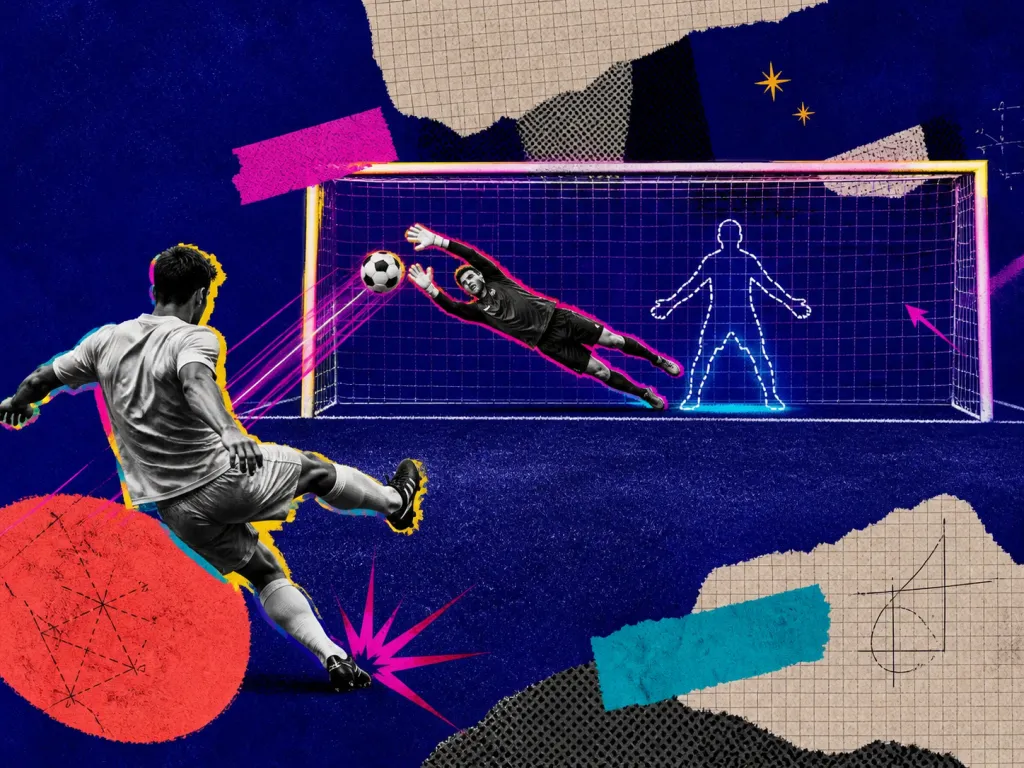
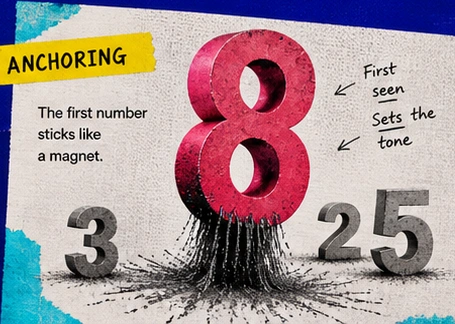
A first price can quietly become a reference point, so a later price feels cheap or expensive in comparison instead of on its own.


Learn the patterns. Check the evidence.
Make a clearer move.
Cognitive Biases is a practical reference with clear examples, evidence reviews, comparisons and decision tools for real choices.
Cognitive biases in everyday life
Why do bad projects survive? Why does repeated news feel true? Why can an AI estimate pull your own estimate toward it? Read the situation first, then follow the evidence.
Money & Shopping
A first price can quietly become a reference point, so a later price feels cheap or expensive in comparison instead of on its own.
Work & Career
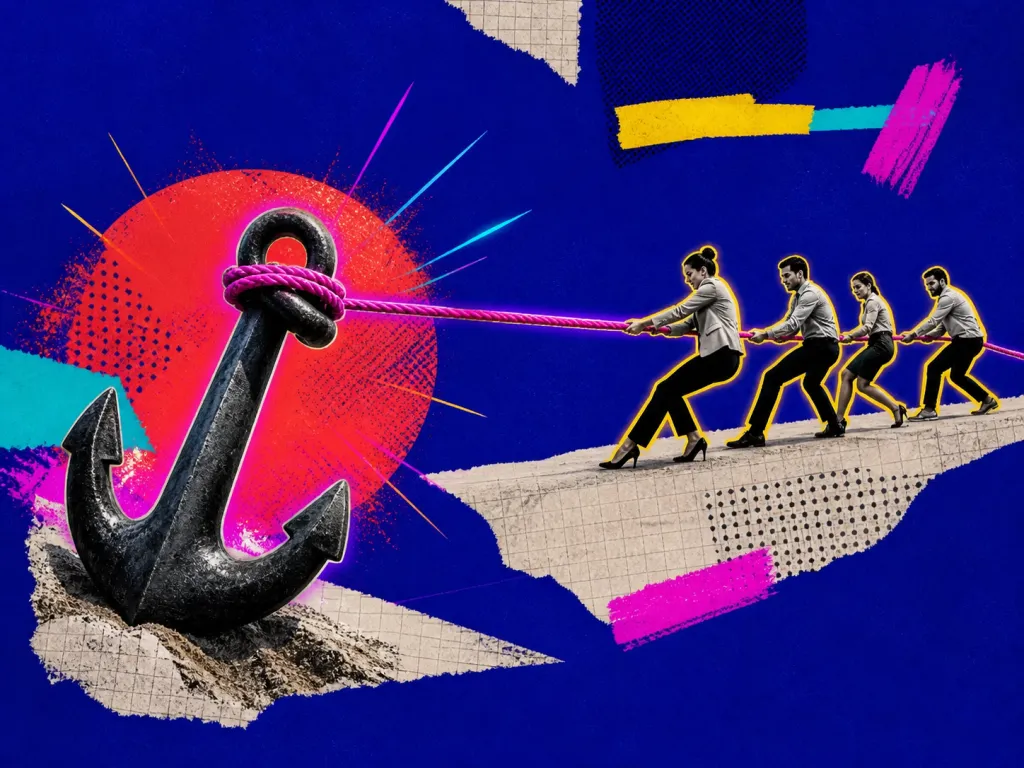
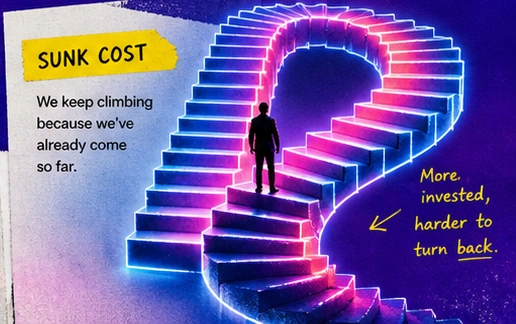
Past effort can make a weak project feel too expensive to abandon, even when the next step no longer makes sense.
News & Internet
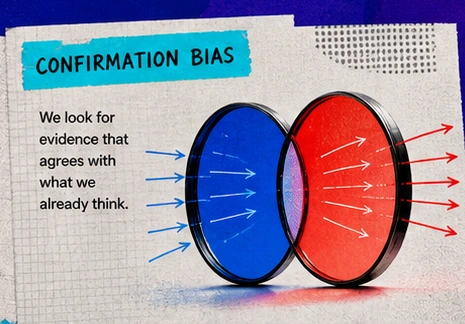
Once we prefer an explanation, it becomes easy to search for supporting evidence and much harder to notice what could prove us wrong.
AI & Decisions
An AI estimate can become an anchor before you have formed your own view, making later reasoning orbit around the model's first number.
Start from a real situation
Use a guide when you know the problem but not the bias name. Each one combines a small set of reviewed lenses with a concrete workflow.
Use these evidence-reviewed lenses when a chatbot, model, recommendation system, or automated decision aid is influencing what you believe or do.
Use this guide →Use these evidence-reviewed lenses when setting a deadline, estimating effort, discussing delivery risk, or learning from a project that finished later than expected.
Use this guide →Use these evidence-reviewed lenses when deciding whether a repeated claim is trustworthy, checking a correction, or testing an explanation against plausible alternatives.
Use this guide →Use these evidence-reviewed lenses when comparing subscription tiers, product plans, vendor offers or recommendation menus where the way options are arranged may change what looks attractive.
Use this guide →From glossary to decision system
The library still explains cognitive biases, effects, heuristics, and related phenomena. The newer layers help you use that knowledge without pretending a label is a diagnosis.
Write the decision, counterevidence, alternative hypothesis, failure condition, and next action. Drafts stay in your browser.
Audit a real decision →Start from work, forecasting, or AI-assisted decisions when you do not already know the name of the relevant pattern.
Browse decision contexts →See boundary conditions, contested findings, reviewed sources, and where the quick definition needs qualification.
Check the evidence layer →Separate patterns that are easy to confuse, such as hindsight versus outcome bias or outcome bias versus moral luck.
Compare nearby concepts →A public knowledge library
Browse the library by concept, then go deeper where we have reviewed the evidence. Older entries stay visible while we improve them, rather than pretending the whole collection is equally certain.
Built for reflection, not certainty
Learn the names and patterns behind common thinking traps.
See concise examples of how a bias can influence everyday judgment.
Use practical countermeasures as a prompt to pause, seek evidence, and reconsider.
What we are building
Practice Lab
Practice matching decision checks to evidence-reviewed cognitive-bias lenses.
6 short exercises with evidence links.
6 short exercises with evidence links.
6 short exercises with evidence links.
Decision Skills
Build practical skills that connect evidence, decision contexts and short exercises.
Judge whether a claim deserves confidence before repetition, fluency or preference turns into evidence.
Make useful choices when outcomes are not known and one number, story or recent event can pull judgment too strongly.
Estimate what may happen next by using comparable evidence, explicit uncertainty and records made before the outcome is known.
Experiments Lab
Run short, private demonstrations of anchoring, framing, choice architecture and decision review. Nothing is uploaded.
Numbers & Estimates
Try two versions of the same pricing question and see why a starting number can pull later estimates toward it.
Framing
The numbers stay identical while the wording changes from survival to mortality. Notice whether your evaluation moves with the frame.
Choice Architecture
Choose between two plans, then compare the same choice after a clearly weaker third option appears.
Cognitive Bias Observatory
Track gain and loss frames, certainty, salience, authority cues and repeated wording with transparent rules and source provenance.
Use the knowledge
Lens packs turn reviewed concepts into short workflows for real tasks. The AI-era Bias Lab tracks newer human–AI interaction patterns as research questions instead of declaring every interesting effect a new bias.
Career, AI work, teams, projects and information checking.
Use a lens pack →Anchoring loops, sycophancy, offloading, source memory and new testable hypotheses.
Explore the lab →Decision workbench
Review a career choice, build a reusable lens pack for a team, or follow AI-era research from an idea to a reproducible result.
Compare options, preserve an independent estimate, challenge the favourite and define a reversible test.
Review a career decision →Create a compact checklist from published lenses for a recurring work decision.
Build a lens pack →See which human–AI ideas have only a hypothesis, which have a protocol and what would move them forward.
Track the research →Open research
Instead of adding another catchy AI-bias label, we are testing one concrete prediction: whether seeing standardized AI advice before an independent estimate changes the final numerical judgment.
Start with a real decision
Choose a situation, identify missing evidence, use a few relevant lenses and finish with a practical next action.
Hiring, estimation, incidents, AI research, vendor selection, negotiation and more.
Start from a situation →Independent estimates, outside view, decision journals, red-team review, source tracing and more.
Browse techniques →Latest research · August 2026
August research covers anchoring in AI evaluation, the strength and limits of repetition-based truth judgments, and evidence transfer across domains.
We do not publish a paper list. Each monthly update says what strengthened, what narrowed, what opened a new context, and what is still only worth watching.
This month
6 reviewed signals. Preprints stay provisional; null results and evidence gaps stay visible.