The complete collection

Explore cognitive biases.

Search the library by name, description, or category. These entries are educational starting points for noticing patterns in your own thinking and decisions.


New taxonomy

Browse by cognitive mechanism

177 of 215 canonical entries now have a reviewed v2 family mapping. Ambiguous entries stay unassigned until reviewed.

Memory & retrieval50 reviewed entriesPatterns involving encoding, recall, reconstruction, source memory, and forgetting.Social judgment32 reviewed entriesPatterns involving attribution, conformity, social inference, and judgments about other people.Valuation & choice17 reviewed entriesPatterns involving framing, reference points, gains and losses, option comparison, and preference construction.Attention & information16 reviewed entriesPatterns that affect what gets noticed, sampled, searched for, or omitted from consideration.Belief updating13 reviewed entriesPatterns that shape how evidence, priors, repetition, and existing beliefs change what feels true.Reasoning & flexibility11 reviewed entriesPatterns involving logical errors, problem representation, rigidity, and fixation on familiar tools or solutions.Self & metacognition10 reviewed entriesPatterns involving confidence, self-assessment, introspection, and beliefs about one's own thinking.Perception & patterns8 reviewed entriesPatterns involving perceptual interpretation, agency detection, and seeing structure in ambiguous input.Probability & risk6 reviewed entriesPatterns involving uncertainty, probability estimates, base rates, and perceived risk.Future state forecasting3 reviewed entriesPatterns involving predictions about future feelings, preferences, and behavior when current or imagined states are an imperfect guide to the future state.Past & present comparison3 reviewed entriesPatterns that can shape comparisons between remembered past experiences, current experience, and broad judgments of change over time.Retrospective evaluation3 reviewed entriesPatterns where knowing an outcome changes later judgments of predictability, decision quality, blame, or responsibility.Time & commitment3 reviewed entriesPatterns involving temporal preference, persistence, escalation, and commitment dynamics.

Apophenia

Attribution Bias

Attribution BiasActor-Observer Bias – when you blame circumstances for yourself but personality for othersthe tendency to blame our own behavior on external circumstances while attributing others’ actions to their personality.Read entry
Attribution BiasDefensive Attribution – when you blame more as the harm gets worse or feels personalthe tendency to assign more blame to a harm-doer as the outcome worsens or if you relate to the victim.Read entry
Attribution BiasExtrinsic Incentives Bias – when you think others work for rewards, but you work for passionthe tendency to believe others are motivated by external rewards while you act out of genuine interest.Read entry
Attribution BiasGroup Attribution Error – when you judge a whole group based on one personthe tendency to believe that an individual’s behavior represents their entire group.Read entry
Attribution BiasHostile Attribution Bias – when you see hostility even where there is nonethe tendency to see neutral or accidental actions as intentionally aggressive.Read entry
Attribution BiasIntentionality Bias – when you assume everything is done on purposethe tendency to believe people’s actions are deliberate, even when they’re accidental.Read entry
Attribution BiasJust-World Hypothesis – when you believe people get what they deservethe tendency to believe everything happens fairly, even when events are random or unjust.Read entry
Attribution BiasMoral Luck – when outcomes change blame for otherwise similar choicesResultant Moral Luck describes cases where people judge blame, punishment, or moral responsibility differently because similar actions lead to different outcomes partly outside theRead entry
Attribution BiasPuritanical Bias – when people blame morality instead of circumstancesthe tendency to blame negative outcomes on personal morality rather than external, societal, or economic factors.Read entry
Attribution BiasSelf-Serving Bias – when success is yours, but failure is someone else’s faultthe tendency to credit yourself for successes but blame external factors for failures.Read entry
Attribution BiasUltimate Attribution Error – when you judge an entire group based on a few individualsthe tendency to attribute an individual’s actions to their entire group, especially for negative behavior.Read entry

Availability Heuristic

Availability HeuristicAnthropocentric Thinking – when everything is judged by human standardsthe tendency to use human experiences as the basis for understanding everything else, even if it operates on completely different principles.Read entry
Availability HeuristicAnthropomorphism – when nonhuman systems are read as humanlikeAnthropomorphism is the attribution of humanlike characteristics, intentions, emotions, or mental states to nonhuman agents. It is a common psychological process, not automaticallyRead entry
Availability HeuristicAttentional Bias – when your thoughts control what you seethe tendency to focus on information related to your current thoughts or concerns while ignoring everything else.Read entry
Availability HeuristicFrequency Illusion – when something new suddenly appears everywherea cognitive bias that makes us think something appears more frequently than before, when in reality we’ve just started noticing it.Read entry
Availability HeuristicImplicit Association – when your brain links things faster than you realizethe effect where the speed of linking words depends on how closely they seem related, even if the connection is subjective.Read entry
Availability HeuristicQuantification Bias – when only measurable things seem to matterthe tendency to give more weight to measurable data while ignoring what can’t be easily quantified.Read entry
Availability HeuristicSalience Bias – when the striking overshadows the relevantthe tendency to concentrate on the most prominent details, even when they are not the most important.Read entry
Availability HeuristicSelection Bias – when the sample doesn’t reflect realityan error that occurs when data is not randomly selected and doesn’t reflect reality.Read entry
Availability HeuristicSurvivorship Bias – when you only see the winnersthe tendency to focus on those who ‘made it’ while ignoring those who didn’t because they’re invisible.Read entry
Availability HeuristicWell-Travelled Road Effect – when familiar routes feel fasterthe tendency to underestimate travel time on familiar routes and overestimate it on unfamiliar ones.Read entry

Belief Perseverance

Cognitive Bias

Cognitive BiasAnchoring Effect – when a starting number pulls later estimates toward itAnchoring Effect is the tendency for an initial number or reference value to pull a later numerical judgment toward it, even when the starting point is weak or not very useful.Read entry
Cognitive BiasConfirmation Bias – when a belief shapes how evidence is searched and judgedConfirmation Bias is a broad label for ways an existing belief or hypothesis can influence how information is searched for, interpreted, remembered, or evaluated. It is wider than Read entry
Cognitive BiasCurse of Knowledge – when what you know distorts what you expect others to knowCurse of Knowledge is a perspective-taking bias: once you know important information, that knowledge can make it harder to judge what a less-informed person knows, notices, or undeRead entry
Cognitive BiasDeclinism – when the present is judged against an idealized pastDeclinism is best treated as an umbrella label for broad judgments that conditions have declined relative to an idealized past. It is not one standardized cognitive bias with one mRead entry
Cognitive BiasEnd-of-History Illusion – when you think you won’t change anymorethe belief that you will stay the same, even though you’ve changed a lot in the past.Read entry
Cognitive BiasExaggerated Expectation – when reality is always less extreme than you imaginedthe tendency to predict more extreme outcomes than what actually occurs.Read entry
Cognitive BiasFundamental Pain Bias – when your pain is real, but others’ seem exaggeratedthe tendency to believe you report your own pain accurately while assuming others overstate theirs.Read entry
Cognitive BiasHedonic Recall Bias – when satisfied employees think they earn more, and unhappy ones think they earn lessthe tendency to overestimate or underestimate earnings based on job satisfaction.Read entry
Cognitive BiasHindsight Bias – when the past looks obvious in retrospectthe tendency to see past events as more predictable than they actually were.Read entry
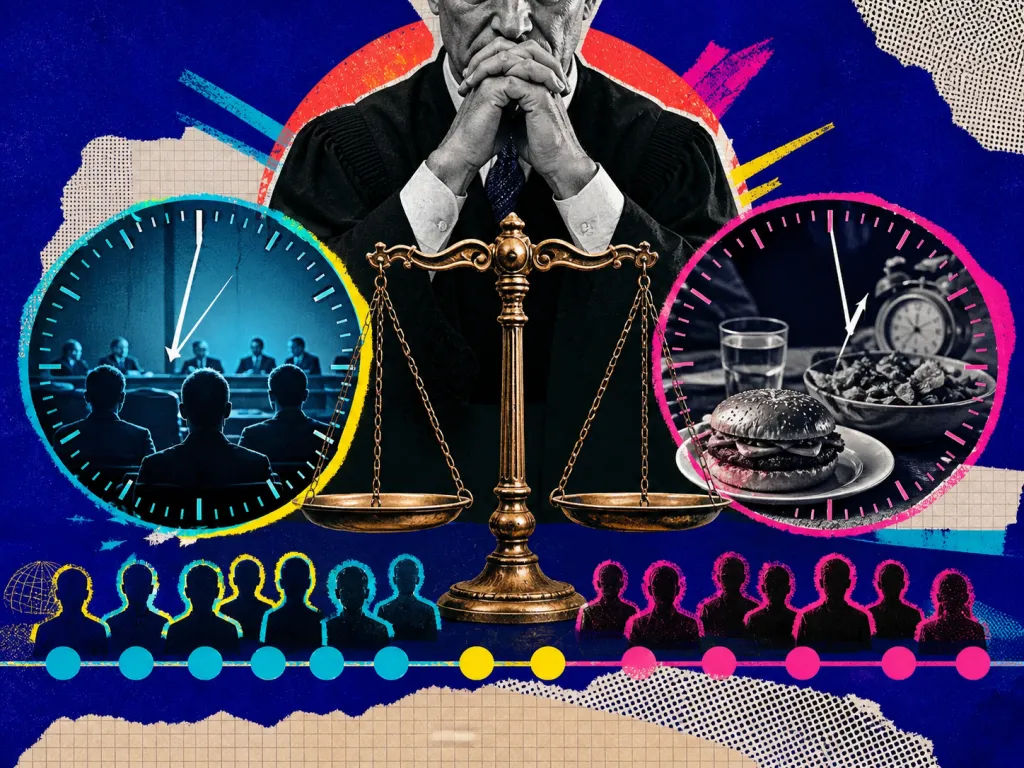
Cognitive BiasHungry Judge Effect – a famous parole-board finding with an uncertain causeHungry Judge Effect is a popular name for a debated finding from a 2011 study of parole-board decisions. Favorable decisions were more common early in decision sessions and after fRead entry
Cognitive BiasImpact Bias – when you overestimate how long or intense your emotions will bethe tendency to overestimate the intensity and duration of future emotions.Read entry
Cognitive BiasInformation Bias – when you seek information that won’t change your decisionthe tendency to seek data even when it won’t impact your choice or actions.Read entry
Cognitive BiasMere Exposure Effect – when you like something just because it’s familiarthe tendency to prefer things just because they are familiar.Read entry
Cognitive BiasMoney Illusion – when a bigger number feels like more moneythe tendency to focus on the nominal value of money rather than its actual purchasing power.Read entry
Cognitive BiasMoral Credential Effect – when doing good gives you a pass to do badthe tendency to believe that doing good earns you the right to be less moral in the future.Read entry
Cognitive BiasNon-Adaptive Choice Switching – when one bad experience makes you avoid a good choicethe tendency to avoid an optimal choice after one bad outcome.Read entry
Cognitive BiasOmission Bias – when doing nothing feels safer than making a mistakethe tendency to view harmful actions as worse than equally harmful inactions.Read entry
Cognitive BiasOptimism Bias – when you believe things will go well, even if the odds say otherwisethe tendency to underestimate negative events and overestimate positive outcomes.Read entry
Cognitive BiasOstrich Effect – when you ignore a problem, hoping it will go awaythe tendency to ignore negative information to avoid discomfort.Read entry
Cognitive BiasOutcome Bias – when you judge a decision by its result, not its qualitythe tendency to judge the quality of a decision based on its final result rather than the logic behind it.Read entry
Cognitive BiasPeltzman Effect – when feeling safe makes you take more risksthe tendency to offset increased safety by engaging in riskier behavior.Read entry
Cognitive BiasPessimism Bias – when you believe everything will go wrongthe tendency to overestimate the likelihood of negative events, especially in people prone to depression.Read entry
Cognitive BiasPlant Blindness – when you fail to notice the green world around youthe tendency to ignore plants in the environment and underestimate their importance to life on Earth.Read entry
Cognitive BiasPresent Bias – when you choose instant rewards over long-term benefitsthe tendency to overvalue short-term rewards and underestimate long-term consequences.Read entry
Cognitive BiasPrevention Bias – favoring preventive security controls over detection and responsePrevention Bias is a domain-specific label from experimental research on information-security investment. In the studied allocation task, participants favored preventive controls oRead entry
Cognitive BiasPro-Innovation Bias – when new technology seems perfect, and flaws are ignoredthe tendency to overestimate the benefits of innovations while underestimating their limitations.Read entry
Cognitive BiasProbability Matching – when you guess instead of picking the best optionthe tendency to match choices to probabilities instead of always picking the best option.Read entry
Cognitive BiasProjection Bias – when you assume your future self will want what you want nowthe tendency to overestimate how much your future self will align with your current desires.Read entry
Cognitive BiasProportionality Bias – when big events must have big causesthe tendency to assume that big events must have equally big causes, even when they don’t.Read entry
Cognitive BiasRecency Illusion – when you think something is new just because you recently noticed itthe tendency to believe something is new just because you’ve only recently become aware of it, even if it has existed for decades or centuries.Read entry
Cognitive BiasSunk Cost Effect – when past costs influence the next choiceSunk Cost Effect is the tendency for money, time, or effort that cannot be recovered to influence what you choose next, even when the future costs and benefits should be enough to Read entry
Cognitive BiasSurrogation – when a performance measure starts replacing the goalSurrogation is a management-accounting construct in which a performance measure starts to be treated as though it were the strategic objective it was meant to represent. A KPI can Read entry
Cognitive BiasSystematic Bias – a measurement and statistical concept, not one cognitive biasSystematic bias is a general measurement and statistical concept. It describes a consistent or predictable tendency for measurements, estimates, or study results to miss a referencRead entry
Cognitive BiasTeleological Bias – when you see purpose where there is nonethe tendency to assign purpose or intention to events and objects, even when they arise randomly or without deliberate design.Read entry
Cognitive BiasTurkey Illusion – when you assume stability until disaster strikesthe tendency to ignore the risk of sudden change just because the past has been smooth.Read entry
Cognitive BiasUnit Bias – when you consume everything just because it’s the ‘right’ portionthe tendency to assume a standard serving size is ideal, even when it’s not.Read entry
Cognitive BiasValue Selection Bias – choosing supplied numbers instead of constructing the Bayesian answerValue Selection Bias is a narrow reasoning pattern studied in Bayesian diagnostic problems. When participants did not derive the correct solution, their incorrect answers were stroRead entry
Cognitive BiasWeber–Fechner Law – when small differences in big numbers go unnoticedFechner Law – the difficulty in noticing small changes when dealing with large quantities.Read entry
Cognitive BiasWomen Are Wonderful Effect – when women are seen more positively than menthe tendency to associate more positive attributes with women than with men, regardless of actual behavior.Read entry

Cognitive Dissonance

Cognitive Rigidity

Confirmation Bias

Conformity Bias

Conformity BiasAssumed Similarity Bias – when you think others are more like you than they really arethe tendency to believe others share your perspectives, preferences, and values more than they actually do.Read entry
Conformity BiasAvailability Cascade – when repeating something enough makes it feel truea process where information starts feeling like fact simply because it’s repeated often enough.Read entry
Conformity BiasBandwagon Effect – when you believe or do something just because everyone else doesand now you want them too? That’s Bandwagon Effect – the tendency to follow the majority, even without good reasons.Read entry
Conformity BiasCourtesy Bias – when you hide your real opinion to avoid offending othersthe tendency to soften your opinion to avoid hurting others’ feelings.Read entry
Conformity BiasGroupshift – when groups make riskier or safer choices than individualsthe tendency for group decisions to become more extreme than individual opinions.Read entry
Conformity BiasGroupthink – when harmony matters more than the right decisionthe tendency to sacrifice critical thinking for group unity and harmony.Read entry
Conformity BiasIngroup Bias – when what’s ‘ours’ is always better than what’s ‘theirs’the tendency to reject ideas, research, and products simply because they come from outside your group.Read entry
Conformity BiasOutgroup Favoritism – when other groups seem better than your owntheir culture, their people, their values? That’s Outgroup Favoritism – the tendency for socially disadvantaged groups to favor and even prefer other communities over their own.Read entry
Conformity BiasOutgroup Homogeneity Bias – when ‘they’re all the same,’ but ‘we’re all unique’the tendency to see members of your own group as individuals, while viewing outsiders as uniform.Read entry
Conformity BiasPygmalion Effect – when others’ expectations shape your success (or failure)a psychological phenomenon where others’ expectations (positive or negative) influence your actual performance and behavior.Read entry
Conformity BiasReactance – when being told ‘no’ makes you want to do it even morea psychological response where attempts to limit your freedom trigger resistance and a desire to do the opposite.Read entry
Conformity BiasReactive Devaluation – when an idea seems bad just because of who suggested itthe tendency to dismiss proposals just because they come from an ‘undesirable’ source, even if they’re beneficial.Read entry
Conformity BiasShared Information Bias – when groups focus on what they all know, ignoring new insightsthe tendency for groups to focus on what everyone already knows instead of sharing unique insights.Read entry
Conformity BiasSocial Comparison Bias – when you favor people who aren’t a threat to your own strengthsthe tendency to favor candidates who don’t threaten your skills or status.Read entry
Conformity BiasTruth Bias – when you believe people, even when they might be lyingthe tendency to assume information is honest, even without evidence.Read entry

Decision Making

Dynamic Inconsistency

Egocentric Bias

Egocentric BiasFalse Consensus Effect – when you think everyone agrees with youthe tendency to overestimate how much others agree with you.Read entry
Egocentric BiasFalse Uniqueness Bias – when you think you’re more unique than you arethe tendency to overestimate how special you are and underestimate how many others share similar qualities.Read entry
Egocentric BiasForer (Barnum) Effect – when vague statements feel deeply personalthe tendency to believe vague descriptions are uniquely accurate for you, even though they apply to most people.Read entry
Egocentric BiasIllusion of Asymmetric Insight – when you think you understand others better than they understand youthe tendency to overestimate how well you know others while believing they don’t understand you as well.Read entry
Egocentric BiasIllusion of Control – when you think you have more influence than you dothe tendency to overestimate your ability to manage external circumstances.Read entry
Egocentric BiasIllusion of Transparency – when you think people can read your mindthe tendency to overestimate how much others perceive your mental state and how well you understand theirs.Read entry
Egocentric BiasIllusion of Validity – when you think your judgments are more accurate than they arethe tendency to overestimate the accuracy of one’s judgments, especially when data appears logically consistent.Read entry
Egocentric BiasIllusory Superiority – when you think you’re better than most peoplethe tendency to overestimate your good qualities and underestimate your flaws compared to others.Read entry
Egocentric BiasNaïve Cynicism – when you think others are more selfish than youthe tendency to assume others are biased and self-serving, while seeing yourself as objective and sincere.Read entry
Egocentric BiasNaïve Realism – when you think you see the world as it really isthe tendency to think you see reality as it truly is, while others are clouded by ignorance or irrationality.Read entry
Egocentric BiasOverconfidence Effect – when you're sure, but still wrongthe tendency to overestimate the accuracy of your knowledge and decisions, even when mistakes are likely.Read entry
Egocentric BiasPlanning Fallacy – when plans make completion times look too optimisticPlanning Fallacy is the tendency to predict that your own task or project will finish sooner than it actually does, even when similar work has taken longer before.Read entry
Egocentric BiasRestraint Bias – when you think you have more self-control than you dothe tendency to overestimate your ability to maintain self-control.Read entry
Egocentric BiasThird-Person Effect – when you think media influences others, but not youthe tendency to think mass media shapes other people’s opinions while leaving your own perception untouched.Read entry

Extension Neglect

Extension NeglectBase Rate Fallacy – when you ignore general statistics for a specific casewhen general probabilities are ignored in favor of specific cases, even when statistics provide a more accurate prediction.Read entry
Extension NeglectCompassion Fade – when one victim moves you more than a thousandthe tendency to emotionally react to personal stories while ignoring large-scale suffering.Read entry
Extension NeglectConjunction Fallacy – when a specific scenario seems more likely than a general onethe tendency to assume that a specific combination of conditions is more probable than a single condition, even though that’s statistically impossible.Read entry
Extension NeglectDuration Neglect – when the ending matters more than the experiencethe tendency to judge experiences based on their final moments rather than their overall length.Read entry
Extension NeglectInsensitivity to Sample Size – when small samples mislead youthe tendency to underestimate how much small samples can distort results.Read entry
Extension NeglectLess-Is-Better Effect – when less seems more valuablethe tendency to see a smaller set as more valuable when judged separately, but to prefer the larger set when compared directly.Read entry
Extension NeglectScope Neglect – when 2,000 and 20,000 victims feel the samethe tendency to respond emotionally rather than rationally, failing to account for the actual size of a problem.Read entry
Extension NeglectZero-Risk Bias – when eliminating a small risk feels better than reducing a big onethe tendency to feel safer when a risk is reduced to zero, even if it’s not the most rational choice.Read entry

False Priors

Framing Effect

Framing EffectContext Neglect Bias – when technology forgets about peoplethe tendency to solve technological challenges without accounting for human behavior and needs.Read entry
Framing EffectDecoy Effect – when an inferior option changes the comparison between better optionsDecoy Effect is a context effect in which adding an inferior option can increase the choice share of another option. In the classic attraction-effect setup, the decoy is clearly woRead entry
Framing EffectDefault Effect – when a pre-selected option changes what people chooseDefault Effect is the tendency for people to choose an option more often when it is already selected or happens automatically if they do nothing.Read entry
Framing EffectDenomination Effect – when small bills disappear fasterthe tendency to spend money more easily when it’s in smaller denominations.Read entry
Framing EffectDistinction Bias – when differences seem bigger than they arethe tendency to perceive differences as more significant when evaluating options side by side.Read entry
Framing EffectDomain Neglect Bias – when you ignore relevant knowledge from other fieldsthe tendency to ignore relevant knowledge from other fields when solving complex problems.Read entry
Framing EffectFraming Effect – when equivalent descriptions lead to different choicesFraming Effect is the tendency for a judgment or choice to change when the same underlying information is described in different ways. A common example is risky choice: people can Read entry

Heuristic Bias

Human-Robot Interaction

Information Bias

Logical Fallacy

Logical FallacyBerkson’s Paradox – when two things seem connected, but they aren’ta logical fallacy where an observed relationship between variables appears due to selection bias, not real causation.Read entry
Logical FallacyEscalation of Commitment – when setbacks lead to more investment in the same courseEscalation of Commitment is the pattern of continuing or increasing investment in a course of action after negative results make stopping or changing direction worth serious considRead entry
Logical FallacyGambler’s Fallacy – when you think the past changes the future oddsthe mistaken belief that past events influence future probabilities, even when each event is independent.Read entry
Logical FallacyHot-Hand Fallacy – when you think winning increases your chances of winning againthe belief that after a streak of success, your chances of continued success increase, even when events are random.Read entry
Logical FallacyPlan Continuation Bias – when you stick to the plan even when the situation has changedthe tendency to stick to an initial plan, even when the situation has changed and it no longer makes sense.Read entry
Logical FallacyTime-Saving Bias – when speed tricks your sense of timethe tendency to overestimate time saved at high speeds and underestimate time saved at low speeds.Read entry
Logical FallacyZero-Sum Bias – when you think someone’s gain is your lossthe mistaken belief that one person’s gain must come at another’s expense, even when resources can grow.Read entry

Memory Bias

Memory BiasBizarreness Effect – when weird things stick in memory better than ordinary onesthe tendency to recall unusual information more easily than common information.Read entry
Memory BiasBoundary Extension – when your memory ‘zooms out’ beyond what you actually sawthe tendency to remember the background of an image as more expansive than it really was.Read entry
Memory BiasChildhood Amnesia – why we forget our earliest yearsthe natural inability to retain memories from the first few years of life.Read entry
Memory BiasConservatism Bias – when your memory downplays extremesthe tendency to recall high values (like probability or frequency) as lower than they were and low values as higher.Read entry
Memory BiasConsistency Bias – when you believe you’ve always thought the way you do nowthe tendency to remember past beliefs and behaviors as being consistent with your current ones.Read entry
Memory BiasContext Effect – when memories depend on where and how you recall themthe tendency for memory to work better in the same environment where the information was learned.Read entry
Memory BiasContinued Influence Effect – when corrected information still shapes reasoningThe Continued Influence Effect happens when false or outdated information still affects later reasoning after a person has been told that it is wrong. A correction can help and theRead entry
Memory BiasCross-Race Effect – when faces of other races seem harder to tell apartthe tendency to have difficulty recognizing and differentiating faces of other racial or ethnic groups.Read entry
Memory BiasCryptomnesia – when you think you came up with something new, but it’s actually an old memorywhen a forgotten memory resurfaces as an original thought because you don’t recognize it as a memory.Read entry
Memory BiasEgocentric Bias – when your past seems better than it really wasthe tendency to exaggerate past achievements and downplay failures.Read entry
Memory BiasEuphoric Recall – when the past feels better than it really wasthe tendency to remember the past through rose-colored glasses while ignoring the negatives.Read entry
Memory BiasFading Affect Bias – when negative emotional intensity tends to fade fasterFading Affect Bias is an average pattern in autobiographical memory: the emotional intensity linked to negative events tends to weaken faster over time than the emotional intensityRead entry
Memory BiasFalse Memory – when you ‘remember’ something that never happenedwhen imagination, stories from others, or time create memories of events that never actually happened.Read entry
Memory BiasGender Differences in Eyewitness Memory – when you recall details better about people of your own genderthe tendency for witnesses to remember more details about individuals of the same gender.Read entry
Memory BiasGeneration Effect – when you remember things better if you created them yourselfinformation you generate yourself is remembered better than information you just hear or read.Read entry
Memory BiasGoogle Effect – when you forget what you can easily look up onlinethe tendency to forget information when you know it can be easily found online.Read entry
Memory BiasHumor Effect – when funny things stick in your memorythe tendency to remember funny things better than neutral or boring ones.Read entry
Memory BiasLag Effect – learning sticks better when spaced out over timeinformation sticks better when learning is spread out over time instead of in one go.Read entry
Memory BiasLeveling and Sharpening – when some details fade and others get exaggeratedover time, some details fade while others become exaggerated and overemphasized.Read entry
Memory BiasLevels-of-Processing Effect – how you learn determines how well you rememberthe deeper you process information, the better you remember it.Read entry
Memory BiasList-Length Effect – the longer the list, the less you recall… but the more you retainas lists grow longer, relative recall decreases, but the total number of remembered items increases.Read entry
Memory BiasMemory Inhibition – when remembering some things makes you forget otherswhen recalling certain items makes it harder to retrieve others.Read entry
Memory BiasMisinformation Effect – when false details alter your memorieswhen memory becomes less accurate due to false details added later.Read entry
Memory BiasModality Effect – you remember the last items better when you hear themspoken information is remembered differently than written, especially at the end of a list.Read entry
Memory BiasMood-Congruent Memory Bias – you remember what matches your moodwe better remember and retrieve information that matches our current emotional state.Read entry
Memory BiasNegativity Bias – when bad memories stick stronger than good onesthe brain reacts more strongly to negative experiences and stores them longer in memory.Read entry
Memory BiasNext-in-Line Effect – when you don’t remember what was said right before your turnthe tendency to forget what was just said because you’re too focused on preparing your own response.Read entry
Memory BiasPart-List Cueing Effect – when recalling one item makes others harder to rememberrecalling some items makes it harder to retrieve others from the same list.Read entry
Memory BiasPeak–End Rule – you judge experiences by their most intense moment and the endingEnd Rule – we judge experiences not by their total duration, but by their most intense moment (good or bad) and how they ended.Read entry
Memory BiasPersistence – when traumatic memories keep coming backwhen the brain forces us to relive traumatic memories even when we want to move on.Read entry
Memory BiasPicture Superiority Effect – images stick in memory better than wordsthe brain remembers visual information more effectively than text.Read entry
Memory BiasPositivity Effect – as we age, we remember more good than badas we age, our memory favors positive experiences and pushes negative ones aside.Read entry
Memory BiasPrimacy Effect – you remember the first items bestinformation presented first is remembered better than what comes later.Read entry
Memory BiasRecency Effect – the last things stick in memory bestthe most recent items or events are remembered better than those before them.Read entry
Memory BiasReminiscence Bump – your youth stands out in memorywe remember adolescence and early adulthood more clearly than any other period of life.Read entry
Memory BiasRosy Retrospection – when a past experience is remembered more positivelyRosy Retrospection is a pattern in which a past experience can be evaluated more positively in later memory than it was evaluated while it was happening. The classic studies followRead entry
Memory BiasSaying Is Believing Effect – when you start believing what you saywhen we tailor a message for others, it becomes part of our own beliefs.Read entry
Memory BiasSelf-Relevance Effect – you remember things better when they relate to youinformation connected to you is remembered better than similar details about others.Read entry
Memory BiasSerial Position Effect – you remember the first and last, but forget the middlethe first and last items in a sequence are remembered best, while the middle tends to be forgotten.Read entry
Memory BiasSocial Cryptomnesia – when you remember change but forget who fought for itwhen society recognizes that change has happened but forgets how it occurred and who made it possible.Read entry
Memory BiasSource Confusion – when you remember information but forget where it came fromthe tendency to misremember where information came from, distorting our memories.Read entry
Memory BiasStereotype Bias – memory distorts facts to fit expectationsmemory reshapes facts to fit expected patterns, even when they don’t match reality.Read entry
Memory BiasSuffix Effect – the last thing is harder to recall if something follows itthe final items in a sequence become harder to remember if extra information follows them.Read entry
Memory BiasSuggestibility – when you ‘remember’ things just because someone suggested themthe tendency to mistake others’ suggestions for real memories.Read entry
Memory BiasTelescoping Effect – recent events feel distant, and distant ones feel recentthe tendency to shift events in time, making recent ones feel distant and distant ones feel recent.Read entry
Memory BiasTesting Effect – self-testing beats passive repetitionmemory improves when you actively recall information instead of just passively reviewing it.Read entry
Memory BiasThe Perky Effect – when reality blends with imaginationwhen real images or experiences influence imagined ones, making it hard to distinguish fantasy from reality.Read entry
Memory BiasTip of the Tongue Phenomenon – when you know a word but just can’t recall itwhen you partially recall something but can’t fully retrieve it.Read entry
Memory BiasVerbatim Effect – you remember the gist, not the exact wordsour brain stores the general meaning of messages rather than their precise wording.Read entry
Memory BiasVon Restorff Effect – the odd one out is easiest to rememberour brain remembers what stands out the most.Read entry
Memory BiasZeigarnik Effect – unfinished tasks stay on your mindthe brain remembers incomplete or interrupted tasks better than completed ones.Read entry

Metacognitive Bias

Perception Bias

Probability Bias

Prospect Theory

Prospect TheoryAmbiguity Effect – when you avoid the unknown, even if it might be betterthe tendency to avoid options where the probability of success is unknown, even if they could be better.Read entry
Prospect TheoryDisposition Effect – when you sell winners but cling to losersthe tendency to cash in on winners too early and hold onto losers for too long.Read entry
Prospect TheoryDread Aversion – when fearing the worst is worse than the event itselfthe tendency to experience fear of an unpleasant event much more intensely than the pleasure of anticipating a good one.Read entry
Prospect TheoryEndowment Effect – when what’s yours feels more valuablethe tendency to overvalue things just because you own them.Read entry
Prospect TheoryLoss Aversion – when a loss can carry more weight than an equivalent gainLoss Aversion is the idea that, relative to a reference point, a loss can receive more subjective weight than an equivalent gain. It is an important part of prospect theory, but itRead entry
Prospect TheoryPseudocertainty Effect – when you avoid risk in gains but chase it in lossesthe tendency to be cautious when things are good but take risks when things go bad.Read entry
Prospect TheoryStatus Quo Bias – when the current option gets extra weight because it is already in placeStatus Quo Bias is a tendency to favour the current option more than we would if the same options were presented without one already being in place.Read entry
Prospect TheorySystem Justification – when you defend the system, even if it harms youthe tendency to defend the status quo, even when it’s unfair or personally harmful.Read entry

Self-Assessment

Self-Assessment Bias

Self-Perception Bias

Social Bias

Truth Judgment