Third-Person Effect – when you think media influences others, but not you
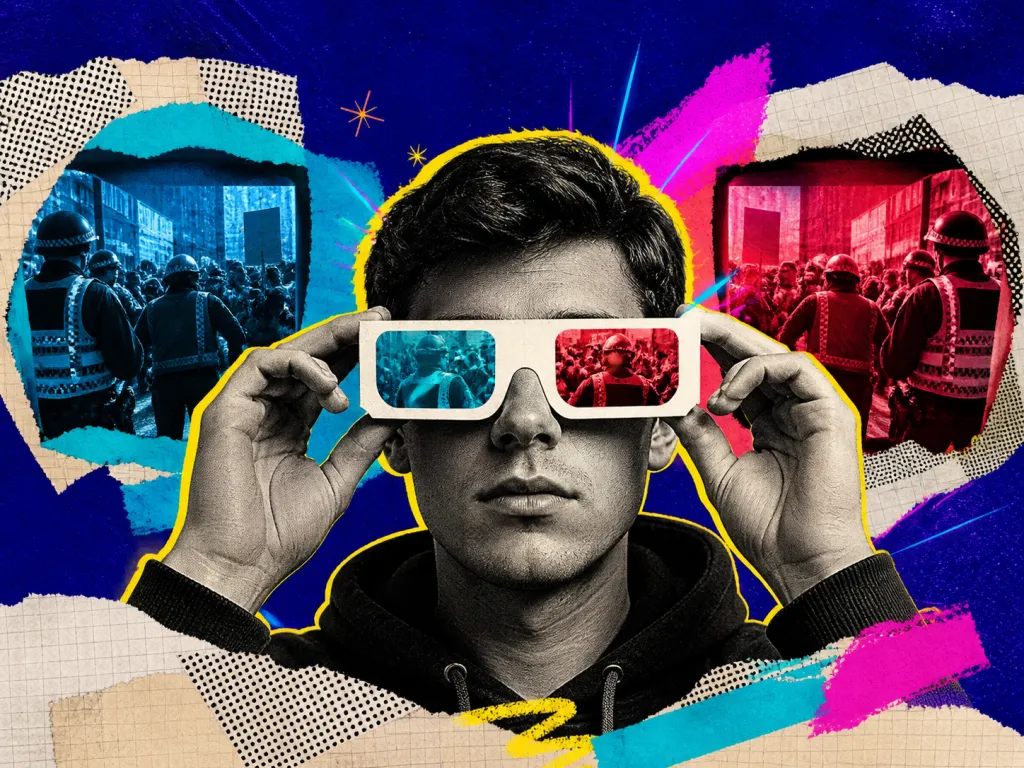
Do you believe that advertising, propaganda, or news influence others, but not you? That’s Third-Person Effect – the tendency to think mass media shapes other people’s opinions while leaving your own perception untouched.

Examples and situations
- Advertising – you think ads manipulate ‘ordinary people,’ but you still choose brands you’ve seen more often.
- News – you assume propaganda affects the masses, but your views are also shaped by the media you consume.
- Social media – you’re sure algorithms mislead others, yet don’t realize how they reinforce your own biases.
Questions to check
- Acknowledge that you’re also influenced – no one is completely immune to media effects.
- Be mindful of your choices – why do you prefer one brand over another? Is it really your decision?
- Check your sources and filters – algorithms and media influence everyone, including you.
Long-form guide
“Not Me, But Them”: The Quiet Power of the Third-Person Effect
A friend sends you an article “debunking” coffee. You roll your eyes. You’re too savvy to be swayed by that kind of clickbait. But you worry about your uncle seeing it on Facebook. He’ll probably throw out his beans, buy a detox kit, and preach about inflammation at Thanksgiving. You’re sure you’re immune—others, not so much.
On this page
What Is the Third-Person Effect and Why It Matters
That story captures the Third-Person Effect: the belief that media influences other people more than it influences you. The Third-Person Effect lives in two parts: Perception: We think messages—ads, news, posts—affect others more than ourselves (Davison, 1983); Behavior: Because we think others are swayed, we support actions to steer or control media (Perloff, 1999). It shows up in politics, public health, advertising, and your group chats. It feels reasonable—“I know how to spot nonsense; not everyone does”—but it quietly distorts judgment. It can make us underestimate our own susceptibility, overestimate risk to “them,” and overcorrect in ways that backfire.
Why it matters: It blinds you to influence. If you assume you’re immune, you won’t set guardrails where you actually need them; It strains relationships. Positioning yourself as the “rational one” and others as dupes can sour conversations; It can fuel censorship. People who feel others are easily misled often support controlling messages “for their own good” (Perloff, 1999); It hides growth opportunities. If a campaign worked on you, you might attribute your change to reason—but if it worked on them, you call it manipulation. You don’t have to distrust all media. The fix isn’t paranoia. It’s humility, measurement, and habits that keep your head clear.
1) The Group Chat and the “Ridiculous” Headline
Let’s roam through places the Third-Person Effect quietly runs the show. A coworker drops a sensational screenshot: “Bananas linked to memory loss!” You snort. Obviously clickbait. You comment, “People will fall for anything.” Two days later, you realize you ate fewer bananas. Not because you believed the article—but because the claim stuck in your head. A small nudge changed your behavior without your consent.
That’s the Third-Person Effect. You spotted the trick—sort of. But knowing a headline is manipulative doesn’t mean it has zero influence. Salience alone can prime action. “I’m immune” is a pleasant story; your grocery cart tells a different one.
3) Health Misinformation—And Your Parents
You swear you skip political ads on YouTube. But a month later you find yourself repeating one of their slogans. You can’t place where you got it. You say, “Well, it’s common sense.” Maybe it is. Or maybe the ad laundered the idea into your mental vocabulary. When asked about ad effects, people say, “It won’t change my vote, but others will be fooled.” Yet small shifts in issue salience, candidate warmth, or perceived norms matter in close elections (Perloff, 1999).
You’re worried about your parents getting swamped by false health posts. You send them fact checks. You roll your eyes at their feed. But in your own circles, you share wellness tips without checking sources. They sound reasonable. They feel aligned with your identity—sleep, supplements, gut health, longevity. You assume you’re discerning. But your parents probably think the same about their sources. In both directions, Third-Person Effect fuels a superior stance and a false sense of immunity.
5) Workplace Communications
In a bull run, you tell yourself you’re only making rational moves. Other people are buying because of hype. You’re different. Then you notice that hype-laden threads made you “research” a coin you’d never heard of. You still call your decision rational, but your interest had a seed: exposure. You’re not uniquely immune to the exposure effect. You just narrate it differently.
A company announces a reorg. You read the internal memo and think, “I’m taking this calmly; others will overreact.” Then you see your Slack scroll time and your calendar fill with “quick chats.” You’re not panicking. You’re “processing.” It’s easier to see others’ bias than your own. That’s the bias blind spot stacking on top of Third-Person Effect (Pronin et al., 2002).
7) The “Harmless” Product Placement
Polls show people favor content restrictions when they believe harmful media will sway “the public,” even if they personally feel unaffected (Perloff, 1999). That belief shapes policy. Sometimes guardrails help. Sometimes they overreach. The lever isn’t “the truth”; it’s your perception of others’ vulnerability. You see your favorite actor drinking a particular seltzer in a show.
You think, “Nice ad. Won’t get me.” The next time you’re at the store, you grab that brand. Not because you “believed” anything, but because it’s familiar. Familiar feels safe. You’d attribute your choice to “taste,” not placement. Meanwhile, you judge others as brand zombies.
9) Academic Articles and “That’s for Undergrads”
People often say, “I’m not affected by violent games, but other players are.” The evidence on behavior is mixed and nuanced, and effects vary across individuals and contexts. But the Third-Person Effect shapes which studies people amplify and what rules they push for. Perception of others’ susceptibility drives action more than clear data.
Professors sometimes assign paper-writing heuristics to undergraduates while insisting they personally don’t need checklists. “Students fall for confirmation bias, not me.” Yet high-level research teams still use formal protocols and preregistration to protect themselves from subtle influences. The belief in personal immunity is a risk signal.
Start With a Mirror, Not a Megaphone
Reading this, you might think, “I get it; I’m not as biased as most readers.” That’s the trap waving from the doorway. The Third-Person Effect is a shape-shifter. It even appears while learning about itself. Here’s the playbook we actually use. Simple, concrete, and humbling by design. Before you worry about others being misled, ask: “Where would this influence show up in me if it did?” Look for:
Micro-behavior changes: search terms, brands you check, accounts you follow, stories you repeat; Shifts in baseline feelings: more annoyed by a group? warmer toward a cause? slightly more cynical or hopeful?; Attention residue: can’t stop thinking about an issue you usually ignore?. If you notice any of those, you’ve been nudged. Not totally controlled, just nudged.
Separate Signal From Style
When the stakes matter—votes, health decisions, major purchases—write a quick “pre-plan” before exposure: What evidence would change my mind?; What will I count as noise?; Who are my trusted sources, and why?. It’s easier to stay anchored when you set the anchor yourself. Every message has content and surface. Style hacks the brain: music, montage, repetition, faces, outrage, novelty. Take 30 seconds to rewrite the core claim in plain words, no flair. Then judge that sentence.
Example: Ad: “Real families choose Brand X for quality time.”; Plain: “Brand X claims using their product increases family connection.”. Now you can test that claim like an adult, not a heartbeat and a soundtrack.
Shrink the Time Window
If you repeat a line, attach a source. If you can’t, label it speculation. This small habit breaks the illusion that your beliefs arrived fully formed from your own reason. Tracing the lineage of ideas blunts Third-Person Effect by making influence visible. The more you assume you’re immune “in general,” the easier it is to miss short-term effects. Bring the window down:
“In the last 48 hours, what messages did I see more than twice?”; “Did I change a choice, add a tab, or save an item because of those?”. Short windows catch the fish while they’re still flopping.
Build a Private Audit
Expose yourself to opposing frames on the same topic with a 1:1 ratio for one week. Notice which frame “sticks” in your inner voice. Then do a quiet debrief: Which frame did I recall first without notes?; Which frame gave me phrases I started using?; Which frame made me more emotionally aroused?. If one side lives rent-free in your head, that’s influence—friend or foe.
Make a simple “influence ledger” in your notes app: Topic; Message; Source; First seen; Felt effect (1–5); Action taken (if any). This turns invisible nudges into a visible trail. It’s tedious for a week, and then you can’t unsee it. You’ll also get more compassionate about other people’s trails.
Use Structural Defenses
Casual scripts you can use: “I’m probably picking up slogans; give me a day to check sources.”; “I want your take, but I need to separate the soundtrack from the claim.”; “I like this idea. I’ve also seen five posts selling it. Let me cool off.”. These lines lower the social cost of humility. They also invite others to lower theirs.
Slow paths: Read instead of watch when you want to evaluate claims. Video hits fast-twitch circuits; Staggered decisions: No same-day big purchases after seeing ads; Private drafting: Write your view before reading the comments; Friction toggles: Install an extension that hides view counts and like numbers. Influence loves speed and status. Reduce both. That’s it. Not heroic—just honest.
Related or Confusable Ideas
Third-Person Effect travels with friends and impostors. Quick map: Bias Blind Spot: We see others’ biases more easily than our own (Pronin et al., 2002). Third-Person Effect is one expression of that blind spot focused on media influence. Optimism Bias: “Bad stuff won’t happen to me.” Different domain, similar “I’m special” flavor. Third-Person is about influence, not fate. Illusion of Unique Invulnerability: We think we’re less susceptible to risks than others. Third-Person is that, with messages instead of accidents.
False Consensus Effect: We overestimate how many people share our beliefs (Ross et al., 1977). Often the inverse dance happens alongside Third-Person: “People think like me, but they’re still easily swayed by bad media.”. Hostile Media Effect: Partisans perceive neutral news as biased against their side (Vallone, Ross, Lepper, 1985). Combined with Third-Person, it becomes: “The media is biased against us and will brainwash them.”. Availability Heuristic: Vivid examples feel more likely. If you can easily recall someone misled by media, you’ll overestimate others’ susceptibility and push for heavy-handed fixes.
Dunning–Kruger: People with low skill overestimate ability. Not the same, but sometimes folks who lack media literacy think they’re immune. Confidence is not comprehension. When you notice any of these, check for Third-Person assumptions lurking nearby. Stick that in your notes app. Use it three times this week. You’ll feel your footing get steadier.
Wrap-Up: Mercy for Ourselves, Respect for Reality
Most of us are decent, smart people. That’s why the Third-Person Effect stings a bit: it points out a place where our self-respect and the facts part ways. We want to believe we’re immune. We’re not. But we’re not puppets, either. We’re teachable. We can choose a slower path for big decisions. We can turn down the soundtrack and read the script. We can tend our attention the way we tend our sleep—on purpose, with routines that work.
If you try one thing from this guide, let it be this: when you catch yourself thinking “People will fall for this—but not me,” add, “And I might be nudged, too.” Then act as if that’s true. Put a day between you and the decision. Ask for a receipt. Log the influence. You’ll still enjoy your shows and scroll your feeds. You’ll just trade a little speed for a lot of clarity. We’ll see you in the next nudge.
Decision checklist
- Write the claim in your own words without style
- Note your immediate emotion (1 word)
- Name the intended audience (who’s “meant” to be swayed?)
- Predict the nudge (what small change might this cause?)
- Log any behavior change in 48 hours
- Say out loud: “This can affect me.” Then act as if it can
- Strip style: write the claim plainly
- Spot the hook: emotion, novelty, outrage, identity, repetition
- Predict the nudge: how might this shift my next tiny action?
- Pre-commit: what evidence would move me? when will I decide?
- Pair sources: add one credible alternative view
- Add friction: wait 24 hours for big choices or shares