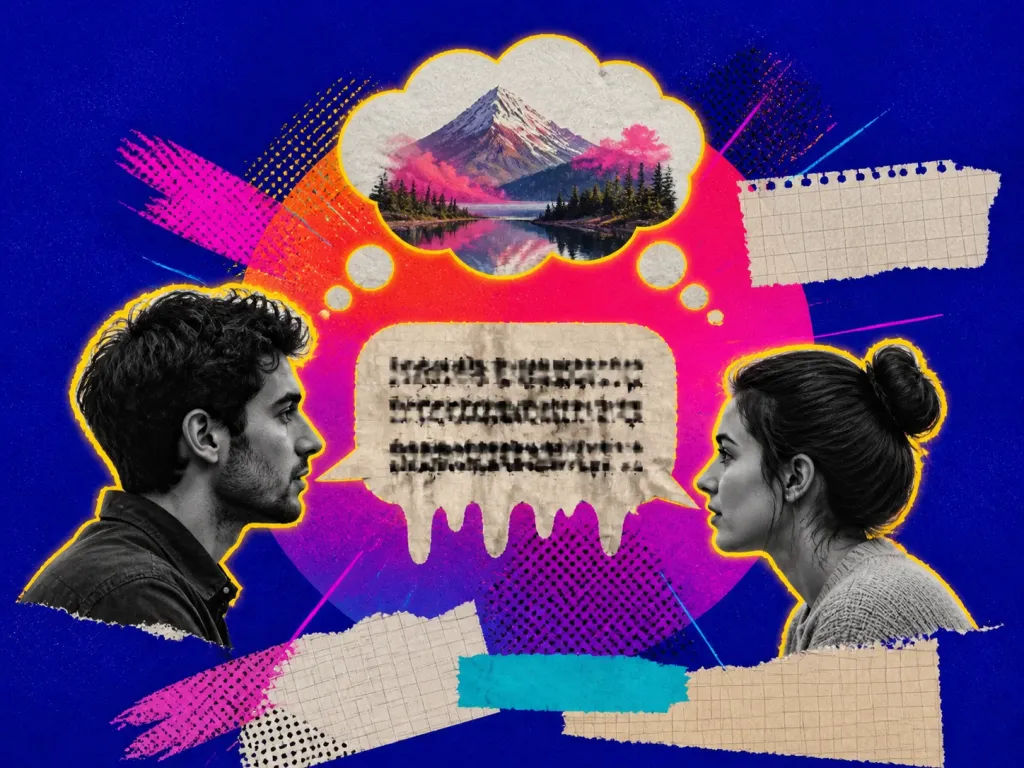
False Memory – when you ‘remember’ something that never happened
Are you sure you’ve been to a place as a child, but your parents insist you never were? That’s False Memory – when imagination, stories from others, or time create memories of events that never actually happened.
Examples and situations
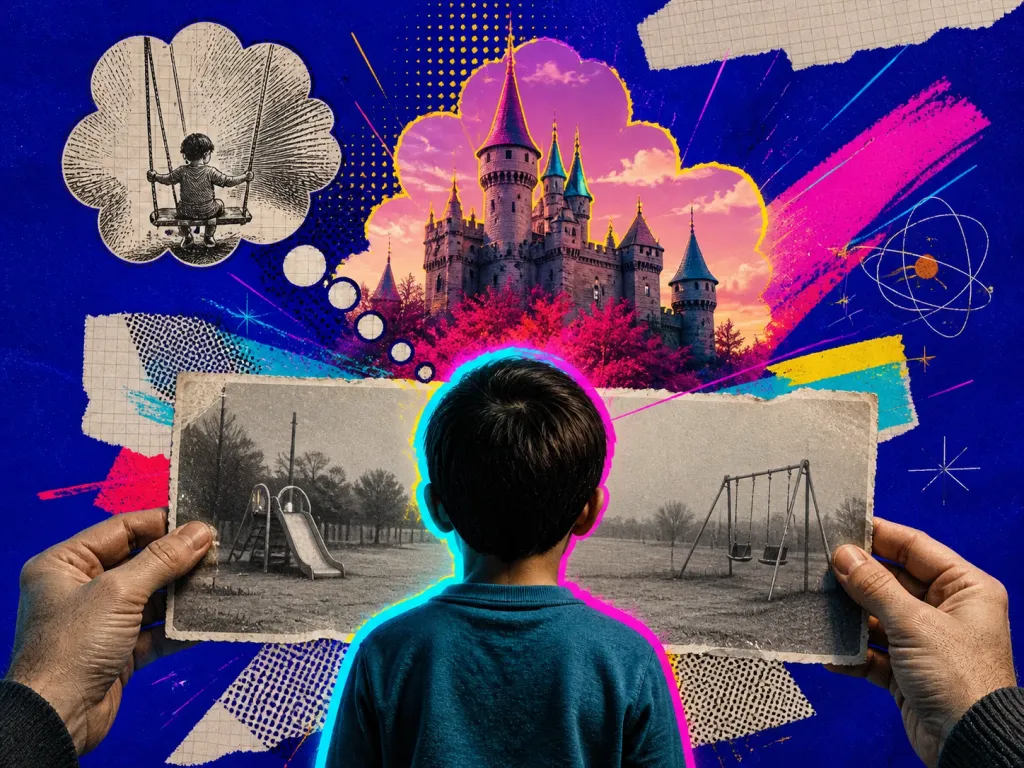
- Childhood memories – vivid childhood scenes may be brain-constructed based on stories rather than real experiences.
- Eyewitness testimony – people genuinely believe they saw something that never happened, especially under leading questions or suggestion.
- Personal stories – over time, details shift, and you may recall events differently than they actually occurred.
Questions to check
- Be cautious with confidence – just because a memory feels real doesn’t mean it is.
- Verify facts – if an event is important, check for proof (photos, diaries, eyewitness accounts).
- Understand how memory works – the brain constantly edits memories, filling in gaps with assumptions.
Long-form guide
The Memory That Wasn’t: Why Our Brains Sometimes Invent Yesterday
You’re at dinner with your brother, laughing about the time you both got locked out of the cabin and had to climb in through the bathroom window. You can feel the cold wood under your palms as you slid along the ledge; you remember the bruised knee; you remember the flashlight between your teeth. Your brother grins—then says, “That was me and Dad. You were at camp that week.”
On this page
What Is False Memory and Why It Matters
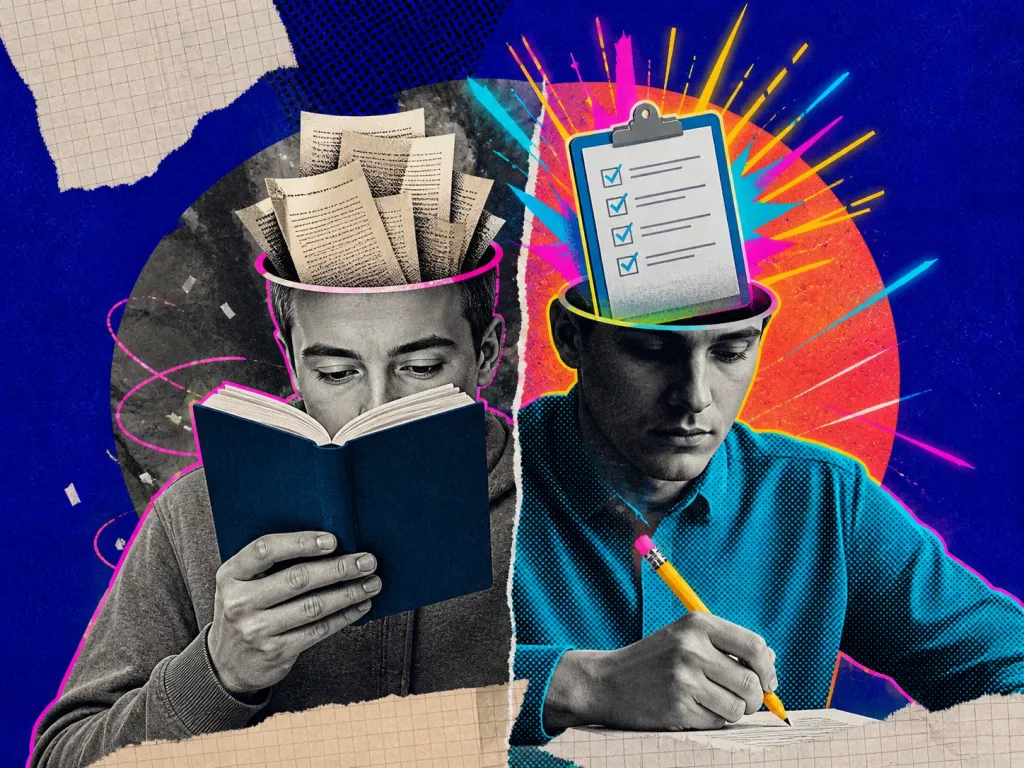
You freeze. The image in your head is vivid and wide-screen. It’s also not true. False memory is when your brain confidently “remembers” something that never happened—or happened differently than you recall. False memories aren’t simple lies or dramatized stories. They’re honest recalls that feel right in your bones—and still miss the truth. Memory is not a hard drive. It’s a living, reconstructive process. Every time you remember, your brain rebuilds the scene from scraps: the gist, the emotions, what usually happens in situations like that, what others later said, and what makes the story feel coherent now. The rebuild is fast and effortless; the result feels whole. That’s the trap.
Psychologists have spent decades showing how flexible recall can be. Ask a witness, “How fast were the cars going when they smashed?” and you’ll get higher speed estimates than if you ask, “When they contacted?” The verb nudges the brain’s reconstruction (Loftus, 2005). Present people with lists like bed, rest, awake, dream, snooze and many will later swear “sleep” was on the list. It wasn’t. Their brain inferred it from the pattern (Roediger & McDermott, 1995). Show people a doctored image of themselves on a hot air balloon and some then “remember” the ride—including the wind and the fear (Wade et al., 2002). Suggestion and imagination both shape memory.
Why it matters isn’t academic. False memories can: Strain relationships when you argue over who said what and when; Corrupt decisions at work if you “remember” a customer asked for Feature X, when the recording says they begged for Y; Sway legal judgments; eyewitness confidence is not a reliable indicator of accuracy (Loftus, 2005); Fill your head with shame for mistakes you didn’t make—or false credit for wins you didn’t earn; Nudge medical choices if you remember your last adverse reaction incorrectly. This isn’t about distrusting everything you recall. It’s about adding gentle friction and a few habits so the memories that guide your choices get honest backup.
How Our Brains Build False Memories
A few moving parts fuel the phenomenon: Reconstruction over replay: Our brains store fragments—the gist, the mood, the highlights—and make up the rest on recall. This saves energy and usually works; Schemas and scripts: You know the pattern of a “status meeting” or a “first date.” When memory is spotty, the brain fills gaps with what usually fits the pattern; Source confusion: You remember the fact, but misremember where it came from. Was it your colleague who said the deadline moved, or the Slack rumor mill? Misplaced sources feel true because the fact itself is familiar; Imagination inflation: Asking someone to imagine an event (e.
g., getting lost in a mall as a child) can make them more likely to “remember” it happened (Garry & Gerrie, 2005); Suggestibility: Leading questions, confident narrators, vivid photos, and social pressure can all tilt recall; Emotion and salience: Strong feelings sharpen parts of memory and distort others. You’ll remember the betrayal clearly and the timeline poorly; Sleep and consolidation: Sleep strengthens some traces and weakens others. It can increase the “gist” of memory over the exact wording. Helpful most of the time; risky when precision matters. Knowing these doesn’t make you immune. It makes you more deliberate about the moments that count.
The Family Legend That Grew
We learn fastest from stories, especially the ones that could be ours. Here are scenes we’ve seen, lived, or bumped into—each with a twist. At a family barbecue, Lena told the story of “The Great Snowbank Rescue,” how she dug her little brother out after he dove headfirst into a drift. She described the mitten with the bite mark and the way his cheeks looked like tomatoes. Her mother gently interrupted: “That was your cousin.” The mitten existed. The drift existed. Lena was there, laughing and holding a shovel. But she was not the rescuer. Over the years, retelling the story made her role bigger. It wasn’t a lie. It was ownership by degrees.
What helped: They pulled out the old Polaroids. The mitten appeared on cousin Max’s hand. The photo didn’t erase Lena’s memory, but it loosened its grip. The family now adds a playful rule to stories: one photo or one outside witness backs the starring role.
The Slack Thread Switch
You “remember” your manager approving a risky experiment in a late-night Slack thread. You remember the reaction: thumbs-up emoji. Weeks later, the experiment backfires. Your manager asks who approved it. You scroll. The thread is real—but the thumbs-up belongs to a teammate. The manager only wrote, “Let’s discuss tomorrow.” Why it happened: You discussed the idea in multiple channels (Slack, Zoom, hallway), and your brain fused them into one thread. That thumbs-up was vivid; it latched onto the wrong message in memory.
What helped: We started a “Decision Log” channel with one message format: Decision, Owner, Approver, Timestamp, Link to context. No thread archaeology. No memory heroics. When something is risky or expensive, it graduates to the log.
The Dune Buggy That Didn’t Exist
As a kid, you swear you rode a dune buggy on a beach with your uncle. The smell of fuel, the sticky cotton candy—practically a movie. Then your mother says: your uncle never visited that summer. You watched a VHS tape of an older cousin doing it, then spent a week pretending you had too. You told the story at recess, complete with hand motions. By high school, it was your memory. Why it matters: Early childhood memories are especially malleable. Imagination plus social feedback can plant deep roots. No blame; just design your present with the knowledge.
A witness at a robbery trial confidently identified the wrong person. Security footage later exonerated the accused. The witness wasn’t lying. He was swayed by a suggestive lineup and by seeing the suspect’s photo in the news before the lineup. Familiarity felt like truth (Loftus, 2005). What to learn: Confidence is not accuracy. Systems and procedures need to compensate: double-blind lineups, neutral instructions, no repeated exposures.
The Retro Bug Fix
In a postmortem, an engineer claimed she’d suggested rate limiting in last quarter’s design review. She recalled the slide, the discussion, the nods around the table. The recording showed she did propose a related logging change. Rate limiting was suggested by someone else in a follow-up email.
Her brain merged a near-miss idea with a later, successful fix. The story felt clean; the truth was messy. What helped: The team made review agendas and recordings searchable, then normalized the phrase, “Let’s check the tape.” Not to punish, but to refine. It feels less personal when the habit is universal.
The Group Chat Mirage
You remember your partner promising to handle the dog’s medicine every morning. Your partner remembers agreeing only to handle evenings. Both of you are sure. The fight isn’t about pills; it’s about feeling let down. After twenty minutes of heat, you check the shared notes app. There’s a half-finished checklist: your initials on morning tasks, theirs on evening tasks, created after the appointment. The sigh of relief is silent but real. The tension drops. Not about blame—about coordination. Lesson: Memory is fragile under stress. Shared artifacts protect love.
Your friend later claims you joked about his layoff in the group chat. He “saw” it, he says. You check: nothing. Turns out, two of you swapped sarcastic comments about your own burnout. He read it in a rush, saw his name mentioned earlier in the thread, and stitched his story from there. You both cringe. You send a voice note apology anyway: “I’m sorry that landed as cruel. That wasn’t the intent.” And you adopt a new norm: tag people explicitly in sensitive messages. Slower, kinder, fewer shrapnel memories.
Recognize and Avoid False Memories
Half your team thinks the logo used to have tiny cat ears in the negative space. It never did. But someone mocked up an April Fool’s variant two years ago, and it sneaks into people’s minds as the “classic” look. Familiarity plus a fun story creates a memory home for details that never existed.
What helped: A style guide with a “hall of almosts”—near-miss designs that never shipped—so future memories don’t turn into debates. You won’t purge false memories. You can catch them earlier, rely on them less, and design your life so truth doesn’t depend on perfect recall.
First, Listen for Clues in Your Own Recall
Pay attention to the texture of the memory, not just the content. Vividness without anchors: You see the room clearly but can’t place the day, the weather, or who else was there. That’s not proof of falsehood, but it’s a flag; Narrative neatness: If the memory wraps perfectly, with clean motives and tidy timing, be suspicious. Real life keeps frayed edges; Borrowed details: If your memory contains facts you usually learn from others (calendar invites you didn’t read, messages you skimmed), consider a source mix-up; Confidence spikes: If you feel a sudden surge of certainty after reading someone else’s account, check for suggestion. That feeling might be theirs, not yours.
When these show up, switch from storyteller to investigator. Gently. In moments with cost—money, reputation, relationships—pause for verification. Cross-check one artifact: search your calendar, messages, notes, or photo roll; Ask a neutral question: “My memory is fuzzy—what do you recall?” Avoid leading phrases like “Remember when you promised…?”; Timebox the check: give yourself five minutes to find evidence. If none appears, downgrade your confidence; Capture fresh context: write a few bullet points now about what you decide, not to win future fights but to help Future You avoid guessing.
Design Your Environment So Truth Is on the Surface
Memory does better when it partners with external scaffolding. Decision ledger: For any decision above a certain risk, record who decided, what, why, and the time. We use a channel and a running doc. Make it searchable; Write-first meetings: Have folks jot decisions and next steps before adjourning. Read them aloud. Small cost, big clarity;
Shared task lists: If two people both think the other took the morning meds task, the dog suffers. Shared checkboxes fix it; Version control rituals: Use meaningful commit messages. Link issues. When a bug returns, you won’t rely on “I swear we fixed that in May.” Memory “breadcrumbs”: Snap a photo of the whiteboard. Forward the calendar invite to yourself with notes. Take a 60-second voice memo on the walk from the meeting.
Build a Culture That Honors Correction
Leading questions plant false details. Neutral, open questions let truth breathe. Instead of “You said the 15th, right?” try “What date did we land on?”; Instead of “Did you see the red car run the light?” try “What did you see at the intersection?”; For your own recall, swap “I remember X, right?” with “What’s the earliest point I’m certain of?” Then build outward. If you must propose a detail, label it clearly as a guess: “I might be misremembering, but I think…”
False memories shrink when it’s safe to be wrong. Normalize “Let’s check.” Not as a gotcha, but as hygiene; Praise corrections. If someone updates their account after seeing evidence, thank them. Don’t punish honesty; Keep a standing “we misremembered” section in postmortems with small, blameless examples. It inoculates the group. Keep it light. You’re not cross-examining yourself. You’re just adding guardrails where cliffs hide.
Confabulation: False Memory
People often mix false memory with other mental glitches. Untangling them helps you respond better. Lying is intentional. False memory is honest error. People can be passionately wrong without being deceitful. Treating honest misrecall as moral failure makes everyone defensive and less accurate.
Confabulation happens when the brain fills memory gaps with invented details, often in neurological conditions or after brain injury. It’s not the same as everyday false memory, though the mechanism—filling in gaps to make a story—echoes. If you see frequent, confident, impossible accounts in someone who’s unwell, seek medical advice.
Source Amnesia and Misattribution
After outcomes, everything seems obvious. “We knew the feature would flop.” In truth, you didn’t. Hindsight bias rewrites your pre-event uncertainty as post-event certainty. It creates false memories of your past opinions. The fix: timestamp predictions. Keep a simple prediction log. You notice and remember details that support what you already believe. Over time, your memory of events skews toward your worldview. This doesn’t create whole fabricated events, but it edits reality to fit your stance. Counter by actively collecting disconfirming facts.
You recall a fact but not where it came from. You might attribute a quote to the wrong person or think a rumor was a direct report. It’s a close cousin of false memory and often the specific mechanism that makes a false memory feel true.
Déjà Vu and Jamais Vu
Simply imagining an event increases your confidence that it happened (Garry & Gerrie, 2005). Role plays, thought experiments, and vividly telling a hypothetical can later seed “memories.” Label imaginative exercises as such. Keep a border fence. Groups remember the same wrong detail (e.g., a logo, a movie line). Shared culture, repeated jokes, and edited images spread and stabilize the mistaken memory. Social proof makes error feel like truth. Fix it with artifacts: official style guides, original footage.
Déjà vu is the eerie feeling you’ve lived a moment before. Jamais vu is the opposite: familiar things feel strange. Neither is false memory, but they can distort your confidence in recall. Treat them as signals to slow down before making big claims.
1) Decide What Deserves Evidence
You recall an idea but forget its source, then believe it’s original. It’s how accidental plagiarism happens. Prevent it by noting sources when you collect ideas, and by searching before shipping. We can’t rebuild our brains, but we can change the context they work in. Here’s a simple approach we use and recommend. Not everything needs a paper trail. But define a few categories that do: big decisions, money moves, legal commitments, health choices, safety protocols. For these, pick a home (doc, channel, app) and a basic format.
Decision: what did we decide, and what are we not doing?; Why: a sentence or two; Who: owner and approver; When: timestamp; Links: to the thread, the PR, the calendar invite. This reduces memory muscle in the places it’s most dangerous.
3) Give Yourself Anchors
Before people stand up, ask: “What did we decide? Who owns what? Any deadlines?” Type it where everyone can see. Read it aloud. You’ll catch errors that would have become future false memories. Your phone already collects anchors: photos, location pings, messages. Use them as truth triggers.
After big moments, snap one photo of something boring but date-stamped: the whiteboard, the door, your desk; Forward key emails to a “Decisions” label. Add one sentence at the top; Use recurring calendar notes on tricky routines (meds, bills, chores) and check them off. It’s for Future You.
5) Create Rituals That Close Loops
Replace “Remember when you promised?” with “What did we agree?” Swap “You said” with “My notes say.” When giving your recollection, label it: “My memory is that X. Could be wrong.” It keeps the room calm and invites evidence. False memory thrives in ambiguity. After a negotiation, write a one-paragraph summary email. Ask the other side to confirm. You’ll catch phantom terms; After a medical appointment, write a two-sentence treatment plan in your notes. Ask the doctor/nurse to glance and approve before you leave; After family plans are made, put them on a shared calendar with a short description. No “But you said Thanksgiving was at ours!”.
Make it cheap to be wrong. Praise “I checked and I was off.”; In documents, add a small “Revisions” section at the top; In chats, accept edits gracefully. “Thanks for catching that—I mixed up Tuesday and Thursday.”. When your identity isn’t glued to being right, your brain can update without a fight.
Wrap-Up: Memory With a Seatbelt
Here’s the quietly heavy truth: sometimes the scenes that make you who you are—your hero moment, your worst regret—aren’t as accurate as they feel. That doesn’t erase their meaning. It invites you to handle them with care. You can love your stories and still practice humility. You can stay warm and stay accurate. You can ask, “What did we decide?” before you spend the budget. You can text, “I might remember this wrong—can we check?” before the argument peaks. You can keep a tiny log instead of a perfect memory.
We’re building a Cognitive Biases app because these problems hit us daily: we remembered a customer’s words wrong; we argued over who promised what; we spent hours on a phantom requirement. The app won’t give you a new brain. It will give you better rails—gentle prompts, tiny logs, and well-timed questions—so your brain doesn’t have to be perfect to lead a good life.
You don’t have to mistrust yourself. You just have to back yourself up. If you only do three: decision log, meeting read-backs, and neutral questions. These three alone will save you hours of misremembered pain.
Decision checklist
- Is this memory about something costly? (If yes, verify.)
- Can I cite one artifact that supports it? (Calendar, message, doc.)
- Do I know the source of each key detail? (Who said what? Where did I see it?)
- Am I mixing channels? (Hallway, Slack, email, meeting.)
- Does the story feel too clean? (Add skepticism.)
- Have I asked at least one neutral witness? (If available.)
- Did I write anything down at the time? (If not, downgrade confidence.)
- Define your evidence zones: decisions, money, legal, health, safety
- Use a simple decision log with who/what/why/when/links
- End meetings with a 2-minute read-back of decisions and owners
- Capture one artifact per high-stakes choice (photo, message, note)
- Ask neutral questions: “What did we agree?” not “You said…”