
Misinformation Effect – when false details alter your memories
Do you swear you saw something at an event, even though it wasn’t there? That’s Misinformation Effect – when memory becomes less accurate due to false details added later.
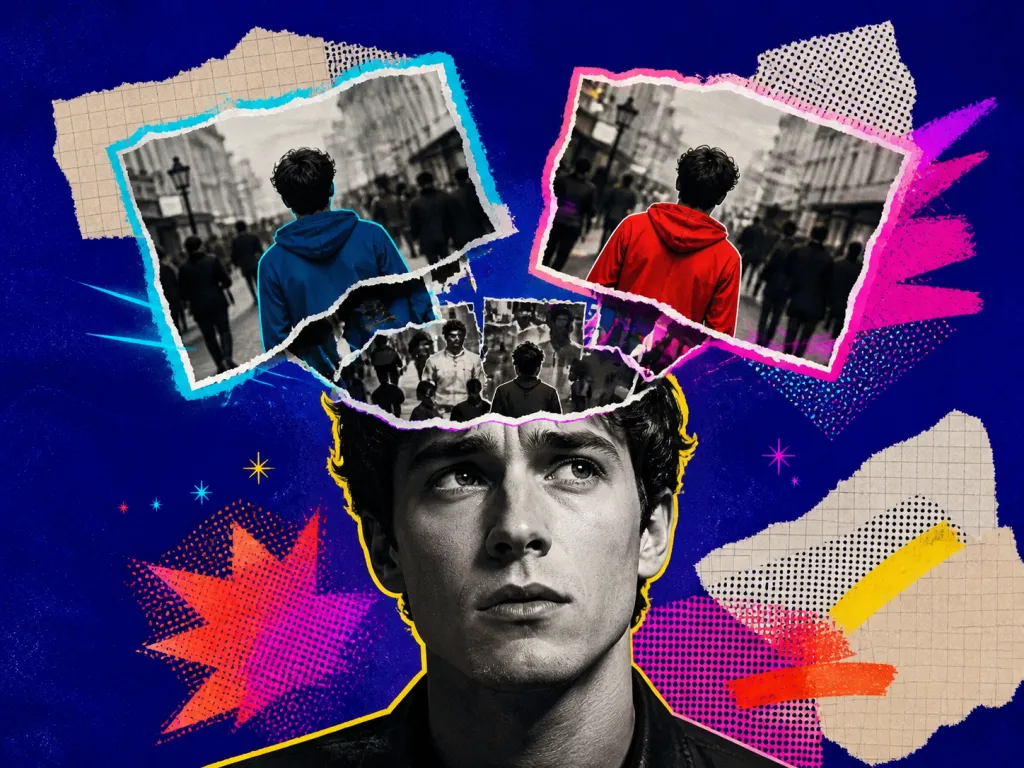
Examples and situations
- Eyewitness testimony – if someone says the suspect wore a red jacket, you might ‘remember’ it that way, even if it was blue.
- Historical events – movies, books, and discussions can ‘rewrite’ how you recall real events.
- Personal memories – friends’ stories might change how you remember your own experiences.
Questions to check
- Write down key events immediately – this helps preserve them accurately.
- Be cautious with repeated stories – the more you hear something, the more likely you’ll ‘remember’ it.
- Double-check sources – if something feels unclear, verify the facts.
Long-form guide
Your Memory Doesn’t Play Back; It Remixes — The Misinformation Effect in the Wild
When I was ten, my cousin told me we saw a whale breach on a ferry ride. He described it so vividly—spray like glitter, the ferry horn, our mom’s gasp—that I believed him. Years later, I bragged to a marine biologist at a dinner party. He asked what month. “August,” I said. He smiled. Our ferry route doesn’t get whales in August. I called my mom. “Honey,” she said, gentle as a correction can be, “we saw a log.”
On this page
What is the Misinformation Effect and Why It Matters
That sting? That’s the misinformation effect—when new, misleading details sneak into your memory and change what you believe you experienced. The misinformation effect is when post-event information—suggestions, questions, captions, headlines, confident voices—alters your memory of the original event. Memory isn’t a hard drive. It’s a reconstruction party. Every time you recall, you remodel. If someone slips in a “helpful” tile—a word, an image, a gesture—your brain’s contractor might install it like it always belonged. That’s not a bug. That’s how memory stays flexible and useful. But flexibility cuts both ways.
We’ve known this for a while. In a classic study, people watched a car crash and then answered, “How fast were the cars going when they smashed/hit/contacted?” The verb changed their answers. People who heard “smashed” gave higher speeds and later “remembered” broken glass that wasn’t there (Loftus & Palmer, 1974). Another line of research shows that when we retrieve a memory, it becomes briefly unstable and ripe for editing before it “reconsolidates” (Nader et al., 2000). Source monitoring—figuring out where a detail came from—is noisy too, so we mix up internal images with outside inputs (Johnson et al., 1993).
So what? Because these soft edges shape hard consequences: In justice, eyewitness confidence convinces juries, but confidence doesn’t equal accuracy. Post-event feedback, news coverage, and lineups can sculpt false certainty (Wells & Bradfield, 1998); In healthcare, patients misremember dosage instructions after stressful visits. Doctors misremember the exact phrasing they used when a complaint arrives; In teams, a postmortem’s “root cause” drifts after Slack threads, screenshots, and leader summaries prime the story; In relationships, a partner’s retelling overwrites your quiet details. You both feel gaslit, even without intent; In journalism and social media, fast corrections rarely erase the first impression. Headlines and comments seed durable pseudo-memories (Frenda et al., 2013). The misinformation effect is not about gullibility. It is about normal memory doing normal memory things under abnormal pressure.
The Stop Sign That Wasn’t
These are true-to-life examples and research-backed vignettes. See if any feel familiar. Participants watched a slideshow: a car at a stop sign turns right and hits a pedestrian. Later, half read a sentence that mentioned a yield sign. On a test, many “remembered” the yield sign.
The post-event detail hijacked the earlier memory (Loftus, Miller, & Burns, 1978). Signs are big. Minds are bigger. Picture the real world: You drive home past construction. Your partner asks, “Was the detour where the yield sign is?” You pause. Yes, probably. A week later, you’d swear it.
Social Media During a Crisis
At a reunion, Uncle Ben retells the “monster trout” story from the 2003 camping trip. You were there. You remember a small fish, a big smile. Ben adds color: the fight, the near-snap of the line, your triumphant whoop. Everyone laughs. A year later, you “remember” the rod bending like a bow. You tell your friend. You add your own salt, because who wants to be a liar at a campfire? Not you. Not your memory.
During a bombing investigation, social media pointed fingers at innocent people. One name trended. Users posted side-by-side photos: gait, backpack strap, circled pixels, a narrative that clicked. The rumor spread, the press echoed, and a feedback loop formed. Even after corrections, some people “remembered” seeing proof that never existed. That mashup—vibes plus commentary plus collage—moved into the memory room and hung itself on a nail.
The Clinic Visit
Your team holds a Friday meeting about a customer outage. No decision; you agree to regroup Monday. Over the weekend, a senior manager posts in Slack: “Let’s move forward with Option B; we were leaning there on Friday.” By Tuesday, people talk as if Friday settled it. Notes blur, emotions settle, a public statement implies consensus. The Monday you can no longer recall your hesitation; the group’s memory tilts to the new norm.
You’re nervous and tired. The doctor explains your medication—take with food, not before bed, watch for dizziness. A week later, your partner asks, “Did the doctor say it’s safe to drive?” You think they did. They didn’t. Stress clamps your memory. Post-visit summaries help, but many clinics still rely on verbal instructions, which are fertile ground for drift.
The Photo That Never Happened
People swear they remember where they were during shocking events: a first kiss, an attack, a moon landing, a championship. Those “flashbulb” memories feel vivid and certain, but longitudinal studies show they mutate—even as confidence stays high (Talarico & Rubin, 2003). Details we discuss afterward—news footage, conversations—blend into the original memory. Your mind glues in the documentary cutaway.
Show someone a doctored image of them at a childhood theme park; give them time and suggestive questions, and some will grow a memory of that trip (or at least a sense of “familiarity”) (Wade et al., 2002). Now think about filters, deepfakes, and the casual power of “throwback Thursday” captions. If pictures speak a thousand words, we forget to ask who wrote them.
The Debate You Didn’t Watch
In a clever experiment, people chose a face they found more attractive. The experimenter then performed a sleight-of-hand and presented the non-chosen face, asking why they picked it. Many didn’t notice the switch and explained their “choice” in detail (Johansson et al., 2005). Our storytelling machinery backfills reasons quickly and convincingly. That same machinery is easy to feed with stray bits of misinformation.
You miss a political debate. You wake to a feed saying, “Candidate X destroyed it!” You skim hot takes, clips, graphic overlays. The next day, someone asks, “Wasn’t it wild when the moderator cut off the healthcare answer?” You nod. You “remember” tone, facial expressions, a zinger. You weren’t there. Your mind assembled a plausible scene from shards and confidence. These aren’t edge cases. They’re Tuesday.
Notice the Situations that Prime Drift
You can’t stop all misinformation. But you can build habits that reduce contamination and keep you honest with yourself and others. High emotion or stress. Adrenaline bookmarks the moment but rarely records the details. Your memory will lean on post-event narratives to fill gaps; Time gaps and retellings. Every replay edits.
Every telling invites suggestions; Authority and group consensus. Confident voices loan your memory scaffolding; the structure becomes “yours.” Leading questions. “How fast were the cars going when they smashed?” stacks the deck; Visuals and captions. Photos and headlines feel like evidence, even when they’re guesses. When you feel these breezes, plant your feet.
Defenses You Can Actually Use
Capture. Label. Separate. Verify. That’s the simple spine. Here’s how to make it work quickly. Freeze the frame. Within minutes of something important, write a short, timestamped note: what you perceived (saw, heard, felt), what you inferred, what you don’t know. Even three sentences beats a foggy recall next week; Tag your sources. When adding a detail later, mark where it came from: “From Alex’s text, not my memory.” You’ll thank yourself when stories merge; Ask neutral questions. When you interview or debrief, use neutral verbs and open prompts. “What did you notice?” is cleaner than “How fast did it smash?”
Separate recall from review. Let people record their memories independently before sharing photos or reading news. Merge after; Use consistent language. Teams: agree on terms early. Name events and objects clearly so later labels don’t drift; Prefer primary sources. Trace a claim to an original document, video, or person. Screenshots of screenshots rot fast; Let corrections travel as far as the mistake. If you shared a flawed story, post an update where you posted the original. Include specifics; Delay confident conclusions. Write “working memory; subject to change” when you’re not sure. It sounds humble; it is accurate.
For Teams: Postmortems Without Retcons
Write solo accounts first. Each teammate quickly writes a narrative of what they did/observed. Only then share logs; Freeze logs. Export system logs, chats, and alerts. Label them with times; avoid editing messages post hoc; Ask neutral prompts. “What happened?” beats “Why did we fail?” in round one;
Distinguish data from inference in your doc. Use brackets or a label: [data], [interpretation], [hypothesis]; Record changes to the story. Keep an appendix of updates with timestamps; Run a “misinformation audit” at the end: What did we believe at T+10 that turned out false? Where did it come from?.
For Personal Media Diets: Minimize Contamination
Swap monologues. Each partner tells the story separately first. Then compare; Say “I remember” and “I might be wrong” in the same breath. Hold the door open; Don’t cross-examine. Ask neutral questions; reflect back (“Here’s what I heard”); When new info arrives (a text thread, a calendar entry), narrate the update, not your righteousness. Read the thing, not the take about the thing; Don’t watch analysis clips before raw footage; they pre-hinge your interpretation; Save material to read later; scarcity (“Must read now!”) engineers suggestibility; Use a “quarantine folder” for uncertain claims. Revisit in 24–48 hours with fresh eyes.
Record the plan. Ask your clinician to write down the medication name, dose, timing, and cautions. Take a photo of the instructions; Use teach-back. Say the plan back to the provider: “So I take 5 mg at night with food, right?” Corrections happen here; Bring a second brain. A friend can listen while you ask; Update the record immediately with any questions; use patient portal messages as a paper trail.
Related or Confusable Ideas
We reach for nearby labels when memory gets weird. A few neighbors: False memories: Memories for events or details that didn’t occur. The misinformation effect is one pathway to false memories, but not the only one. Internal associations can also spawn them (the DRM paradigm: hearing “bed, rest, awake” leads people to “remember” “sleep”); Source monitoring errors: Misattributing where a memory came from—your mind’s voice, a photo, a friend. This is the engine under a lot of misinformation effect (Johnson et al., 1993); Confabulation: Confidently producing invented memories without intent to deceive, often seen in certain neurological conditions. Everyday confabulation happens too (“I mailed that letter”), but clinical confabulation is more severe; Illusory truth effect: Repeating a claim makes it feel more true. This primes the misinformation effect by making later insertions feel familiar (and thus right); Confirmation bias: Favoring info that fits your beliefs.
It becomes the bouncer at the memory club, letting in details that vibe with your worldview; Hindsight bias: After you know the outcome, it feels like you “knew it all along.” That compresses uncertainty out of your earlier memory; Flashbulb memories: Vivid, emotional event memories that feel crisp but aren’t necessarily accurate over time (Talarico & Rubin, 2003); Choice blindness: Not noticing a swap in what you chose, then justifying it anyway (Johansson et al., 2005). Different mechanism; same storytelling superpower; Mandela effect: Collective false memories (like a movie line misquoted by millions). It’s a catchy name for pattern-driven misremembering, not a separate cognitive process; Memory conformity: After discussing an event in groups, people’s memories converge, sometimes away from the truth. That’s the social version of the misinformation effect. You don’t need a taxonomy test to defend yourself. It helps to know the shape of the beast stalking your headspace.
Wrap-Up: Guard the Past to Free the Future
Your memory tells you who you are. It whispers, “You were brave,” “You didn’t forget,” “They were unfair,” “You were loved.” Those whispers steer what you try next, who you apologize to, what risks you take. When sneaky details creep in, the whisper changes. Maybe not by much. But enough to bend a future line. None of us live in a lab.
We live in group chats, breaking news, crowded ERs, family dinners. The misinformation effect gets its shots there, not under a microscope. We can take some of them back. Freeze moments fast. Ask kinder, cleaner questions. Tag your sources. Carry your uncertainty proudly like a compass, not a flaw. Help others keep their stories intact. Correct yourself where you made the mess.
Decision checklist
- Immediately jot down what you saw/heard, in your own words, with a timestamp
- Identify uncertainty explicitly: what you didn’t see or couldn’t tell
- Note your emotional state; it colors recall
- Avoid discussing details with others until you’ve recorded your own memory
- Save or photograph primary evidence (receipts, messages, screenshots)
- When you later add a detail, mark its source (memory vs. message vs. photo)
- On retelling, preserve your uncertainties; don’t round them off
- If a new claim contradicts your note, investigate before updating; keep both versions
- Write a timestamped, first-person note immediately: what you perceived, what you inferred, what you don’t know
- Label any later additions with their source: memory, message, photo, log, other person
- Ask and answer neutral, open questions first; ban leading verbs until the facts breathe
- Collect primary sources before group discussion; share only after independent notes