False Uniqueness Bias – when you think you’re more unique than you are
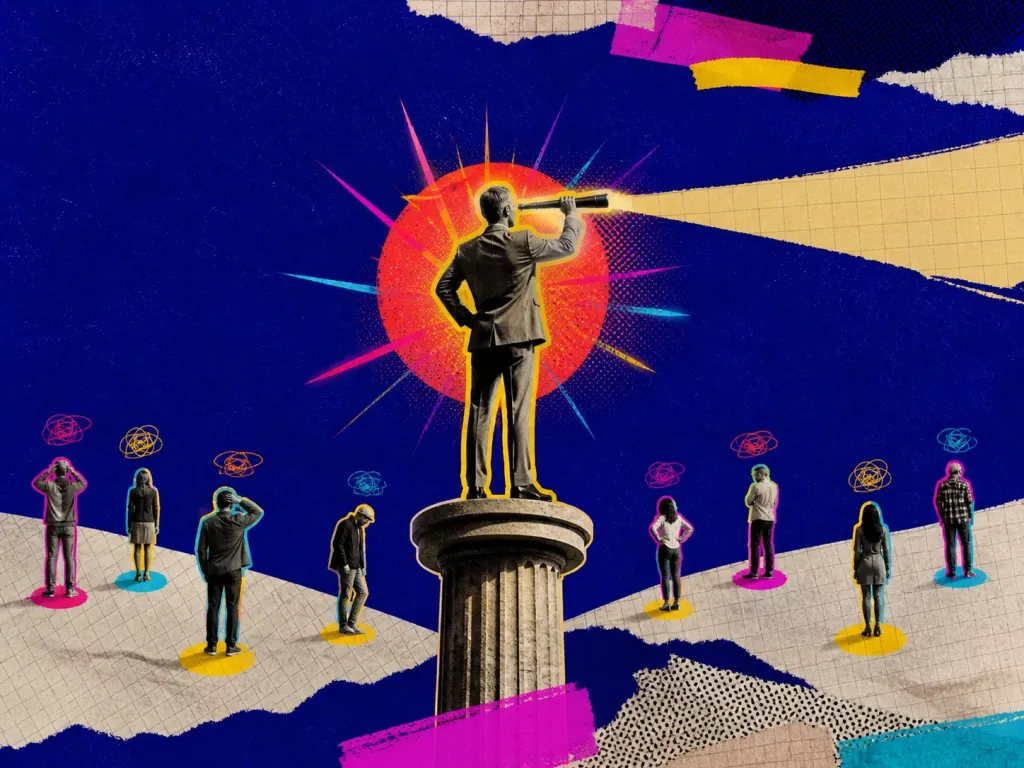
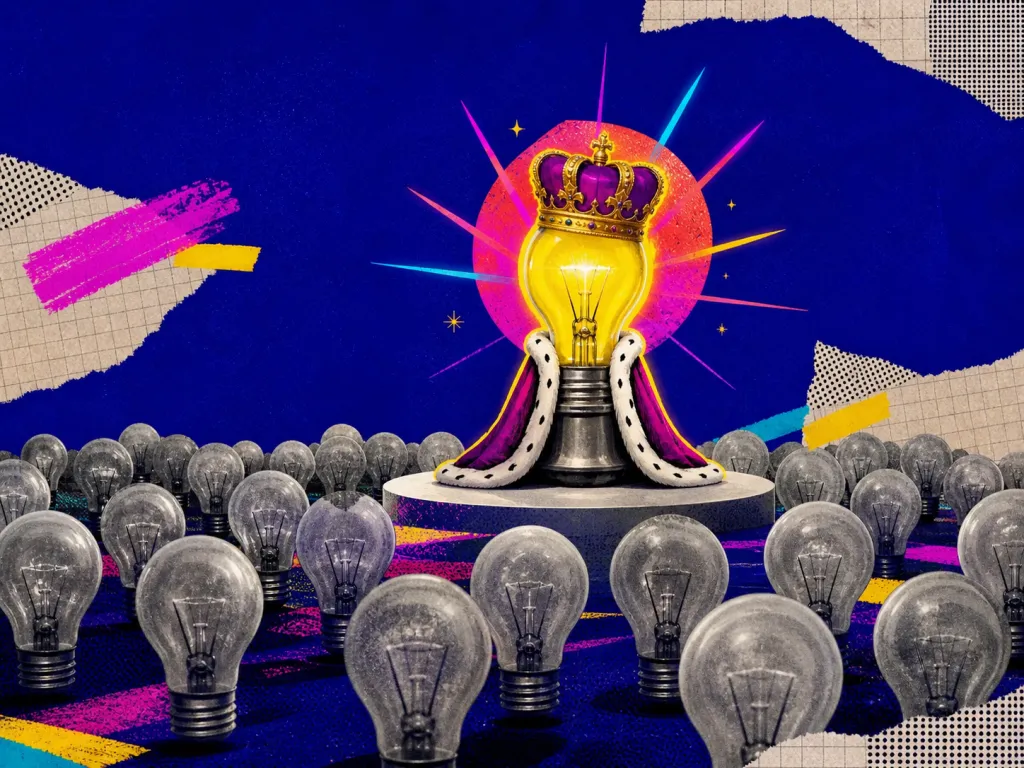
Do you believe your ideas, talents, or projects are one of a kind, while others are just average? That’s False Uniqueness Bias – the tendency to overestimate how special you are and underestimate how many others share similar qualities.
Examples and situations
- Work – you’re convinced no one else can handle tasks as well as you do.
- Creativity – you think your idea is groundbreaking, only to discover someone has already done something similar.
- Social skills – you assume your values and perspectives are rare, even though many people share them.
Questions to check
- Check how truly unique your idea is – it might already exist in another form.
- Acknowledge that others are competent too – being good doesn’t mean others are bad.
- Use others’ achievements as inspiration, not a threat – uniqueness often comes from refining existing ideas.
Long-form guide
The Myth of Being the Only One: False Uniqueness Bias and How It Tricks Builders, Creatives, and, frankly, all of us
You’re at a dim café with a notebook that already has four pages torn out. You’ve sketched a product idea that feels like a first spark on dry timber. It’s personal. It’s not like those other things out there. You whisper to yourself: I’m onto something nobody else sees.
On this page
What is False Uniqueness Bias and why does it matter?
Then someone at the next table says a sentence that sounds alarmingly close to your idea. You pretend you didn’t hear it. You press harder on the pen. You list the reasons yours is different. You convince yourself you are an exception. You get protective and precious. You decide it’s uniquely yours—and that uniqueness becomes part of the idea’s identity. That’s the moment False Uniqueness Bias slips in and starts steering the wheel. One-sentence definition: False Uniqueness Bias is our tendency to believe our desirable traits, ideas, and behaviors are rarer than they actually are.
False Uniqueness Bias makes us feel like our good qualities and smart ideas are less common than they really are. If you’re generous, you might think most people aren’t. If you have a clever solution, you’ll assume few others have thought of it. In life, this bias can safeguard self-esteem. In work—especially creative or entrepreneurial work—it can tax time, money, and trust. Researchers have studied this for decades. People downplay how many others share their positive behaviors (Suls, Wan, & Sanders, 1988). Meanwhile, we often believe undesirable habits are common elsewhere and rare in us (Alicke, 1985). We see our virtues as scarce resources we carry alone. That framing comforts the ego, but it distorts the terrain.
Why it matters: It blinds you to base rates. You’ll miss how many teams are solving similar problems; It weakens strategy. You design around novelty instead of usefulness; It isolates you. You stop listening because you think there’s nothing to hear; It sets you up for “We were first!” heartbreak when the market shrugs; It makes collaboration harder. If you’re “the unique one,” feedback feels like dilution, not refinement. The cost isn’t just money. It’s momentum. It’s also joy. When you anchor identity to uniqueness, you’ll cling to difference over impact. Let’s go step by step and keep what matters: the spark, grounded in reality.
1) The generous founder who thinks customers don’t care
We’ve tried to keep these concrete. No morality plays. Just how people stumble—and recover. A founder tells us, “We’re the only tool that respects user privacy.” We ask them to name five other products that say exactly that on their landing pages. They find seven within an hour. Turns out privacy is a shared value.
The uniqueness isn’t the value—it’s the execution: a no-nonsense data deletion flow and clear defaults. They doubled down on those. Result: fewer words, more proof. The message became stronger, not less special. False Uniqueness trap: Assuming a value is uncommon because it feels personally important. What changed: Measured, then shipped where it counts.
3) The artist in the city basement
An engineer sketches a feature: “Auto-generate documentation from code comments.” Sounds novel in the room. A fifteen-minute scan shows open-source tools doing 70% of it. We proceed anyway—but our angle shifts: integrate with the specific stack, add real-time diffs, and a simple “Docs drift” alert. False Uniqueness trap: Mistaking novelty in your circle for novelty in the world. What changed: Leaned into what others missed, not the illusion we were alone.
A painter believes her mix of folk motifs and glitch textures is singular. She resists exhibitions because she fears “copycats.” Her friend drags her to a group show: ten artists exploring parallel forms. She isn’t crushed. She’s relieved. She stops hiding. Sales follow. False Uniqueness trap: Hoarding your work because uniqueness feels weaponized. What changed: Exposure reframed common ground as community, not threat.
5) “Our culture is special”
A local group pitched “family-friendly coworking.” They claimed nobody had done it. A quick check: dozens of similar outfits, some within driving distance. We didn’t kill the idea. We narrowed. They focused on after-school hours, homework coaches, and reliable transportation partners. The “unique” piece became the logistics, not the label. False Uniqueness trap: Letting a catchy phrase substitute for a hard wedge. What changed: Shift from category brag to operational edge.
A team swore they were the only ones doing “no meetings Wednesdays.” A survey across three peer companies showed variants of the same practice. They kept it but stopped treating it like a moat. They invested in something rarer: a “request for silence” policy—two hours a day where Slack threads auto-snooze unless critical. Productivity jumped. False Uniqueness trap: Confusing a popular practice for a sacred artifact. What changed: Protecting the hard-to-copy system, not the slogan.
How to recognize it in the wild (and in yourself)
You switch from architecture to data science and feel like an outlier. LinkedIn search reveals thousands with the same arc. That’s not bad news. It’s a talent pipeline. You stop pitching your uniqueness and showcase your domain taste: “I model space use in public buildings.” Suddenly, your work clicks with facilities teams. False Uniqueness trap: Selling your biography as a product. What changed: Selling specific value, not an origin story. False Uniqueness isn’t a villain. It’s just loud. It loves mirrors and hates baseline checks. What does it sound like? Try these field tests.
You say “nobody” or “everyone” with confidence and zero data; You treat value alignment (“we care about X”) as differentiation; You avoid searching because you fear you’ll “jinx” the idea; You interpret similar efforts as threats instead of signals of demand; You postpone user conversations until “the idea is ready.”; You rely on “people don’t think like us” as a shield against pushback. That’s awareness. Now we need tools. We promised practical, so here’s a small kit you can use this week.
The 30-minute Uniqueness Audit
Try this when you feel a surge of “we’re the only ones.” 1. Write the claim. One sentence: “We are the only X that does Y for Z.” 2. Translate to search queries. List five possible ways someone else would describe it. Include synonyms and worse phrasing. 3. Look for cousins. Not just direct clones—adjacent angles in the same problem space. 4. Check revealed preferences. What do buyers actually choose today? What are they hacking together? 5. Identify the wedge. If similarity exists, what part is hard to copy? Price? Speed? Integration? Relationship? Craft?
You’re not asking “Are we original?” You’re asking “Where is our traction likely to come from?” Use this when you’re about to plan, pitch, or publish. Print that. Tape it inside your laptop. We did.
Creative Playbook: Protect the flame, not the myth
Share early with taste-aligned peers. Not everyone, not the timeline. Pick three people you trust to spot pattern and craft; Do a motif inventory. List your recurring shapes, melodies, color pairings. Search for each motif in a gallery, playlist, or lens. You will find kin. Let it expand your samples; Name your constraints on purpose.
“I only use two instruments,” “I paint in 4x4,” “I write with zero adverbs.” Constraints surface voice better than novelty claims; Separate output from lineage. Put your influences on the wall. It won’t make you derivative. It makes you honest and faster; Measure resonance, not originality. Notice where people lean in, hum later, or ask for a print. That’s your gravity.
Product/Engineering Playbook: Ship your wedge
Start with the boring baseline. What is the simplest version that solves the job? Good onboarding, clear data model, stable sync; Make your wedge legible. If you’re faster, show a timer. If you’re cheaper, show the math. If your taste is the edge, show opinionated defaults; Instrument everything. Track time-to-value, error recovery, frequency of “aha” actions.
Users don’t care how unique. They care how soon it works; Do comparison as a service. Build importers or compatibility layers. If competitors exist, ease switching. Your uniqueness becomes frictionless adoption; Test in the wild. Give it to a hostile environment for a week. Ask: “Where did it break and why?” That’s where your wedge needs armor.
Personal/Career Playbook: Be findable for something real
Replace “unique blend” with “useful specialty.” “I build low-latency data pipelines for games” beats “I connect creative and analytical.” Collect proofs. Case studies, before/after screenshots, performance graphs. Show, don’t claim; Publish small, real artifacts. Tiny libraries, short walkthroughs, a clear gist. The internet rewards work you can run, not bios;
Name your market. Who loses sleep over what you fix? How do they describe their pain? Use their words. It’s not selling out. It’s tuning in; Keep a “commonness map.” Track how many people you meet with similar skills. If it’s many, good: collaborate, cross-refer, niche down one click.
Related or confusable concepts: a quick map through the fog
False Consensus Effect: Thinking others share your opinions and behaviors more than they do (Ross, Greene, & House, 1977). That’s about beliefs feeling popular. False Uniqueness is about virtues and good ideas feeling rare. You can have both: “Everyone thinks like me, but few act as well as I do.”. Better-Than-Average Effect: We rate ourselves above average on desirable traits (Alicke, 1985). Overlap: we also think those traits are rare in others. Distinction: better-than-average is ranking; false uniqueness is frequency. Dunning–Kruger Effect: People with low skill overestimate their competence (Kruger & Dunning, 1999). Different focus: miscalibrated skill vs. miscalibrated commonness. But layered together, you get a dangerous cocktail: “I’m uniquely great at this thing I barely understand.”.
Pluralistic Ignorance: Everyone privately disagrees but thinks others agree (Prentice & Miller, 1993). In groups, this leads to silence spirals. With false uniqueness, you might think your ethical stance is uncommon, when many share it but stay quiet. Spotlight Effect: Overestimating how much others notice you (Gilovich, Medvec, & Savitsky, 2000). Related through ego. When you believe you’re uniquely visible, you also misread how unique your actions are. Optimal Distinctiveness Theory: People seek a balance between fitting in and standing out (Brewer, 1991). This is the healthy version: enough uniqueness to feel you, enough similarity to belong. False uniqueness breaks the balance by pushing you too far into “I’m unlike.”. These aren’t academic detours. They’re useful labels. If you name the beast, you can leash it.
Step 2: Map the landscape
Let’s talk danger: overcorrecting. The point isn’t to flatten your work into bland consensus. It’s to aim uniqueness where it matters: quality, speed, taste, care. Here’s a more granular workflow we use when our own alarms go off. No “only,” “unique,” “unprecedented,” “revolutionary.” Just the job and outcome. Bad: “The only analytics platform that gives real-time insights.”; Good: “See key events within 2 seconds so you can fix issues before users feel them.”.
If you can’t make it compelling without the uniqueness crutch, your wedge isn’t legible yet. 10-minute search bursts with a timer: product reviews, GitHub repos, Reddit threads, conference talks; One phone call with a buyer, not a friend. Ask what they tried and why it didn’t stick; One call with a competitor’s customer service, just to hear their language. You’re not gathering ammo. You’re building a mental map.
Step 4: Share results and decide
Pick one: Speed test: Put your product side-by-side. Click same flow. Stopwatch it; Clarity test: Draft onboarding copy. Ask a stranger to use it. See where they pause; Integration test: Plug into a popular tool. How many steps? How many errors?; Taste test: Show two versions. One safe, one opinionated. Which gets “keep that”?. The wedge that moves a metric is real. Keep it. Cut the rest.
If the wedge wins: Great. Make it your headline and build around it; If it’s a tie: Drop uniqueness claims and compete on reliability and support; If you lose: Either niche down or pivot. Don’t keep repeating “we’re unique” to drown out the data. This is not a straightjacket. It’s armor for the heart of your work. Bias shows up in language and posture. Listen. You describe your work with metaphors that obscure the real job; You get angry when someone finds a similar product instead of curious; You chase novel features over fixing obvious friction; You hoard progress for fear of being “scooped.”; You keep saying “they don’t get it” instead of “we didn’t show it.”. When you catch these, don’t punish yourself. Smile. You’re human. Then do the audit.
Micro-experiments to run this month
Pick two. Calendar them. 1. The “Boring Elevator” pitch: No adjectives, no claims. One sentence about the job. Try it on five strangers. If they ask follow-ups, you have clarity. 2. The “Copy Mine” dare: Publish a template, a snippet, or a playbook so someone could copy your surface. See if your results suffer. They usually don’t. Execution is sticky. 3. The “Three Similar” rule: Before starting a new project, find three similar ones and list their gaps. Your task becomes gap-filling, not ego-soothing. 4.
The “Taste Line” experiment: Design two versions: one conventional, one your taste. Ship both to small cohorts. Measure retention after one week. Taste can be your wedge—but only if it holds. 5. The “Unicorn Tax” budget: In your planning doc, add a line item called “uniqueness tax”—time spent on novel parts. Cap it at 20% until you have traction metrics. 6. The “Ask the Competitor” move: Reach out to someone adjacent. Ask what they wish they had time to do. You’ll find collaboration opportunities. Scarcity thinking evaporates.
Research notes you can trust without drowning in them
People see their positive behaviors as rare and their negative behaviors as common in others (Suls, Wan, & Sanders, 1988); We systematically rate ourselves above average on many dimensions (Alicke, 1985), which pairs neatly with thinking our good qualities are scarce;
We overestimate how many people agree with our views (Ross, Greene, & House, 1977)—the cousin bias you’ll often find in the same room; Low performers tend to overestimate their relative skill (Kruger & Dunning, 1999). False uniqueness can amplify that overconfidence. You don’t need to memorize citations. What matters is the habit: base rates first, wedges second, craft always.
Stories from the studio: times we caught ourselves
We promised real talk. Here are two. We launched a small internal tool that auto-tags image assets by project. We told ourselves, “No one has this because it’s too messy.” Fifteen minutes later: open-source scripts, paid services, tutorials. We still built ours—but we scoped to our real wedge: our naming conventions and our file structure. That made it worth building. We stopped saying “no one has this” and started saying “no one has ours.”.
We drafted a piece about “ethical prompts for AI design” and felt reputable. “No one is doing this the way we are.” Plenty were. The wedge became tone: concrete prompts with exact wording, not principles. That angle helped people use the piece right away. It got shared. The fuel wasn’t uniqueness. It was utility. We’re not bragging that we resisted the bias. We didn’t. We just learned to name it fast enough to pivot.
Wrap-up: Keep the spark, love the base rate
You started reading this because a part of you knows the “I’m the only one” story can warp reality. That part is wise. Keep it close. False Uniqueness Bias isn’t an enemy to defeat. It’s a spotlight to reposition—from yourself to the work. Let the market tell you what’s common. Don’t fear it; Pick a wedge you can demonstrate.
Then demonstrate it; Invest in craft that compounds: clarity, reliability, taste; Share early with people who care and will tell you the hard truth; Keep adjusting. Uniqueness is a moving target; utility is a steady friend. And if you catch us bragging “no one’s doing this,” send us this article. We’ll run the audit, then get back to work.
Decision checklist
- Ask five people outside your bubble to describe your idea back to you in their words. If they use common terms, accept that your uniqueness isn’t in vocabulary
- Search for 15 minutes across product hunt, app stores, GitHub, Google Scholar, and Reddit. Save links. Don’t spiral; skim and tag
- Name your base rate
- Do the “boring bar test”
- Run a tiny experiment
- Invert once
- Specify your edge
- Practice subtraction
- Ask for counterexamples
- Schedule the similarity scan monthly