
Illusory Truth Effect – when repetition makes a claim feel more true
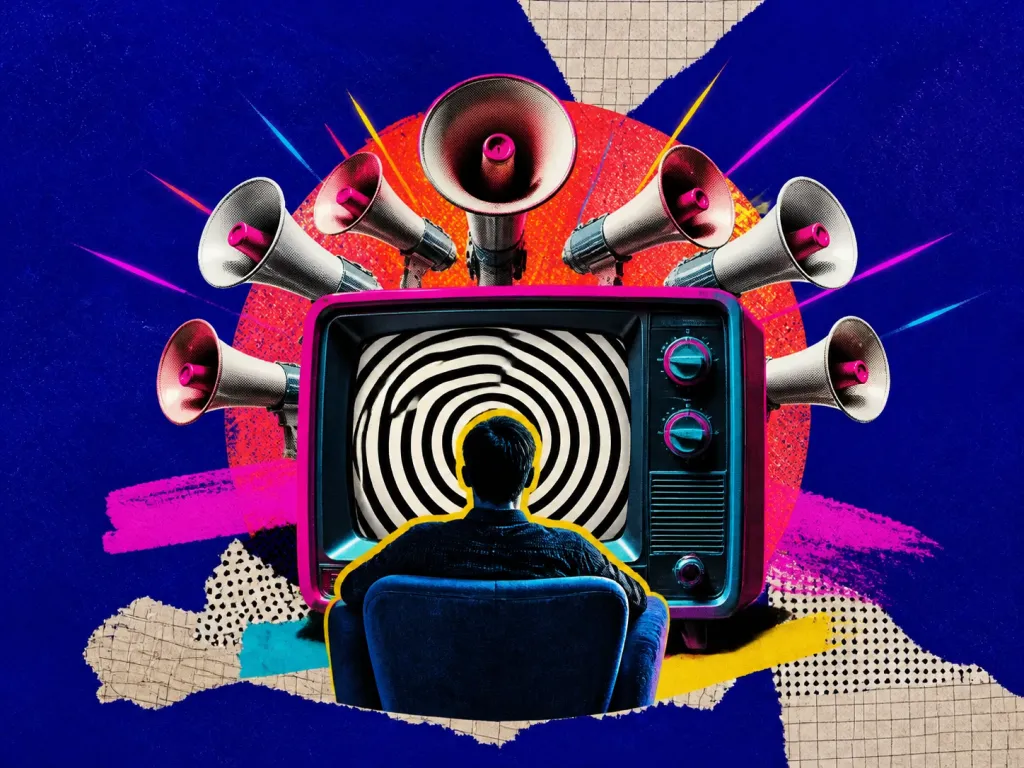
The Illusory Truth Effect is the tendency for repeated claims to receive higher truth ratings than comparable new claims. The effect is well supported overall, but it is not a rule that repeating any sentence makes people believe it. A 2026 meta-analysis found a reliable average repetition effect with substantial variation across studies, and later preregistered experiments found little or no effect for social-political opinion statements.
Examples and situations
- News and social media – the same factual claim appears again and again, so familiarity starts to feel like evidence.
- AI answers – several outputs repeat one claim, but the apparent agreement may come from overlapping sources or the same retrieved material.
- Debate – a result about factual truth judgments is stretched into the stronger claim that repetition will make any opinion more believable.
Questions to check
- Separate exposure count from evidence count: ten repeats can still come from one source.
- Ask whether the statement is a factual claim that can be checked or an evaluative opinion; the evidence does not support treating these as interchangeable.
- Trace repeated claims back to independent sources when accuracy matters.
- Treat familiarity as a cue to verify, not as proof that a claim is true or false.
Long-form guide
The Echo That Lies: Living With the Illusory Truth Effect
You know that weird moment when a rumor you disliked at first starts to feel… plausible? You didn’t find proof. You just heard it a few times. That’s the Illusory Truth Effect breathing down your neck—the brain’s habit of treating repeated statements as more likely to be true, even when we know better.
On this page
What is Illusory Truth Effect and why it matters
Illusory Truth Effect: Repetition boosts believability. Familiarity feels like truth. You encounter a claim. Your brain does two fast checks: 1) How easy is it to process this statement? 2) How familiar does it feel? If the answers are “very easy” and “very familiar,” your brain’s fluency alarm pings “probably true.” The Illusory Truth Effect is that: fluency and familiarity silently tug truth upward (Hasher, Goldstein & Toppino, 1977). You can know a fact is false and still feel its repetition working on you (Fazio et al., 2015).
This matters because most of our modern life is repetition at scale: Feeds recycle the same claims; Group chats forward the same screenshots; Headlines echo other headlines; Ads sing the same slogan until you hum it in the shower. Over days and weeks, the drumbeat can move attitudes, votes, purchases, and relationships. A meta-analysis found that repetition increases perceived truth across many contexts, even when people have prior knowledge that could correct the claim (Dechêne et al., 2010). The effect is not just for gullible strangers. It’s for careful you and me.
The trickiest part: repetition does not need to be coordinated or malicious. It can be accidental. A friend retweets. A journalist quotes a spokesperson. A coworker repeats a rumor “just in case.” Each repeat sands the rough edges off your skepticism. That soft, easy glide you feel when you hear the claim again? That’s fluency pretending to be accuracy.
The “just passing this along” message and the team rumor
Let’s make it concrete. These are not cautionary abstracts; they’re moments you’ll recognize. Your aunt forwards a message: “Doctors warn that cold water after meals can cause cancer. Please share.” You roll your eyes. Two days later, a coworker mentions avoiding cold drinks for “health reasons.” You think, “Interesting—maybe there’s something there.” Nothing changed in the science. Only the repetition changed in your memory. That second exposure felt oddly comfortable, and your brain mistook that warmth for truth.
A senior engineer leaves a project suddenly. Someone says, “He was pushed out for missing deadlines.” You shrug. Next week, a different colleague repeats it, “Well, he was always late.” The rumor now floats like background music—unquestioned. You find yourself evaluating another teammate’s work with a harsher eye, imagining a pattern that may not exist. No data. Just repetition sliding the rumor from “maybe” to “seems likely.”
The brand promise you never checked and the political line that lands
You’ve seen a cereal box crow “Heart Healthy!” since childhood. You never read the studies; you just walked past that claim in grocery stores for years. The mere existence of that phrase, repeated in your visual field, became a gentle nudge in your hand. Into the cart it goes, edged out by familiarity, not evidence.
A candidate says “We’re the safest we’ve ever been,” repeats it on TV, the slogan splashes across social, influencers echo it. The stats—messy, mixed—get no repetition rhythm. If the truth is complex and the lie is catchy, the lie hums in memory. Voters describe a “vibe” more than a fact. That vibe is often repetition dressed as certainty (Hasher et al., 1977; Pennycook, Cannon & Rand, 2018).
The medical myth with staying power and the self-story you repeat
“Detox teas flush toxins.” The phrase “flush toxins” repeats on packaging, in influencer voiceovers, and in before/after reels. Experts post detailed debunks—liver and kidneys do the detox; tea doesn’t remove vague “toxins.” But the debunks rarely repeat as often as the ads, and they require more cognitive effort. The myths remain, camouflaged as common sense.
“I’m not good at public speaking.” You tell yourself you freeze when you see a crowd. You repeat it before meetings, after small flubs, in quiet jokes. Over time, it feels not just familiar but inevitable. Skills don’t grow in soil salted with repetition. You are hearing yourself so often that belief calcifies.
“Everybody knows…” and the meme that rebrands your memory
A friend says, “Everybody knows renting is throwing money away.” Another says, “Everybody knows real estate never loses value long-term.” Neither sentence carries data. Both wear a cloak: “everybody knows.” Those words are repetition magnets. Once you hear them often, you stop asking which “everybody” and what they actually know.
A meme claims a famous quote belongs to Einstein. It fits his image, you see it five times, and now he “said” it in your mind. The brain likes neat packets: a wise line plus a wise face. The repetition binds them, even though the origin is wrong.
The safety myth at work and the apology that lodges
“On Fridays, accidents spike.” It’s told at the morning safety huddle every Friday. People repeat it because it’s vivid. The actual incident log doesn’t show a variation. But each week, the sentence lands like a ritual. You feel more cautious, which might help—ironically turning the false into a self-preventing prophecy.
A company repeats, “We take your privacy seriously.” Over the years, breach after breach. The phrase sits like wallpaper, too familiar to question. Familiarity shaves the edge off your alarm, even when the pattern says otherwise. The Illusory Truth Effect is sneaky, but it’s not invincible. You can build habits that make repetition work for you, not against you.
Notice the feeling and ask for the source
When a claim breezes past your skepticism because it feels familiar, pause. Mentally tag that sensation: “This is fluency.” Fluency means the sentence glides. Accuracy means the claim matches reality. They’re different signals. Make the distinction visible in your mind. Try this line in your head: “Familiar, not verified.” Friends, bosses, and media brands all repeat claims. Trusting them is fine. Asking for their source is better.
“Where did that number come from?”; “Can I see the original report?”; “What’s the most credible counterpoint?” A single primary source beats ten repeats. If the source is a screenshot of a screenshot, you’re in the repetition spiral.
Switch from claim to mechanism, and write your first impression
Claims can echo forever. Mechanisms cut through. “How would cold water cause cancer biologically?”; “By what mechanism would this supplement ‘flush toxins’?”; “If this policy made us safer, what metric would show it, and where is that metric?” Mechanism questions force specifics. Repetition decays in the light of specifics.
If you’re about to step into a rumor storm, jot down your initial take in a note app: “I think this claim is unlikely because X.” Later, when you hear the claim again, compare. You’ll see how repetition gently shifted your stance. That meta-awareness weakens the effect.
Slow your re-shares and use a Truth Sandwich when correcting
Design your environment to resist reflex shares: Unfollow accounts that post “urgent, share now!” without sources; Turn off autoplay. It increases passive exposure; Create a 30-second rule: if you can’t summarize source and mechanism in one sentence, don’t share. A tiny friction layer saves a pile of later corrections. If you must repeat a false claim to correct it, build a truth sandwich. 1) Start with the fact. 2) Briefly mention the false claim. 3) Return to the fact, with a reason or mechanism.
Example: “No, vaccines don’t cause autism. A now-retracted 1998 paper started that rumor, but large studies in multiple countries show no link. The immune response created by vaccines does not affect neurodevelopment.” This pattern reduces the risk that your correction accidentally reinforces the falsehood (Lewandowsky, Ecker & Cook, 2017; Swire-Thompson et al., 2020).
Prebunk early and keep a small “fact stable”
Prebunking (warning people about the tactics of misinformation before they see it) helps people recognize manipulation when it appears. Even small “heads up” notes can blunt repetition later: “You’ll see a lot of posts this week claiming X; they’ll rely on cherry-picked graphs and emotionally charged words.” When the posts arrive, they feel less persuasive (Pennycook & Rand, 2019).
You likely revisit the same hot issues—health, finance, safety. Make a living doc with vetted sources: CDC pages you trust, a financial regulator’s stats, your company’s internal metrics dashboard. When repetition hits, open your stable. You’re not reinventing skepticism every time.
Ask “what would change my mind?” and rehearse the truth
If the answer is “nothing,” you’re not tracking truth; you’re guarding identity. That’s normal—we all do it sometimes. But once you see it, you can decide to switch modes: from identity defense to investigation. Repetition works both ways. If a true but inconvenient fact matters to you, repeat it to yourself: “Seatbelts reduce risk of death by nearly half in car crashes.”
“Compound interest grows by staying invested, not by timing the market.” “Liver and kidneys handle detox; no tea removes vague ‘toxins.’” By rehearsing truths, you build their fluency. You’re using the mind’s bias to your advantage (Unkelbach & Rom, 2017). Tape it on your monitor. It pays rent in fewer mess-ups.
Mere-exposure effect and availability heuristic
A few neighbors in the bias neighborhood look similar to the Illusory Truth Effect. Here’s how to tell them apart. Mere exposure makes you like something more the more you see it—songs, faces, logos. Illusory Truth makes you believe something more the more you hear it. Liking versus believing. They can reinforce each other; a repeated slogan becomes both catchy and convincing (Zajonc, 1968; Dechêne et al., 2010).
When examples jump to mind easily, you think they’re common. After seeing several plane crashes in the news, flying feels dangerous. That’s availability. Illusory Truth isn’t about vivid events; it’s about repeated statements becoming fluent—no images needed.
Confirmation bias, authority bias, and anchoring
You search for and favor info that matches your existing beliefs. Illusory Truth can operate even when the repeated claim clashes with your beliefs; repetition still nudges belief upward. Together, they’re potent: you seek confirming claims and then get them repeated. You give extra weight to statements from perceived experts.
With Illusory Truth, repetition alone is enough—even without authority. A non-expert repeated often can outpull an expert said once. You hear a first number, and it anchors your estimates. It’s about first exposures shaping later judgments. Illusory Truth can boost belief even after many exposures; anchor is first-impression-wins. Repetition can strengthen anchors too.
Misinformation effect, sleeper effect, and repetition heuristic
Your memory for events changes after exposure to misleading information. That’s about reconstructing past events. Illusory Truth is about judging a statement’s truth in the present. They often travel together in the wild (Loftus, 2005). A message from a low-credibility source can grow more persuasive over time as you forget the source but remember the message.
Illusory Truth helps here: as the message repeats elsewhere, familiarity grows while source fades. This is a cousin: people infer popularity, importance, or truth from frequency. Illusory Truth is the specific belief bump from repetition. The heuristic is the rule-of-thumb; the effect is the outcome.
Build evidence rituals and make the debunk easy to repeat
Let’s go a layer down. These are field-tested moves we’ve seen work in teams and in personal life. Weekly metric review with a fixed template: what changed, what didn’t, what’s noise; “Rumor check” ritual: when a claim surfaces, assign someone to find a primary source within 48 hours. Share findings in the same channel where the rumor started; “One chart, two truths”: pair a chart with a short paragraph on what it shows and what it doesn’t.
Repetition thrives in ambiguity. Rituals reduce ambiguity. A clunky paragraph loses to a seven-word claim every time. Craft sleek counters. “Cold water doesn’t cause cancer—no mechanism.”; “Detox is organs, not tea.”; “Single study? Not policy.”; “Screenshot isn’t a source.” Short, true, repeatable. Equip your group chats.
Spaced reminders, correction logs, and teaching the effect out loud
We all forget. Set reminders to revisit key truths monthly. Example: a recurring note that includes your “fact stable” links. You’ll feel silly, then you’ll feel accurate. Keep a private “I was wrong” log. Two lines per entry: claim, correction. Pattern-spot. Maybe you over-trust charts with red arrows. Maybe you fall for health tips that promise “natural.” Once you see your pattern, you can add friction at those tripwires.
When you explain the Illusory Truth Effect to others, you hear yourself too. In families, teams, classrooms, the mere existence of a shared term—“illusory truth alert”—lets people flag repetition without hostility. That language shortens arguments.
Test with the “Sunday Friend” and expect the strongest first repeat
Imagine you must explain the claim to a smart friend on Sunday morning, no phone, just your memory. Can you say where it came from, how it works, and what would change your mind? If not, you’re likely holding familiarity, not knowledge. Your brain likes high-contrast fonts, clean layouts, and neat rhymes. These features increase fluency, which can leak into “feels true.” Don’t conflate production value with accuracy. Ugly PDFs can be correct. Pretty carousels can be nonsense.
Studies show that even one additional exposure can raise perceived truth, and the first repeats often have the biggest effect (Hasher et al., 1977; Dechêne et al., 2010). When you hear a claim the second time, be extra alert. That’s the moment it tries to move in rent-free. We underestimate background exposure—radio in the car, TVs in waiting rooms, that one YouTube channel always playing. If you can lower passive exposure to low-quality sources, you starve the effect where it’s strongest.
A short science pit stop (so we’re not hand-wavy)
Hasher, Goldstein, and Toppino (1977) first documented that repeated statements increased perceived truth across general knowledge questions; A meta-analysis found the effect robust across contexts; prior knowledge reduces but doesn’t eliminate it (Dechêne et al., 2010); Even when participants know a claim is false, repetition can still lift truth ratings, especially when cognitive load is high or attention is low (Fazio et al., 2015);
Prebunking and warnings about misinformation reduce susceptibility, partly by keeping source memory active and slowing fluency’s shortcut (Pennycook, Cannon & Rand, 2018; Swire-Thompson et al., 2020); Fluency—how easy something is to process—is the engine. Familiarity adds fuel. Together they shape a “feels true” signal that the brain mislabels (Unkelbach & Rom, 2017). You don’t need to memorize the papers. You only need to remember the engine: fluency feels like truth. Don’t let it drive.
Wrap-up: choosing reality over rhythm
We all want to be the person who doesn’t fall for dumb stuff. But the Illusory Truth Effect is not a dumb-person problem. It’s a human-brain feature that once kept us alive in communities where repeated warnings meant danger. The modern world hijacks that feature with slogans, headlines, and infinitely shareable “Did you hear…?” whispers. Here’s the part that lands for us: we can love people and still not share their claims. We can respect coworkers and still ask for sources. We can be wrong, correct it publicly, and grow sharper because of it. That’s not being difficult. That’s choosing reality over rhythm.
The world will keep repeating. Make your mind a place where truth has a chance. The echoes won’t stop, but you can hear your own voice again. Print the checklist, pin it, use it. Your future self will thank you.
Decision checklist
- Have I seen this exact claim before? Familiar, not verified
- What is the primary source? Can I open it now?
- What’s the mechanism that would make this true?
- What’s the best counterevidence?
- If I share this and it’s wrong, who does it harm?
- Can I wait 30 seconds and check a trusted reference?
- If I must correct, can I use a truth sandwich?
Evidence review
What the evidence supports
Repeated claims receive higher truth ratings than comparable new claims on average, but the effect is heterogeneous and does not generalize equally to every kind of statement. A 2026 systematic review and meta-analysis covering 182 studies, 366 effect sizes and more than 31,000 participants found a reliable corrected average effect. A later 2026 paper with two preregistered experiments found little or no meaningful repetition effect for social-political opinion statements. The useful claim is therefore narrower than 'repeat anything and people will believe it.'
How researchers describe the pattern
Familiarity, processing fluency, memory and source-related cues can all contribute to repetition-based truth judgments, and the literature does not require one mechanism to explain every result. The 2026 meta-analysis found substantial variation across studies, while targeted opinion experiments suggest that content type and the kind of judgment being made can matter. A factual truth judgment and an evaluative opinion should not be treated as psychologically interchangeable simply because both are written as sentences.
Practical interpretation
When a repeated statement feels true, separate exposure count from evidence count and trace it to independent sources. Also identify the statement type before applying the label: a checkable factual claim is a better fit for the classic truth-judgment literature than an evaluative social or political opinion. For opinions, other processes such as persuasion, identity, norms or familiarity may be more relevant. Repetition is not evidence that a statement is true, and it is not evidence that the statement is false either.
Reviewed sources
- Frequency and the conference of referential validity foundational experiment · 1977 · DOI 10.1016/S0022-5371(77)80012-1
- The effects of repetition frequency on the illusory truth effect experiments · 2021 · DOI 10.1186/s41235-021-00301-5
- The illusory truth effect: A review of how repetition increases belief in misinformation review · 2024 · DOI 10.1016/j.copsyc.2023.101736
- Systematic review and meta-analysis of the evidence for an illusory truth effect and its determinants systematic review and meta-analysis · 2026 · DOI 10.1038/s41467-026-70041-x
- The robustness of repetition-based illusory truth and certainty effects in social media contexts peer-reviewed experiment · 2026 · DOI 10.1038/s41598-026-61449-y
- Limits of the illusory truth effect for social-political opinions: Evidence from two experiments and a mini meta-analysis two preregistered experiments and mini meta-analysis · 2026 · DOI 10.1016/j.concog.2026.104119
Editorial review: 2026-09-05. The controlled evidence class is an editorial reading aid, not a numeric truth score; the descriptive status above carries the entry-specific qualification.
Continue from here