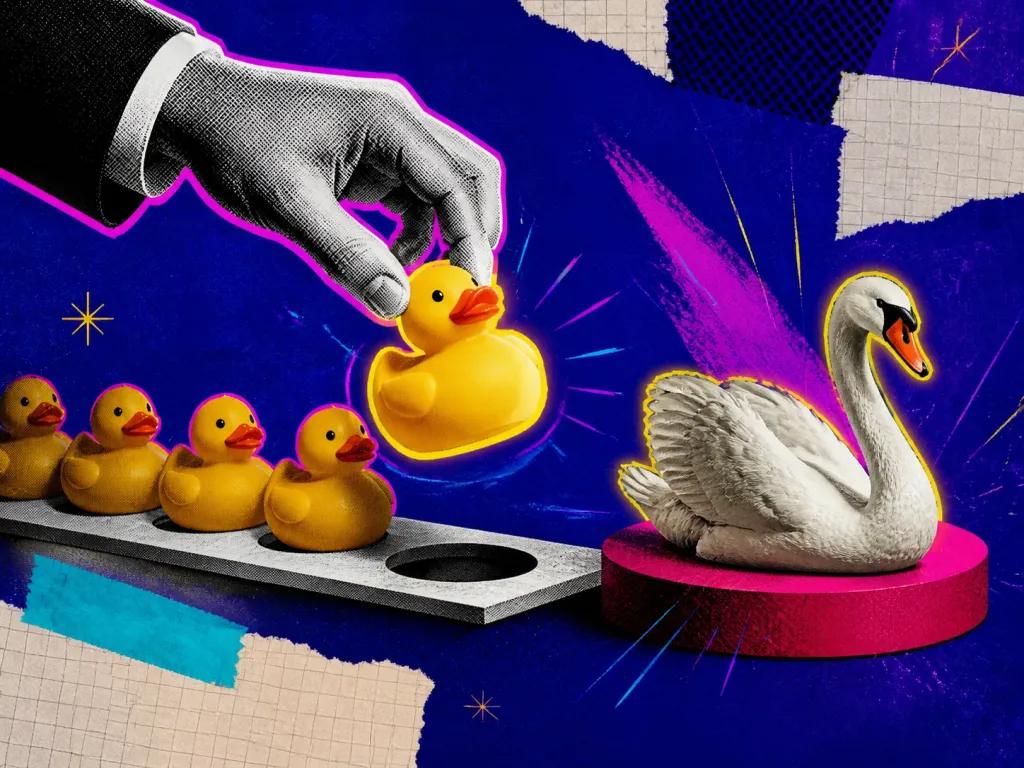
Spotlight Effect – you think everyone is watching, but they’re not
Forgot to button your shirt and feel like everyone noticed? Said something awkward and now think it’s all anyone remembers? That’s Spotlight Effect – the tendency to overestimate how much others notice your appearance or behavior.

Examples and situations
- Social situations – you think people judge your outfit, speech, or gestures, but they’re too focused on themselves.
- Mistakes & awkward moments – you feel like your mistake is a big deal, but most people didn’t even notice.
- Public speaking & presentations – you stress over small things, but the audience cares about the overall impression, not tiny details.
Practical considerations
- Remember, people are focused on themselves – they’re not analyzing every detail of what you do.
- Don’t obsess over small mistakes – even if you slip up, most won’t notice or care.
- Use it to your advantage – since people don’t notice everything, feel freer to try new things and take risks.
Long-form guide
The Quiet Room In Your Head: Escaping the Spotlight Effect
You’re halfway to work when you notice the coffee stain. A perfect crescent, front and center on your shirt, like the moon mocking you at noon. You steel yourself for the comments. The smirk from the receptionist. A Slack message: “Did you spill?” A quiet judgment that you’re clumsy, disorganized, not paying attention. You walk into the office braced for a verdict that never comes. People say hello. They ask about the meeting. The stain silently dries. Not a single person mentions it.
On this page
What is the Spotlight Effect—You Think Everyone Is Watching, But They’re Not—and Why It Matters
That disconnect—between the attention you think you’re getting and the attention you actually get—has a name. The Spotlight Effect is our tendency to overestimate how much other people notice and judge us. The Spotlight Effect is the feeling that a bright lamp follows you everywhere. It’s a cognitive bias that makes us believe our appearance, mistakes, and quirks are highly visible to others. In reality, most people are busy considering their own lamp.
This happens because the most available view of the world is from inside your head. Your shirt stain is loud in your mind. Your missed line in the presentation sounds like someone dropped a cymbal. You anchor on your internal experience. Then you assume others perceive the same intensity. That assumption is wrong, and it quietly taxes your life. It keeps you from acting. You won’t ask a question, approach someone, publish, perform, or try again because you assume people remember your last stumble. Most don’t; It wastes energy. You rehearse imaginary criticisms. You edit yourself to death. You make decisions not to be seen, instead of decisions to do good work; It skews feedback. You overcorrect for tiny mistakes, then miss the real issues. You chase approval that no one has time to give; It makes learning painful. Learning needs messy tries. If you think the room is scoring you, you’ll avoid chances to grow.
Why it matters: The classic study features a Barry Manilow t-shirt. Researchers asked participants to wear an embarrassing shirt into a room of strangers. The shirt-wearers thought half the room noticed. In reality, only about a quarter did (Gilovich, Medvec, & Savitsky, 2000). That’s the Spotlight Effect in one clean chart: we feel twice as noticed as we are. The gap between felt attention and actual attention can shrink a life. If you feel watched, you choose safe. But safe doesn’t teach. Safe doesn’t build interesting work. Safe keeps you defending your identity instead of building it. That’s the cost. The upside: once you see the bias, you can design around it. The light dims. You move again.
The Slide That Froze
Stories make this bias concrete. Here are a handful from the trenches—workplaces, classrooms, Zoom calls, sidewalks, open mics, and first dates. An analyst is presenting quarterly numbers to thirty colleagues. Midway through, a chart refuses to render. She clicks. Nothing. Panic spikes. She imagines whispers about competence, imagines a director’s eyes narrowing, a note in a performance review. She apologizes three times in twenty seconds. Later, someone messages: “Strong deck. Loved the cohort view.” No one mentions the glitch. Another person says, “Happens to me every week.”
The analyst’s self-critique afterward focuses on apology tone and keyboard handling under pressure. The actual opportunity? She could have prepared a single-sentence contingency: “Looks like this chart’s stuck—here’s the short version: churn stabilized at 2.9%.” The imagined audience pulled her away from the real fix.
The Flubbed Name
A startup founder shows up to a partner meeting in a hoodie. It’s clean, nice, on purpose. He imagines the partners think he’s immature. He imagines they text each other that it’s disrespectful. He decides not to push on terms he cares about because he’s anxious about the vibe. Months later, a partner says, “We invest in execution, not costumes.” The missed ask costs the founder real ownership. Clothes took up the headspace that the deal deserved.
At a community meetup, a designer mispronounces a stranger’s name. They correct him, kind, quick. He spends the next hour avoiding them because he feels like a jerk. That person spends the next hour chatting with three others and forgets the moment. Later, the designer regrets not reconnecting to show basic interest. Spotlight: 1. Networking: 0.
The Slack Message With a Period
A runner trips at a crosswalk. Knees scrape, palms sting. She imagines cars snickering. She limps home, humiliated, and skips her next two runs. When she finally returns, she watches other runners and sees them stumble, adjust, move on. She realizes no one’s cataloging falls. Everyone’s fighting their own little battles with shoelaces and sidewalks. A programmer writes, “Can you push by EOD?”
with a period at the end. After sending, he worries it reads as cold. He sends a follow-up emoji. Then another clarifying sentence. He drags coworkers into a subtle, unnecessary loop because he feels exposed. The teammate reads the first line and thinks, “Okay, end of day,” and never sees the next two messages. The imagined attention turned into noise.
The First Draft
A teacher sings karaoke at a birthday party. Half the room is talking. The screen lags a beat. He assumes people are judging his pitch. He imagines Monday morning at school as a whisper fest. No one says anything Monday. One student asks, “How was your weekend?” He realizes: different circles, different clocks. What felt like a full broadcast was a private local radio. A writer shares a draft with six readers.
One comment says, “The middle feels slow.” She hears: “You are slow. You are boring.” She rewrites the middle three times, cuts the best paragraph, and emerges with competent mush. One of the readers later says, “I liked the middle, just thought page six had an extra beat.” If she had assumed less attention, she would have asked one clarifying question and kept the spine.
The Video Camera Obsession
On Zoom, an intern watches themselves on camera instead of the meeting. They adjust hair and angle five times. They contribute once. Later they recall every micro-expression they made, convinced someone noticed. People remember the one question they asked and the code they pushed at 4 pm. The rest is ghosts.
Under each moment: the same engine. You’re the protagonist of your story. You experience high-resolution details about yourself. You assume others see the same resolution. They don’t. Their own story plays in their heads, in full color, with their own coffee stains in the center of the frame.
Notice the Sensation, Name the Bias
You don’t have to kill self-awareness to escape the spotlight. You just need a few tools. Think of them as dimmer switches for the imaginary light. The first sign is internal. Your stomach tightens. Your thoughts zoom in on how you look, how you sounded, what you did. You predict an audience’s reaction with certainty.
Name it: “This is the Spotlight Effect.” A label isn’t magic, but it interrupts the loop. It reminds you: this is a pattern, not a prophecy. Studies show that simply becoming aware of a bias can reduce its impact, especially when paired with a specific strategy (Wilson & Brekke, 1994). Don’t stop at awareness. Pair it with a move.
Build One-Line Contingencies
You think people noticed. Ask, in small, safe doses. “Did that mic glitch throw us off?” “Did I come across rushed?” Keep it concrete and behavior-based. You’re not fishing; you’re calibrating. Make it easy for others to answer lightly: “Anything I should tweak next time?” Then listen. Don’t argue with their “no big deal.” Accept the data. Over time, your internal predictions will align with reality.
“If the demo fails, summarize the three takeaways.”; “If I blank, I’ll pause, breathe, and ask, ‘Could someone repeat the last question?’”; “If I spill, I’ll joke once and move on.”. Write a single-sentence fallback for fragile moments: Contingencies don’t just save a moment; they quiet the threat. When your brain knows there’s a plan, it stops scanning for imaginary judges.
Add Friction to Ruminations
Attention is a finite resource. Spend it on the work. Before entering a situation that triggers the spotlight, write: “What value am I bringing?” and “What one thing do I need from this?” Then commit to those two things. Image will ride along. If you chase image first, you’ll lose both. Stand up. Change rooms;
Do a short, concrete task: send one email, wash a mug, take a three-minute walk; Time-box replays: “I’ll review that meeting for five minutes, then make a note and stop.” When you catch a rumination loop—replaying a moment, editing your past—add speed bumps: You’re not ignoring feelings. You’re choosing not to feed the imaginary audience.
Train With Micro-Embarrassments
Ask: “In ten minutes, will anyone remember?” Then: “Ten hours?” “Ten days?” Push to “Ten weeks?” The curve falls fast. Most stumbles don’t survive ten minutes. Big ones rarely last ten days. This isn’t a guarantee. It’s a recalibration tool. Wear two slightly mismatched socks to a cafe; Ask a “basic” question in a meeting; Admit you don’t know, then ask for help.
Exposure works. Do small, harmless things that trigger the sensation and watch the world not end: You’ll collect counter-examples to your fear. The spotlight dims when you learn, in your bones, that most people don’t care. And the few who do aren’t steering your life.
Set Defaults That Hide the Spotlight
When someone else makes a small mistake, notice your reaction. Most likely, you forget in under a minute. Use that as a mirror: if you give others a pass, odds are they’re giving you one too. If you have a trusted peer, trade quick snapshots: “What do you think people noticed most today?” Compare answers. The gap teaches you. Turn off self-view in video calls.
You don’t need a mirror while thinking; Use checklists to handle common stress points so you don’t spiral when a detail slips; Establish an “oops protocol” on teams: name it, fix it, move on. Culture can blunt the bias. Make environmental tweaks: Use this checklist lightly. It’s a pocket tool, not a ritual. The point is to act, not to manage your image of acting.
Egocentric Bias: Spotlight Effect
Cognitive biases travel in packs. The Spotlight Effect often shows up with cousins. Knowing the differences helps you pick the right tool. You think others can read your internal state. You feel nervous and assume everyone sees your nerves. In reality, people are bad at detecting internal feelings unless you signal them explicitly (Gilovich, Savitsky, & Medvec, 1998). Spotlight is about visibility of actions or appearance; transparency is about visibility of emotion. Fix: normalize that your feelings are private; don’t overconfess to manage them.
You overweight your own perspective. You assume your view is baseline. Spotlight is a specific instance: your details feel central, so you assume they’re central to others. Fix: perspective-taking. Write what others likely care about given their goals. Usually it’s not your shirt.
Social Anxiety: Spotlight Effect
You assume everyone else is watching, so someone else will act. That’s adjacent but different (Darley & Latané, 1968). In emergencies, diffusion of responsibility, not self-consciousness, drives inaction. Fix there: assign roles, call on people directly. Spotlight fix: reduce imagined observers, increase your own agency. Social anxiety amplifies perceived scrutiny.
It’s not just a bias; it’s a pattern of fear with physical and cognitive components (Clark & Wells, 1995). The Spotlight Effect is a normal bias that everyone experiences. Social anxiety is a clinical pattern for some people. Tools here help, but if it grips your life, therapy helps too.
Pluralistic Ignorance: Spotlight Effect
You worry you look incompetent, which sounds like this effect, but Dunning–Kruger is about miscalibrated self-assessment—novices overestimate ability, experts underestimate (Dunning & Kruger, 1999). Spotlight is about miscalibrated audience attention. Different gears; different remedies. You think you’re the only one feeling X because no one else shows X. In classrooms, students think they’re the only confused one, so no one asks questions.
Everyone waits, thinking everyone else understands. Spotlight adds heat by telling you that if you ask, you’ll be judged. The fix is to pierce the silence: ask first. Usually people thank you. Pin this. Use it. Edit it to fit your life. The list is a compass, not a cage.
Wrap-Up: The Room Is Quieter Than You Think
Here’s the hard truth and the soft relief: people aren’t thinking about you as much as you fear. They’re not scoring you. They’re not replaying your joke. They’re dealing with their own spill, their own freeze, their own weird camera angle. That’s not sad. It’s liberating. It means you can try more. Ask more. Publish more. Dance more. Say, “I don’t know,” and then find out.
The Spotlight Effect shrinks when you move. Treat it like weather: note the clouds, pack a jacket, go outside anyway. You don’t need to be fearless. You need to be willing. That room you walked into this morning? It wasn’t a stage. It was a room full of people, each carrying their own little spotlight. Let yours light the next step, not your shadow.
Darley, J.M., & Latané, B. (1968). Bystander intervention in emergencies: Diffusion of responsibility; Dunning, D., & Kruger, J. (1999). Unskilled and unaware of it; Gilovich, T., Medvec, V.H., & Savitsky, K. (2000). The Spotlight Effect in social judgment; Gilovich, T., Savitsky, K., & Medvec, V.H. (1998). The illusion of transparency; Wilson, T.D., & Brekke, N. (1994). Mental contamination and thought correction.
Decision checklist
- Pause and label: “Spotlight Effect.”
- Ask for one piece of outside data
- Use your one-line contingency
- Identify the value you’re here to deliver
- Add friction to rumination: move, task, timer
- Apply the Ten-Minute Rule
- Do one micro-embarrassment this week
- Turn off self-view; reduce mirrors
- Keep a tiny win/loss log to recalibrate memory
- Debrief with a peer using concrete questions
- Label “Spotlight Effect” the moment you feel watched
- Get one external data point; don’t guess the crowd