
Continued Influence Effect – when corrected information still shapes reasoning
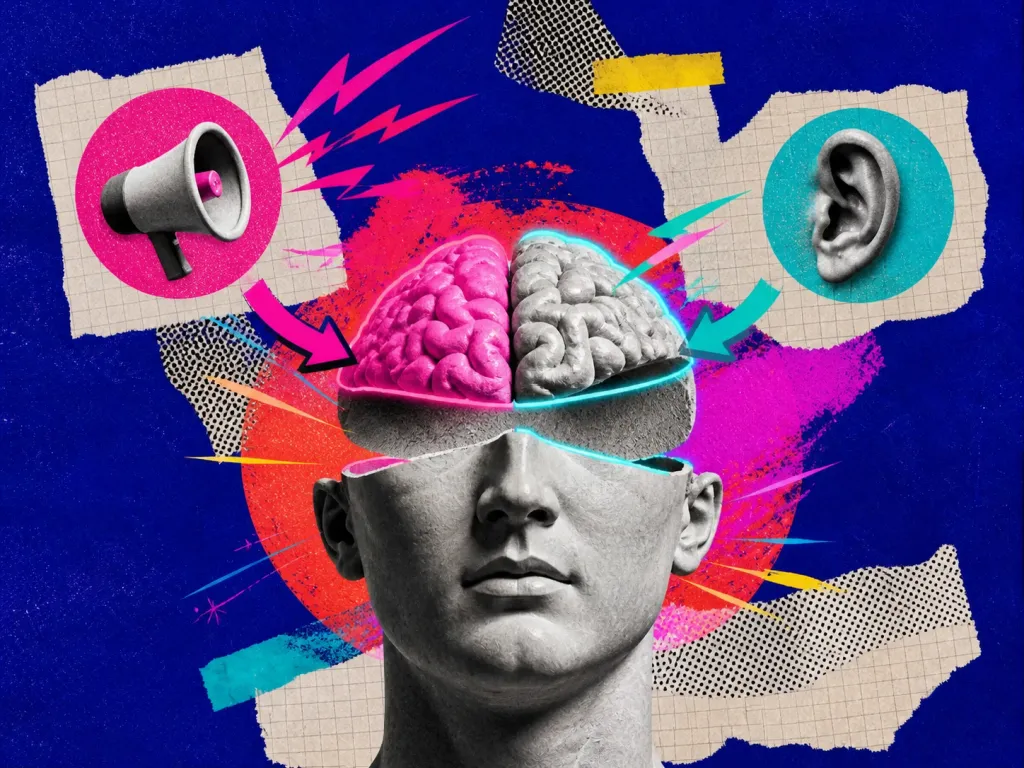
The Continued Influence Effect happens when false or outdated information still affects later reasoning after a person has been told that it is wrong. A correction can help and the old information can still leave a trace at the same time.
Examples and situations
- Breaking news: an early explanation is corrected, but people still use it when explaining what happened.
- Work and incident reviews: an initial root cause is ruled out, yet later discussion keeps returning to it.
- Everyday claims: you remember that a statement was corrected but still use part of the original story when judging a related question.
Questions to check
- State the correction clearly instead of only saying that the old claim is wrong.
- If the old claim filled an explanatory gap, give the best supported alternative explanation when one is available.
- Keep important corrections easy to find and repeat them when needed.
- Do not call incomplete updating a backfire effect. Backfire requires the false belief itself to become stronger after the correction.
Long-form guide
The Velcro Lie: Why Misinformation Sticks Even After You Peel It Off
A friend texts you a screenshot: “City water is contaminated—boil it for three minutes.” You panic, cancel dinner, and blast the warning to your neighborhood chat. An hour later, the city posts a correction. It was a testing error. The water’s safe. You breathe out—but that uneasy feeling lingers. For days you let the tap run a second longer, just in case.
On this page
What Is the Continued Influence Effect and Why It Matters
That lingering unease? That’s the continued influence effect in the wild. The continued influence effect is our tendency to keep using misinformation in how we think and act, even after we’ve learned it’s false. The continued influence effect (CIE) shows up when an initial false claim keeps shaping judgments and behaviors after a correction. It’s not just “I still believe the myth.” It’s also “the myth is still driving my reasoning, my hunches, my memory, and my choices,” even when you accept the correction intellectually.
Here’s why it happens: Our minds like complete stories. Corrections often remove a key cause or actor and leave a hole. We prefer a plausible-but-false story to a true-but-fragmented one. When a correction tears out a piece, the brain stitches the old piece back in so the narrative doesn’t leak meaning (Lewandowsky et al., 2012); Repetition feels like truth. If you’ve heard the myth three times and the correction once, fluency and familiarity tilt you toward the original claim (Fazio et al., 2015); Emotions anchor the memory. Shocking claims, outrage, and fear attach to our recall like burrs. Corrections often arrive cold and technical. Cold facts don’t dislodge hot feelings (Pennycook & Rand, 2019); We save mental effort. It’s cheaper to reuse the first explanation than to rebuild a new one. Under time pressure or cognitive load, we default to whatever’s most accessible.
The cost isn’t theoretical. CIE skews public health choices, investment decisions, hiring calls, crisis response, and everyday relationships. It distorts our trust in institutions and in one another. It wastes time as teams rehash already-corrected rumors. It also sticks to our identity: “I’m the kind of person who doesn’t get fooled” can make us cling more tightly when we are. If you lead people, build products, manage risk, or just navigate the world with a group chat, the continued influence effect is your silent antagonist.
The Office “Budget Freeze”
We’ll skip lecture-hall diagrams and walk through how CIE looks in real life. These aren’t straw men; we’ve watched versions of all of them play out. Monday morning, a Slack message flies: “Heard from Finance: budget freeze next quarter. Hiring paused.” The VP of Finance replies at noon: “Incorrect. We paused one vendor contract for review; no hiring freeze.” The correction is clear. Yet managers hesitate to post job ads that week. Team leads underspend. A designer postpones a course reimbursement. HR sees fewer leads in the pipeline. Months later, when performance flags, people say, “Yeah, that freeze period hurt.” The freeze never existed. But the rumor kept influencing spend decisions and risk tolerance.
Why it stuck: The rumor told a complete story with a culprit (Finance) and a time frame. The correction told a narrower fact and left the narrative gaps unfilled; The rumor spread fast in backchannels first; the correction was single-source and formal; Acting cautious feels safer than risking an awkward reversal. What worked later: Leadership published a clear alternative story: “We paused one contract to audit security. Hiring and team budgets remain open. Here’s the vendor review checklist and timeline.” The alternative explanation filled the narrative hole the rumor occupied.
The Wildfire “Arsonist” That Wasn’t
A regional wildfire erupts. Local news quotes a “source” blaming arson. The story spreads; neighbors decide it fits recent vandalism. Days later, investigators confirm lightning as the cause. Even with the correction, homeowners talk about “arson season.” People advocate for harsher penalties and volunteer patrols. The myth shapes policy preferences and perceived risk.
Why it stuck: Arson has a villain and a fix. Lightning offers no villain and no sense of control; The arson story aroused anger; the lightning correction only informed. What helped: Fire officials didn’t just say “not arson.” They showed the burn pattern and radar data and explained how lightning-start fires differ in spread from human-caused ones. They gave a new mental model.
The “Evil Ingredient” in Food
A celebrity posts: “This cereal contains a chemical also found in industrial cleaner!” It goes viral. Scientists debunk it: dose makes the poison; the ingredient is safe at levels used. The brand issues a statement. Sales dip anyway. Months on, a surprising number of shoppers “just feel weird about it.”
Why it stuck: The myth aligned with an intuitive rule: “Hard-to-pronounce chemicals = dangerous.” Easy to remember, easy to spread; The correction forced a statistical concept and trust in regulators—both heavy cognitive lifts. What helps: Visual comparison: “You also find this chemical in apples in this concentration. This bowl has less of it than a cup of milk.” A concrete replacement beats an abstract plea.
The “Autism and Vaccines” Zombie
You know this one. A now-retracted study claimed vaccines cause autism. Every major study since shows no causal link. Yet parents still encounter the myth at playgrounds and in parenting groups. Even those who vaccinate sometimes feel a twinge of anxiety when the needle appears.
Why it stuck: Identity and fear: “Protecting my child” outruns statistics. A single vivid anecdote can outweigh millions of data points; The original claim attached to a cause-and-effect story. Corrections often say “doesn’t cause,” but don’t offer a satisfying “what does?” which leaves fear unresolved (Nyhan & Reifler, 2015). What helps: Prebunking during prenatal care: “You’ll hear X; here’s why people say it; here’s what the best evidence shows; here’s what scientists are still studying; here’s how to evaluate claims” (Cook & Lewandowsky, 2011); Centering the affirmative: “Vaccines reduce your child’s chance of hospitalization by X.” Provide an alternative, meaningful story.
The “We Already Tried That Feature” Memory
Product meeting. Someone says, “We tried in-app messaging in 2019. Engagement tanked.” Heads nod. The PM pulls numbers: a small A/B test ran for two weeks on a tiny segment, overshadowed by a pricing experiment launched the same week. It wasn’t a fair test. Still, the myth blocks the roadmap. Nobody wants to carry the “didn’t we learn this?” stigma.
Why it stuck: The pseudo-experiment narrative is tidy and flattering: “We’re a team that learns and moves on.”; The correction is fuzzy: flaws in setup, confounds, limited scope. It feels like excuse-making. What helps: Pre-commit to experiment hygiene: define sample, duration, and success criteria before you run it. Archive one-page summaries. When the myth returns, link the summary and propose a new, specific test.
The Family Argument That Never Happened
At a holiday dinner, Aunt Lina “remembers” that you called her selfish last year. You didn’t. She’s mis-remembered a tense chat. You apologize for the hurt, share your words at the time, and the rest of the table agrees with your version. Aunt Lina nods. Weeks later, you notice cousins acting wary. The original allegation keeps coloring interactions.
Why it stuck: Emotional memory can outlast factual memory in social networks. People update beliefs slowly when relational risk is involved; Corrections feel like an attack on Aunt Lina’s self-concept, so defenders mentally keep the old story alive (belief echoes; Ecker et al., 2010). What helps: Validate impact without conceding the false claim: “I didn’t say that, and I’m sorry you felt dismissed.” Follow with a fresh story for the group to hold: “What I wanted to say was X. I’m asking for Y going forward.” A new narrative offers a shared anchor.
The Market Rumor and the Fear Trade
Rumor: “Regulator to ban feature X next quarter.” Stocks wobble. Analysts tweet. A week later, the regulator clarifies: they plan to study X, not ban it. The rumor’s already influenced portfolios; risk teams raise VAR thresholds; product teams slow investment in feature X. Six months later the study suggests guardrails, not bans. The opportunity cost is real.
Why it stuck: Markets price uncertainty aggressively. It’s rational to move fast on partial info—but the protective stance can calcify even after clarity arrives; Institutional memory takes hold via dashboards and alerts. The correction appears once; the artifact (the spiky chart) remains visible daily. What helps: Pair rumor dashboards with “correction cards” that persist alongside the original event. During post-mortems, document when the rumor was corrected and what was updated in response.
Spotting CIE in the Moment
You don’t need a lab coat. You need a few habits and some scripts. Below we offer both. Here’s the tell: you agree a claim was false, but you keep behaving as if parts of it might be true. If that sounds vague, watch for these patterns in yourself or your team: The “just in case” behaviors linger. You double-check, delay, or hedge decisions long after a correction; “Everyone knows” statements pop up with no current source. The myth has become background;
Corrections draw nods but no actions. Policies don’t change, templates don’t get updated, onboarding still includes the old slide; Emotional tone doesn’t shift. Anger, fear, or disgust attached to the myth still colors conversation; The correction feels like a technicality that doesn’t address the feelings the myth created. If you’re managing a team, ask during retros: “Is there anything we debunked that is still shaping how we operate?”
Build Corrections That Actually Work
Generic “this was false” doesn’t erase the influence. Strong corrections have specific ingredients. Think of a correction as a story replacement, not just a fact replacement. 1) Warn before you mention the myth. “Note: the next statement is false. I’m including it for clarity.” This primes skepticism and reduces familiarity bias. 2) Lead with the truth. Start with the accurate claim, not the myth. “Lightning caused the fire” before “it wasn’t arson.”
3) Explain the mechanism. Offer a “how” or “why,” not just what. Mechanisms are story glue. “Lightning-start fires leave X pattern, confirmed by radar at 3:12 PM.” 4) Fill the gap. If your correction removes a cause, give a new cause or admit uncertainty and label the unknown. Uncertainty, when named, beats a vacuum. 5) Don’t put the myth in the spotlight. Mark it false and keep the focus on the replacement story. Current evidence gives little reason to fear that a clear correction backfires just because it names the myth.
6) Use timing and channels wisely. Correct in the same spaces the myth traveled. If the rumor spread in DMs, ask allies to post in those DMs. If it went out in a town hall, correct in the next town hall. 7) Match the emotional temperature. If the myth scared people, the correction should acknowledge fear and provide agency. “Here’s what you can do now.” 8) Give people a next action. Offer a behavior that locks in the update: “Bookmark this vendor-review checklist,” “Switch your project label to X,” “Delete the screenshot and re-share this update.” These aren’t just vibes. Research shows that corrections that include causal alternative explanations, warnings about potential misinformation, and simple, repeated truths reduce the CIE (Lewandowsky et al., 2012; Ecker et al., 2010).
Prebunking: Beating CIE Before It Starts
Prebunking is inoculation: expose people to a weakened form of the misinformation and show the rhetorical trick before they encounter the full blast. Done right, it builds mental antibodies (Cook & Lewandowsky, 2011). In onboarding, show the team the top five myths they’ll hear about your product or process.
For each, give the truth, the myth, the trick (“false equivalence,” “context collapse”), and a ready link; In communities, run short “spot the fallacy” posts. Make it fun: “Is this a correlation or causation claim?” Reward correct answers; In health settings, give parents a one-pager of common myths before vaccinations, including what they’ll likely hear in parent groups.
Personal Defense Moves
You can’t control the internet, but you can control your intake and your updates. Set a correction ritual. When you learn you shared something false, correct in the same place, with the same intensity. “I was wrong; here’s the update; here’s how I’ll avoid this next time.” This trains your circle to value updates; Tag your memory. Literally label notes: “Updated on YYYY-MM-DD.” Your brain will trust that timestamp later;
Build a personal “myth sandwich” habit. Truth → myth (flagged as false) → reinforced truth. Example: “City water is safe. A post claimed it was contaminated—that’s false; the test was faulty. If you need details, here’s the lab’s explanation.” Notice the feeling. If a claim makes you feel outraged or triumphant, pause. Google once. Ask: “What would change my mind?” That question opens a door for facts to enter.
Team-Level Systems That Reduce CIE
CIE thrives where institutions lack muscle memory for corrections. Create a single correction channel. Post all debunks there with a simple template: claim, status (false/uncertain/true), evidence, owner, next steps. Link it in dashboards and onboarding; Keep a living “myths and realities” page. When a rumor dies, update the page and tag life cycle: first seen, last seen, corrected date, reference.
This helps new teammates avoid refighting old battles; Use templates that force alternatives. When someone flags a rumor, ask: “If not X, what’s the current best explanation? What’s unknown?” The template pushes gap-filling; Conduct “myth retirement ceremonies.” In all-hands, pick one persistent myth, show how it affected decisions, present the correction, and commit to a behavior change. A ritual creates social salience.
Related or Confusable Ideas
The continued influence effect overlaps with other sticky mind-things. Here’s the landscape, so you don’t mix them up. Illusory truth effect: Repetition increases perceived truth. Different from CIE but fuels it; repeated myths feel true even after you know they’re false (Fazio et al., 2015); Belief perseverance: People keep the initial belief even after evidence changes. CIE is narrower: even if belief shifts, the initial misinformation still influences reasoning and memory; Confirmation bias: We seek and favor info that fits what we already think. CIE can run on top of confirmation bias: the myth that fits our views keeps influencing us after correction; Backfire effect: Corrections make people double down on the myth.
Studies show strong, general backfire is rare; the bigger issue is partial correction that leaves influence intact (Nyhan & Reifler, 2015); Motivated reasoning: Emotions and goals steer how we process facts. CIE often lingers because the myth served a motive (control, identity, status); Anchoring: First numbers or claims set a reference point. CIE includes anchoring-like residue from the first claim, especially in estimates; Misinformation vs disinformation: Misinformation is false but not necessarily intentional; disinformation is false and strategic. CIE doesn’t care about intent—both can leave residue; Rumor cascades/social proof: When many people share something, we trust it more. CIE is the aftertaste; social proof is the initial flavor.
The Human Part We Don’t Say Out Loud
CIE isn’t just a bug in our mental software. It’s also a survival trick. Stories helped our ancestors coordinate. An incomplete story—“we don’t know why the bushes shook”—was riskier than a wrong but actionable one—“tiger.” Today, that instinct bumps into complex systems and good science, and it misfires.
You feel embarrassed when you’re corrected. Of course you do. You feel disloyal when you let go of a myth your friend shared. Totally normal. The way through isn’t perfect rationality. It’s two simple commitments: We update in public, even when it stings; We give people a better story when we take a bad one away.
Wrap-Up: Continued Influence Effect
We don’t beat the continued influence effect by being smarter alone. We beat it by making corrections social, practical, and story-shaped. We replace myths with sturdier narratives and tiny, repeatable actions. We build the muscle to update together. We’ve all felt the sting of being wrong and the heavier sting of being wrong together. Let’s trade the shame for better scripts. Let’s make it normal to say, “I got updated.” Let’s make it easy to offer a new story when we retire an old one.
References (for the curious, not for a fight): Ecker, U. K. H., Lewandowsky, S., & Tang, D. T. (2010). Explicit warnings reduce but do not eliminate the continued influence of misinformation; Fazio, L. K., Brashier, N. M., Payne, B. K., & Marsh, E. J. (2015). Knowledge does not protect against illusory truth; Lewandowsky, S., Ecker, U. K. H., Seifert, C., Schwarz, N., & Cook, J. (2012). Misinformation and its correction; Nyhan, B., & Reifler, J. (2015). Displacing misinformation about events: The paradox of minimal effects?; Pennycook, G., & Rand, D. G. (2019). Lazy, not biased: Susceptibility to partisan fake news is better explained by lack of reasoning than by motivated reasoning.
Decision checklist
- Warn before repeating a myth
- Lead with the truth; keep it simple
- Provide an alternative explanation or name the unknown
- Match the emotional tone; offer agency
- Correct in the same channels the myth traveled
- Ask for a concrete next action
- Timestamp updates and keep a living log
- Prebunk common myths in onboarding
- Use the myth sandwich: truth → myth (flagged) → truth
- Reward corrections, not just original claims
- Pick one persistent myth in your team. Write a one-paragraph alternative explanation. Post it where the myth lives
- Create a corrections log with four fields: claim, status, link, date. Use it this week
Evidence review
What the evidence supports
The continued influence effect describes a specific pattern: false or outdated information can keep affecting later reasoning even after a clear correction. It does not mean the correction had no effect, that the person rejected the correction, or that belief in the false claim became stronger. Corrections often reduce misinformation reliance without removing it completely. That distinction matters because continued influence is much broader than the rarer backfire outcome.
How researchers describe the pattern
Research does not support one single explanation for every continued-influence result. Accounts include difficulty updating a mental model once misinformation has filled an explanatory role, retrieval competition between the original information and the correction, familiarity, source memory, and changes in how the original source is judged. Recent reviews therefore treat continued influence as a family of updating and retrieval problems rather than one simple memory failure.
Practical interpretation
Correct important misinformation clearly rather than leaving it unchallenged. When the false claim explained an event, provide a credible alternative explanation when one is available. Detailed corrections and repetition can help in many settings, and current evidence gives little reason to avoid a correction simply because it repeats the false claim. Keep the corrected information easy to find and measure the same belief or inference again when the distinction matters. Do not label disagreement, distrust, or incomplete updating as a backfire effect unless the targeted false belief actually becomes stronger.
Reviewed sources
- Misinformation and Its Correction: Continued Influence and Successful Debiasing research review · 2012 · DOI 10.1177/1529100612451018
- Debunking: A Meta-Analysis of the Psychological Efficacy of Messages Countering Misinformation meta-analysis · 2017 · DOI 10.1177/0956797617714579
- The psychological drivers of misinformation belief and its resistance to correction research review · 2022 · DOI 10.1038/s44159-021-00006-y
- Effective correction of misinformation research review · 2023 · DOI 10.1016/j.copsyc.2023.101712
- Factual corrections: Concerns and current evidence research review · 2024 · DOI 10.1016/j.copsyc.2023.101715
Editorial review: 2026-08-18. The controlled evidence class is an editorial reading aid, not a numeric truth score; the descriptive status above carries the entry-specific qualification.
Continue from here