
Hot–Cold Empathy Gap – when one state is a poor guide to choices in another
The Hot–Cold Empathy Gap is the difficulty of predicting preferences, behavior, or experience across different visceral or affective states. In a relatively cold state, people can underappreciate how hunger, pain, craving, fear, anger, sexual arousal, or other hot states will change motivation; in a hot state, they can also overproject the current state into the future. The point is state dependence, not a rule that emotion makes decisions irrational.
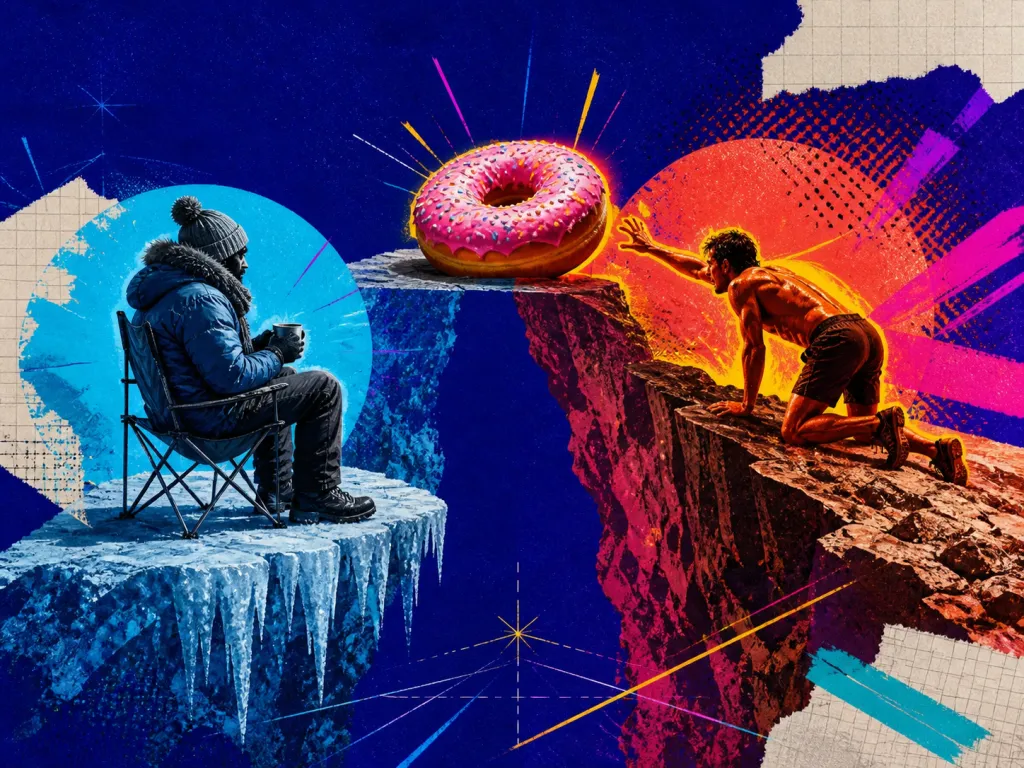
Examples and situations
- Planning – a calm, comfortable person assumes a future stressed or hungry self will value the same options in the same way.
- Health – someone who is not currently in pain underestimates how pain may change willingness to accept treatment or risk.
- Interpersonal judgment – a person in one state expects someone in a very different state to respond according to the same motives and priorities.
Questions to check
- Name the current state and the future or other person's state explicitly.
- Use evidence from past episodes or people actually in the target state instead of imagination alone.
- Precommit when a predictable hot state repeatedly defeats a cold-state goal, while leaving room for genuinely new information.
- Separate a change in preferences caused by state from a claim that one state is automatically more rational than the other.
Long-form guide
When Calm You Promised, When Hot You Didn’t: Navigating the Hot–Cold Empathy Gap
We’ve all made a vow in the quiet of a Sunday evening that melts under Monday heat. “I’ll wake at 6, run three miles, bring salad.” Morning arrives. Snooze. Toast. The plan—so neat last night—feels laughable under a warm duvet and a chilly room. That switch is the hot–cold empathy gap at work: when we’re calm (“cold”), we underestimate how strong emotions, cravings, or stress (“hot”) will flip our choices.
On this page
What Is the Hot–Cold Empathy Gap and Why It Matters
One-sentence definition: the hot–cold empathy gap is a bias where our current emotional state blinds us to how a different emotional state will change what we want, judge, or do (Loewenstein, 1996). The hot–cold empathy gap is the mismatch between what you believe you’ll do in a calm state versus what you actually do when a feeling surges. “Hot” doesn’t only mean anger. It includes hunger, pain, lust, fear, euphoria, social pressure, stress, and even righteous certainty. These states reweight your priorities. They shrink your time horizon. They change what feels obvious, fair, possible, or safe.
The gap runs two ways: cold-to-hot: while calm, we fail to imagine how powerfully a hot state will pull us; hot-to-cold: while hot, we can’t imagine returning to a cooler perspective. We care because the gap drains money, health, trust, and time.
It explains why you overspend after promising to save; you snap at a teammate though you “don’t do drama”; you ghost your planner when cravings hit; you accept a bad deal to end the discomfort of silence. It shows up in hospitals, investing, parenting, public policy, and product design. Knowing the gap means you’ll stop asking future-you to be a superhero and instead rig the environment so your ordinary self can win.
A few anchor studies: people choose healthy groceries when full, junk when hungry (Read & van Leeuwen, 1998); sexual arousal shifts risk judgments more than participants expect (Ariely & Loewenstein, 2006); hot states reduce compassion for future pain and increase willingness to take risks (Nordgren et al., 2007). The theme: feelings are not “noise.” They are part of the decision. Pretending otherwise is how we get surprised.
The demo high, the early discharge, and the cart-free grocery run
Jin runs a startup. She scheduled a tough talk with her cofounders about cutting a pet feature. She wrote clear notes the night before. Then the investor demo that morning went amazingly. Applause. Adrenaline. Back in the room, someone said, “Maybe we keep the feature—momentum!”
Jin nodded before her notes even made it out of her bag. The hot high from the praise muffled the earlier reasoning. The team lost six weeks chasing a feature they had already decided to cut.
Mr. Leone wanted to go home the day after surgery. Pain meds working. He said he’d be fine managing his drains. His nurse tried to slow him down. He couldn’t picture the night ahead when meds would wear off and fear would spike. At 2 a.m., back in the ER, he was scared and in pain. Cold Mr. Leone insisted on independence. Hot Mr. Leone just wanted help. The discharge plan ignored the gap.
Devon popped in for “three things.” He refused a cart because he was “disciplined now.” Then he walked past warm rotisserie chickens. The smell wrapped around him. He grabbed chips, dips, a magazine that promised perfect abs in two weeks. On the sidewalk, one bag split. He laughed at himself and still ate half the chips before dinner. Cold Devon designs noble diets. Hot Devon has a nose and a stomach.
The late-night text and the compliance training
Lena promised herself she wouldn’t text her ex. She blocked the number. She felt steady… until a song hit at midnight. She unblocked and typed. She woke hating the message and herself. Cold Lena was wise. Hot Lena was lonely. Cold Lena forgot to account for music and midnight.
An HR team held a calm, bright training on conflict escalation. Months later, an engineer felt cornered during a code review and fired off a public message that broke policy. In the cold room, best practices made sense. In hot social threat, those lessons vanished. The organization taught content without teaching how to act when blood pressure climbs.
The retail return trap and the soccer parent
“No returns after 48 hours.” The jacket looked perfect in the warm store lighting. You felt flattered by the salesperson. You said yes. At home, under plain light, it looked wrong. Hot you was all in. Cold you was puzzled. Policies that collapse time windows exploit the gap.
Luca swore he’d let the coach coach. His kid missed a pass. The other parent yelled. Luca felt heat rising and shouted too. Later he apologized to his kid and promised again. The trigger wasn’t rational. It was mammal. Cold Luca believed in growth mindset. Hot Luca wanted to protect.
The negotiation that paid in relief and the night-shift cookie
In a salary negotiation, Asha held out for equity. The hiring manager let silence stretch. Asha felt her chest tighten. She accepted the first number to make the discomfort stop. Later, she called herself weak. That’s unfair. Hot Asha was in a physiological state she’d never prepared for. Relief is a powerful currency.
Nurses kept a bowl of cookies on the medicine cart. “For morale.” Every nurse swore they’d skip. At 3 a.m., one by one, they ate a cookie. They laughed in the break room about their iron wills. The hospital replaced the cookies with fruit and moved the bowl away from the cart. Cookie consumption dropped. Wills stayed the same. The environment changed.
Learn the Signature of “Hot”
We won’t lecture your emotions away. They are part of you. The point is to expect the switch and build ramps, bumpers, and brakes so hot you and cold you can cooperate. Time collapses; only the next minute matters; Strong certainty appears out of nowhere; You feel pushed: “I have to decide right now.”; Your world narrows to one option; Your language sharpens: always, never, must, ruined; Your body cues: face heat, jaw clench, heart speed, shallow breath, stomach pull, tingling.
Hot states have tells. Your body sets the warning lights before your brain catches up. Notice: If two or more show up, name it: “I’m hot.” Naming doesn’t cool you instantly, but it buys a half-step. That half-step is gold.
Design for State-Switching, Not Superhero Will
Think architecture, not pep talks. You are not lazy. You are human. Make the cold plan on Monday that assumes a hot Thursday. If you buy junk when hungry, shop after meals or order online. The plan is where and when, not “be strong.”
If you overspend under social pressure, move savings to a separate bank with no instant transfer and no app card in your wallet. Friction wins; If anger torpedoes feedback, script canned lines: “I need 10 minutes; I’ll come back at 2:15.” Put the words in your pocket so you don’t grab harsher ones.
Use Packaged Choices, Not Abstract Goals
Hot states eat working memory. Replace “remember” with “installed.” Install defaults: set retirement contributions and auto-escalation now. You will forget later, and that’s the point; Install blockers: uninstall delivery apps; delete payment details; put a parental control on your own streaming apps with a code held by your partner; Install timers: a 24-hour rule for purchases over $200; a 10-minute rule for replying to incendiary emails.
Vague goals die in heat. Prepackage good options. Decide now your “default lunch order” that future-you can one-tap when busy; Create a boring portfolio and take away the day-trade button; Use “if–then” scripts: “If I’m offered a drink and I’m driving, I say, ‘I’m on water tonight.’” Yes, out loud, now. Practice matters.
Build Cool-Down Lanes
Hot states shrink perspective. A second brain holds the wider scene. Text a friend before you decide. The rule is: “If it feels urgent, I text Sam.” He doesn’t need to reply. The act slows you; Use “future-you” as a person. Write yourself a two-sentence note when calm: “Hi hot me. Here’s what we learned last time. It will pass. Do X.”
Don’t fight the heat head-on. Create lanes where it can run without wrecking you. Cooling-off periods: commit to “sleep on it” for tattoos, big purchases, resignations, proposals, and rage letters; Delay triggers: move notifications off the lock screen; batch email; Safe outlets: draft the angry email in Notes; scream into a pillow; run around the block; cold shower if it’s cravings.
Train With Simulated Heat
Treat yourself like a mission-critical system. Single points of failure are risky. Two-factor decisions: for money over a threshold, require a second approval—your partner, your mentor, your past self via a code in a sealed envelope; Two-locations storage: snacks live in the garage, not the desk; emergency cash is at the bank, not your coat pocket. This sounds silly. It works.
Practice negotiation with a timer and a friend who throws silence at you. Feel the body heat. Learn to sit in it; Watch videos of common triggers (customer yelling, a crying child) and rehearse your line: “I see you; we’re going to fix this. Give me two minutes.”; For arousal-related risks, study private scripts and condoms-in-the-bag routines now. Don’t plan at midnight.
Create Social and Physical Locks
Give hot you a door that lets out steam safely. Temptation bundling: only watch your favorite show while on the stationary bike (Milkman et al., 2011); Progressive commitment: turn off alcohol Mon–Thu, but plan one social drink Fri. Make it explicit. Hot you has a promised treat. Make it easy to do the right thing. Make it hard to do the wrong thing. Put your phone charger in the kitchen.
No charger by the bed, fewer midnight scrolls; Freeze your credit card in a block of ice. You’ll laugh—until you need 20 minutes to melt it for an impulse buy. That 20 minutes is a cooling-off period in disguise; Put the cookies on the highest shelf in an opaque bin behind the flour. This matters more than “discipline.” Tape this to your fridge. It looks small. It’s heavy.
Related or Confusable Ideas
Hot–cold empathy gap sits inside a family of mental habits. Knowing the cousins helps you pick your tool. Projection bias: you assume your future tastes will match today’s. When hungry you buy too much; when full you swear you’ll never snack. The empathy gap is a broader version that includes strong emotional and visceral states, not just taste; Affective forecasting error: you mispredict how long or how intensely you’ll feel something. The empathy gap focuses on how a state shifts your preferences and judgment right now. Forecasting is often about duration and intensity; empathy gap is about state-dependent choices; Present bias: you overvalue immediate rewards over future ones. In hot states, present bias spikes. They’re intertwined but not identical; you can have a cold present bias too (retail therapy “because today was hard”); Restraint bias: you overestimate your self-control and take on too much temptation. It’s a flavor of cold-to-hot empathy gap: cold you thinks hot you will behave; State-dependent memory: you recall information better when in the same state as when you learned it. If you rehearse calm scripts only when calm, they vanish during heat. Train in the state you plan to perform; Ego depletion: the idea that self-control is a finite resource. Evidence is mixed, but strain from accumulated tasks is real. Regardless, the fix is similar: redesign the environment and add friction instead of betting on a mood or reserve; Dunning–Kruger effect: overestimating your skill when you’re unskilled. Different beast. But a hot flush of confidence can produce similar outcomes. The cure—feedback and guardrails—overlaps.
A small map: if the issue is “I can’t imagine what I’ll want later,” think empathy gap. If it’s “I discount later benefits,” think present bias. If it’s “I think I’m stronger than temptation,” think restraint bias. If it’s “I’ll feel this way forever,” think affective forecasting error.
Money: Hot–Cold Empathy Gap
Let’s take three domains and design simple systems. Hot: flash sales, social pressure, “only 2 left,” lifestyle comparison. Cold plan: remove saved cards from browsers. Keep one physical card. Freeze the second; set a purchase delay: over $200, wait 24 hours;
Create a “silly money” sandbox, a small monthly amount for spur-of-the-moment joy. Label it out loud. Hot you gets a playground that doesn’t wreck the yard; Add a second approver: large expenses require a text to your partner with “3 reasons why now.” The act slows you; Unsubscribe from promos. Use a burner email if you must browse.
Health, relationships, and work: Hot–Cold Empathy Gap
Hot: midnight hunger, post-workout euphoria, stress eating, pain. Cold plan: meal prep one boring, decent option you can eat without thinking. Freeze portions. Bored wins more nights than genius; put healthy snacks at eye level. Move treats to opaque containers. The eye is the lever; sleep first. Most “discipline” failures happen when sleep debt simmers; for pain, write “med plan in English” before you leave the clinic. Include “what if worse at 2 a.m.” with a phone number. Hot you panics; give them a map; pair workouts with shows or podcasts. Build the hook into the bike or shoes.
Relationships and work. Hot: anger at tone, envy after promotions, shame in feedback, urgency in crisis. Cold plan: write a “two by ten” rule: in the first two sentences of any tough reply, name the shared goal and something you appreciate. Practice it. It reduces heat; install a “10-minute walk” policy for conflicts. Put it in the team charter; draft your “I’m pausing” scripts and put them in your notes app; during crisis, agree on check-in times. The quiet between them will feel hot. Knowing when to reconnect cools it.
Wrap-Up: Make Peace With Both Yous
Hot you is not your enemy. Hot you is the parent who sprints into the street, the mammal who stiffens at a growl, the lover who leaps, the friend who defends. Cold you is the architect. You need both. The damage happens when they don’t talk. Imagine you’re surfing. Cold you checks the tide chart, waxes the board, watches the flags. Hot you stands on the board with salt in your nose and a wave in your chest. Without prep, hot you wipes out. Without heat, cold you never paddles out.
So this week: pick one hot zone; add one friction; write one script; tell one person. Small levers, big shifts. You won’t win every wave. You don’t need to. You just need fewer wipeouts and faster pop-ups. See your states. Plan for the flip. Let both versions of you do what they do best.
Decision checklist
- Name your three common hot triggers and their body cues
- Pre-commit through friction: remove apps, separate accounts, add passwords you don’t hold
- Set cooling delays: $ threshold and time; message delay; 24-hour rules
- Script exact words for your exits: “I need a break. I’ll reply at 3.”
- Prepare safe defaults: go-to meals, go-to replies, go-to workouts
- Move temptations out of reach and line-of-sight
- Ask one friend to be a quick “pause” contact. Agree on the rule
- Schedule decisions for cold windows. Protect mornings/afternoons when you’re clearest
- Practice the heat: short drills of the hard thing with a timer
- Review after-action: when you slip, log the trigger, cue, action, and fix a tiny environmental tweak
Evidence review
What the evidence supports
The hot–cold empathy gap describes difficulty predicting preferences, behavior, or experience across different visceral or affective states. In a relatively cold state, people can underappreciate how pain, hunger, sexual arousal, craving, fear, anger, and other hot states will change motivation and choice; in a hot state, they can also overproject the current state into the future. The pattern can be intrapersonal or interpersonal and should not be reduced to a generic claim that emotion always causes bad decisions.
How researchers describe the pattern
Visceral and affective states change the relative desirability and salience of actions. Forecasts made outside the target state rely on an incomplete simulation of those motivational changes. The empathy-gap framework overlaps with projection bias and affective forecasting, but focuses specifically on failures to appreciate state-dependent changes rather than on every error in predicting future feelings or preferences.
Practical interpretation
For a consequential decision that will be made or lived through in a different state, identify the relevant state explicitly and gather evidence from people or past episodes in that state. Use precommitments for predictable hot-state choices, but keep an escape route when the future state contains information the cold-state planner could not know. In interpersonal decisions, ask what the other person's current pain, craving, fear, or arousal changes rather than assuming your present state is a neutral reference point.
Reviewed sources
- Out of Control: Visceral Influences on Behavior foundational theory / evidence synthesis · 1996 · DOI 10.1006/obhd.1996.0028
- Hot-cold empathy gaps and medical decision making review · 2005 · DOI 10.1037/0278-6133.24.4.S49
- fMRI evidence of a hot-cold empathy gap in hypothetical and real aversive choices behavioral experiment + neuroimaging · 2013 · DOI 10.3389/fnins.2013.00104
Editorial review: 2026-08-18. The controlled evidence class is an editorial reading aid, not a numeric truth score; the descriptive status above carries the entry-specific qualification.
Continue from here
Choose the next useful move.
Evidence-linked concepts
Nearby ideas, with the relationship made explicit.
These links are reviewed separately from the original library’s related-entry suggestions. A relation means the concepts overlap or are often confused; it does not mean they are interchangeable.
Projection Bias – when current preferences shape forecasts of future preferences
Both concern forecasting across states. Projection bias emphasizes overprojecting current preferences into the future; the hot–cold empathy gap emphasizes failing to appreciate how a different visceral or affective state changes motivation and choice.
Open reviewed entry